


Listen to the article
Voters Split on Trump’s “War on Fraud” Initiative During State of the Union
President Donald Trump’s declaration of a “war on fraud” during his State of the Union address Tuesday night drew sharply divided reactions from voters across the political spectrum, highlighting the partisan lens through which many Americans view the administration’s anti-corruption efforts.
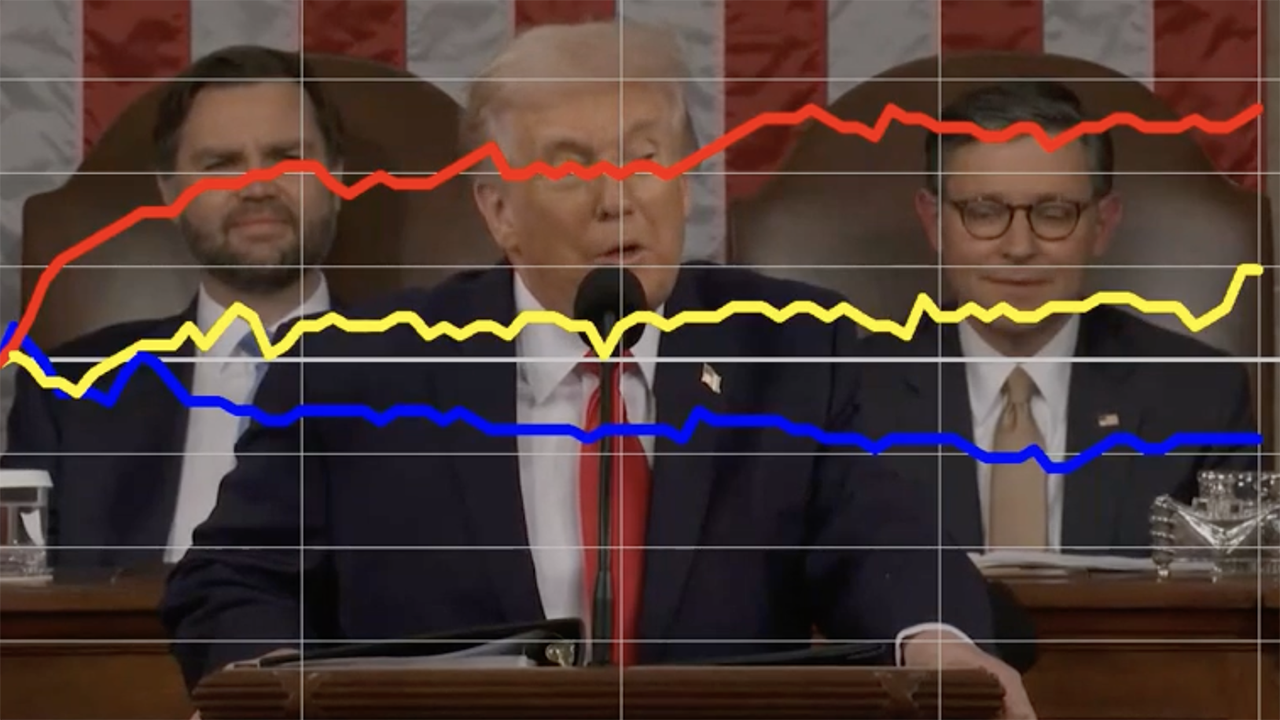
During his speech, Trump claimed that corruption was “plundering America,” singling out Minnesota as what he called the “most stunning example” of welfare fraud. A real-time reaction panel organized by polling group Maslansky & Partners showed Republicans responding positively to these remarks, while Democrats registered negative reactions and independents remained largely neutral.
“Members of the Somali community have pillaged an estimated $19 billion from the American taxpayer,” Trump asserted, apparently referencing potential Medicaid fraud in Minnesota since 2018. This figure stems from revelations by a Minnesota federal prosecutor last year about potentially fraudulent Medicaid payments.
The president’s comments about Minnesota come against the backdrop of a separate $250 million child nutrition program fraud case in which the majority of defendants were of Somali descent. However, the connection between the broader Medicaid fraud claims and the Somali community remains unclear.
Minnesota Democratic Governor Tim Walz has pushed back forcefully against Trump’s characterization, accusing the president of “demonizing” the Somali community. Walz has dismissed Trump’s claims about the state as politically motivated exaggerations and called Trump “the biggest fraudster.”
Trump’s fraud allegations weren’t limited to Minnesota. He claimed that California, Massachusetts, Maine, and “many other states” had even worse fraud problems, though he did not provide specific examples or evidence during the address.
“This is the kind of corruption that shreds the fabric of a nation, and we are working on it like you wouldn’t believe,” Trump told lawmakers. He formally announced that Vice President JD Vance would lead the anti-fraud initiative, which he said had actually begun four months ago.
In perhaps his boldest claim of the evening, Trump suggested that the fraud detection effort could single-handedly solve the nation’s fiscal problems: “If the administration could find enough fraud, we will actually have a balanced budget overnight. It’ll go very quickly. That’s the kind of money you’re talking about. We’ll balance our budget.”
The administration’s multi-agency approach to fraud prevention has tasked the Departments of Justice, Treasury, Health and Human Services and others with identifying and addressing abuse of welfare systems nationwide.
The State of the Union address, which set a record as the longest in history, became contentious at several points. Reports indicate at least one Senate Democrat left the chamber early, saying he couldn’t endure “hours of Trump’s lies.”
The president’s fraud initiative comes as his administration has faced criticism for its own financial practices and transparency. Critics point to this as context for why Democratic voters responded so negatively to the fraud comments, seeing them as potentially hypocritical or politically targeted.
Political analysts note that welfare fraud has long been a galvanizing issue for conservative voters, while Democrats often express concern that such initiatives can lead to cutting legitimate benefits for vulnerable populations or targeting immigrant communities unfairly.
As the administration moves forward with this “war on fraud” under Vice President Vance’s leadership, the implementation and outcomes will likely continue to be viewed through starkly different partisan lenses, reflecting the deep political divisions that have characterized much of Trump’s presidency.
Fact Checker
Verify the accuracy of this article using The Disinformation Commission analysis and real-time sources.

8 Comments
It’s good to see the President take a firm stance against corruption and fraud, but the claims about Minnesota seem a bit exaggerated. We need to be careful about making sweeping generalizations and ensure we have solid evidence to back up such allegations.
The mixed reactions to the president’s anti-fraud pledge highlight the challenges of tackling corruption in a highly partisan environment. Fact-based, good-faith efforts to root out waste and abuse should be welcomed by all, regardless of political affiliation.
The president’s remarks on welfare fraud are concerning, but we need more context and data to fully understand the scope of the problem. I hope the administration is basing its policies on rigorous analysis rather than political rhetoric.
Interesting to see the partisan divide in reactions to the president’s anti-fraud pledge. Reducing corruption is a worthy goal, but it needs to be approached objectively and with due process, not as a political weapon.
The president’s harsh language around welfare fraud seems designed to appeal to his base more than address the issue constructively. I hope we can move beyond divisive rhetoric and find bipartisan solutions that protect taxpayer dollars without scapegoating vulnerable communities.
While the scale of potential fraud highlighted is concerning, I’m worried the president’s approach will only deepen polarization rather than lead to meaningful reforms. We need a measured, fact-based dialogue to tackle these challenges effectively.
I’m curious to learn more about the specific evidence and methodology behind the administration’s claims about Medicaid fraud in Minnesota. Transparency and accountability on these issues are crucial for building public trust.
While I agree that combating fraud and corruption is important, the president’s rhetoric seems to be fueling further political division. It would be better to focus on bipartisan solutions that address the root causes of these issues in a measured, fact-based way.