


Listen to the article
The U.S. military has assembled what President Donald Trump describes as an “armada” around Iran in recent weeks, creating a strategic deployment that signals escalating pressure amid nuclear negotiations with Tehran.
The latest addition to this military buildup is the USS Gerald R. Ford, the world’s largest aircraft carrier, which is now moving from the Caribbean toward the Middle East with its strike group. This movement coincides with ongoing indirect talks between Washington and Tehran regarding Iran’s disputed nuclear program.
President Trump has issued clear demands that Iran must completely dismantle its nuclear infrastructure or face potential consequences. The deployment appears designed to back these diplomatic efforts with visible military capability.
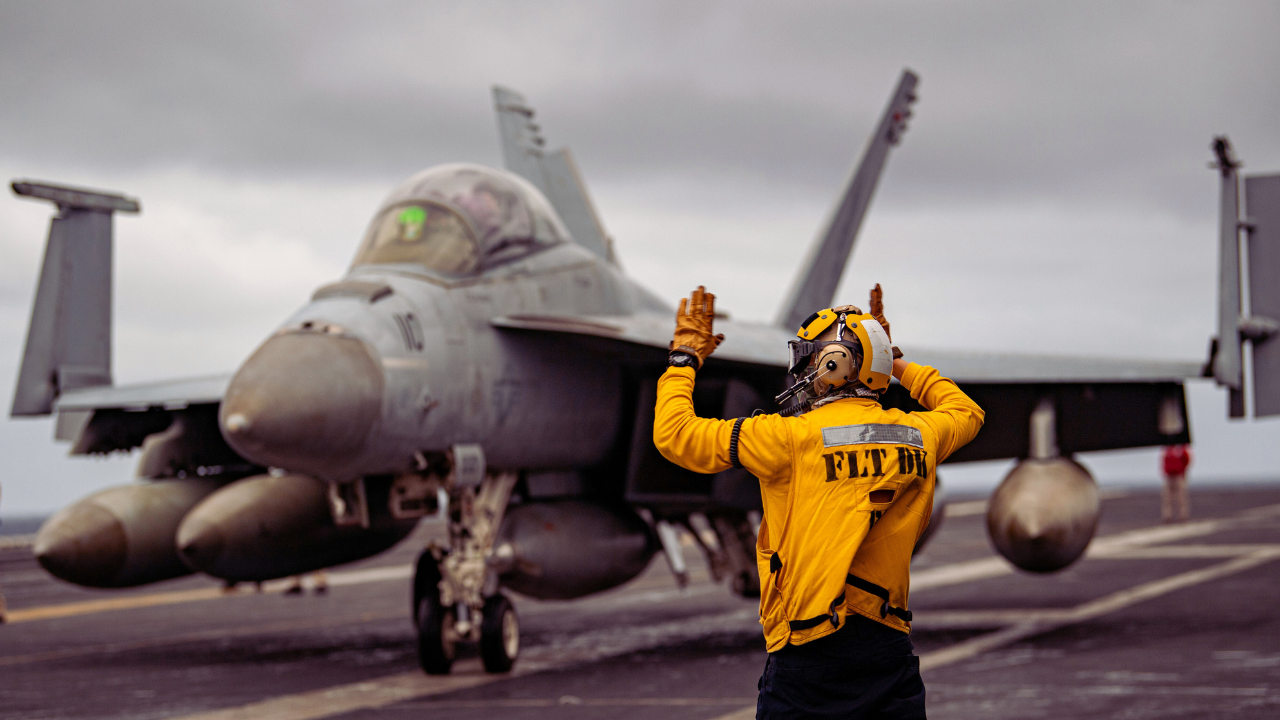
At the center of America’s force projection is the USS Abraham Lincoln carrier strike group, a mobile naval fortress protected by destroyers and equipped with F-35 fighters and F/A-18 attack aircraft on deck. This powerful maritime platform sits within striking range of numerous key Iranian military and nuclear facilities, creating an immediate threat of precision strikes if needed.
The U.S. naval presence extends well beyond these carriers. In the Eastern Mediterranean, the destroyers USS Bulkeley and USS Roosevelt provide additional strike capability and missile defense coverage. These vessels could potentially assist Israel in defending against any Iranian counterattack, highlighting the regional defensive dimension of this deployment.
Farther south in the Red Sea, the USS Delbert B. Black patrols one of the world’s most critical shipping lanes. This strategic waterway links the Mediterranean to the Indian Ocean via the Suez Canal, serving as a vital corridor for global trade and energy supplies. The destroyer’s presence helps secure commercial traffic while offering Washington rapid response capabilities between the Middle East and Europe.
Even closer to Iran’s coastline, the USS McFaul and USS Mitscher operate in the Persian Gulf and the Strait of Hormuz, one of the planet’s most strategically sensitive waterways. Approximately one-fifth of the world’s daily oil supply passes through this narrow strait. Their presence demonstrates that U.S. forces can both defend this critical chokepoint and, if necessary, launch strikes against Iranian targets from close proximity.
The naval component of this military buildup is complemented by substantial air power distributed across multiple bases in the Middle East. This aerial presence includes various combat aircraft such as F-15s, F-16s, and radar-evading F-35s, alongside A-10s specialized for close air support against armored threats.
Supporting these fighters is a sophisticated network of auxiliary aircraft. KC-135 and KC-46 tankers provide midair refueling capabilities, extending the range and endurance of strike aircraft. EA-18G electronic warfare planes can disrupt enemy radar and communications systems. E-3 Sentry aircraft function as airborne command centers with extensive threat tracking capabilities, while P-8 Poseidon planes monitor maritime activity.
The deployment also includes heavy transport aircraft such as C-5 Galaxy and C-17 Globemaster planes that can rapidly move troops and equipment throughout the region. MQ-9 Reaper drones provide persistent surveillance and precision strike options, adding another layer of capability to the U.S. force posture.
This comprehensive arrangement of air and naval assets creates overlapping strike zones, missile defense coverage, and control over major maritime routes throughout the region. The distributed nature of these forces means they aren’t concentrated in a single vulnerable location – instead, they’re positioned to operate simultaneously from multiple directions if needed.
For Iran, this military buildup presents a clear message that the United States possesses both the capability and positioning to enforce its demands regarding the nuclear program, while maintaining multiple options for response to any potential escalation by Tehran.
Fact Checker
Verify the accuracy of this article using The Disinformation Commission analysis and real-time sources.

15 Comments
Deploying the USS Gerald R. Ford to the Middle East is a bold move by the U.S. I’m curious to see how Iran responds, and whether this leads to a diplomatic breakthrough or raises the chances of military confrontation.
This is a dangerous game of brinkmanship between the U.S. and Iran. I sincerely hope the diplomatic track succeeds in resolving the nuclear issue, as further military escalation could have catastrophic consequences for global energy and mining markets.
This is a high-stakes game of brinkmanship between the U.S. and Iran. The potential impacts on global commodity markets, especially oil and uranium, could be significant. I wonder what the strategic calculations are on both sides as this situation unfolds.
Absolutely, the geopolitical risks here could roil markets for key mining and energy commodities. Investors will be closely watching for any disruptions to supply chains or price volatility.
The U.S. is clearly ratcheting up the pressure on Iran with this military buildup. While the goal may be to force concessions, I worry that miscalculation could lead to unintended conflict with major implications for global energy and commodity markets.
The U.S. deployment of its largest aircraft carrier to the Middle East is a clear signal of intent. However, I worry that this posturing could backfire and lead to unintended conflict. Diplomacy and de-escalation should be the priority to avoid disruptions to vital commodity supplies.
Absolutely, the risks to global energy, mining, and manufacturing supply chains are very real if this situation spirals out of control. Prudent investors will be closely monitoring developments on the diplomatic and military fronts.
The U.S. military buildup around Iran seems designed to ratchet up pressure, but the risks of miscalculation or unintended escalation are very real. I hope the diplomatic track makes progress, as further disruptions to energy and mining supply chains could have huge global impacts.
Absolutely, the geopolitical risk premium in commodities like oil, uranium, and other strategic minerals could rise sharply if this situation deteriorates further. Prudent investors will be closely monitoring developments.
Deploying the world’s largest aircraft carrier to the Middle East is a major show of force by the U.S. It will be interesting to see if this military posturing leads to any breakthroughs in the nuclear negotiations, or if it raises the risk of outright conflict.
The U.S. is really ratcheting up the pressure on Iran with this military buildup. While the goal may be to force concessions on the nuclear program, miscalculation could lead to unintended consequences. I hope cooler heads prevail and diplomacy wins out.
Interesting to see the U.S. bolstering its military presence around Iran. Clearly a show of force to back up diplomatic efforts, though escalation risks remain high. I wonder how this will impact global energy and commodity markets if tensions continue to simmer.
Absolutely, any disruption to Iranian oil and gas exports could have major ripple effects across energy and mining sectors. Investors will be watching this closely.
The U.S. is clearly taking an aggressive posture towards Iran, but I hope cooler heads prevail and diplomacy wins out. Disruptions to global energy and mining supply chains could have far-reaching economic impacts that hurt everyone.
Agreed, the stakes are incredibly high here. Investors in mining, metals, and energy sectors will be watching this situation very closely, as any major supply shocks could roil global commodity markets.