


Listen to the article
Indiana Republicans Rebuff Trump’s Redistricting Push, Citing Tone and Constituent Concerns
If Indiana Republican senators had any doubt about what to do with President Donald Trump’s redistricting proposal, he helped them make up their minds the night before this week’s vote with a scathing social media post that accused the state’s top senator of being “a bad guy, or a very stupid one.”
“That kind of language doesn’t help,” said Sen. Travis Holdman, a banker and lawyer from near Fort Wayne who voted against the plan.
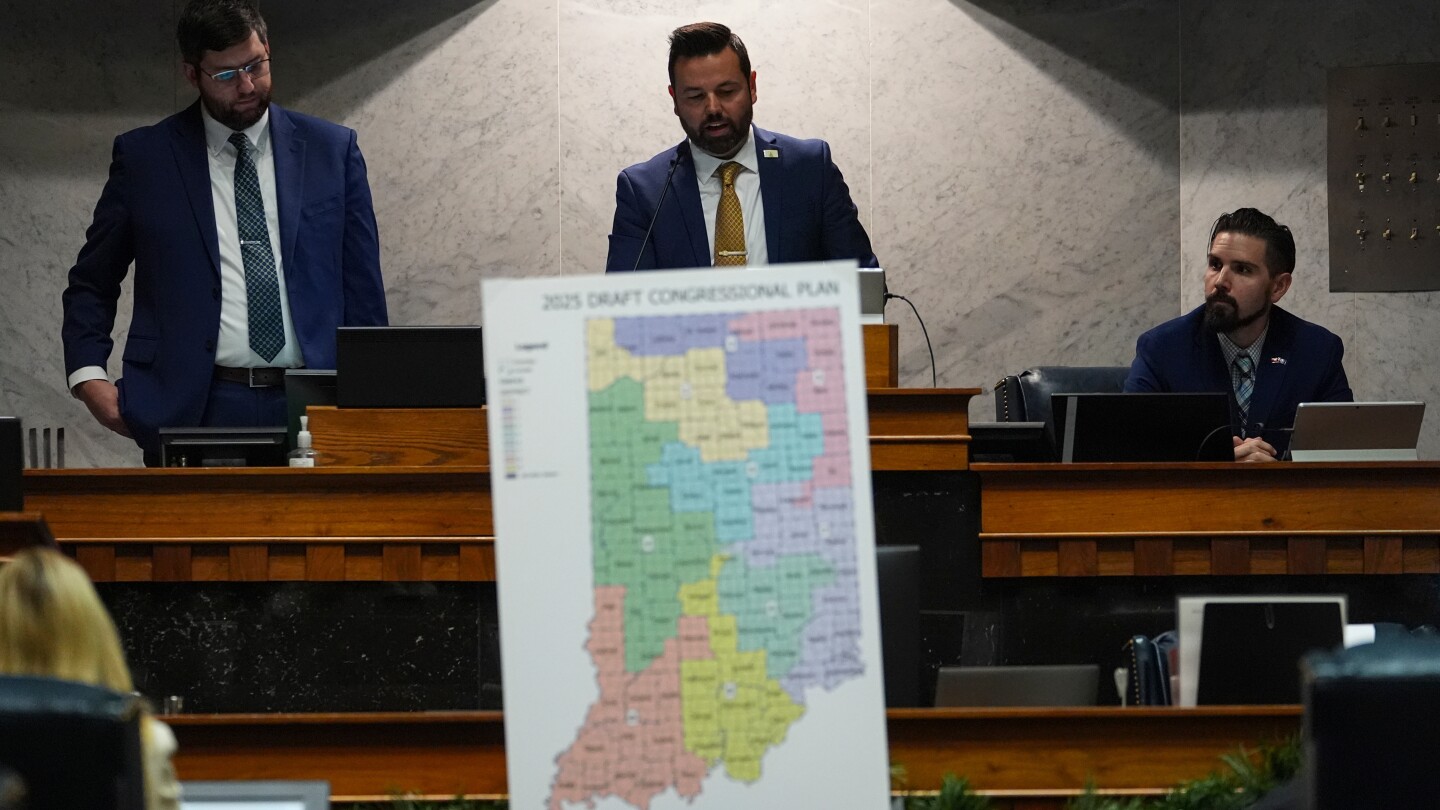
Holdman was among 21 Republican senators who delivered Trump one of the most significant political defeats of his second term by rejecting a redistricting plan in Indiana. The decision undermined the president’s national campaign to redraw congressional maps to boost Republican chances in the upcoming midterm elections.
Several Republican senators interviewed after Thursday’s vote indicated they were leaning against the plan from the start, primarily because their constituents opposed it. But in what could be characterized as a “Midwest nice” rebuttal to America’s increasingly coarse political discourse, some specifically cited the president’s tone as a factor in their decision, particularly when he called senators “suckers.”
“I mean, that’s pretty nasty,” said Sen. Jean Leising, a farm owner from Oldenburg who works at her daughter’s travel agency.
Trump appeared undeterred by the rejection. When asked about the vote, he once again targeted Indiana Senate President Rodric Bray: “He’ll probably lose his next primary, whenever that is. I hope he does, because he’s done a tremendous disservice.”
Sen. Sue Glick, an attorney from La Grange who opposed redistricting, dismissed Trump’s threats to unseat lawmakers who defied him. “I would think he would have better things to do,” she said. “It would be money better spent electing the individuals he wants to represent his agenda in Congress.”
The president attempted to downplay the defeat, telling reporters he “wasn’t working on it very hard.” However, multiple senators described an extensive White House effort that Republican Sen. Andy Zay characterized as “a full-court press.”
Vice President JD Vance met with senators twice in Indiana and once in Washington, while White House aides maintained frequent contact by phone. Holdman noted the contradiction between Trump’s public attacks and private diplomacy.
“We were getting mixed messages,” he said. “Two days before the vote, they wanted to declare a truce on Sen. Bray. And the next day, there’s a post on Truth Social that didn’t sound like truce language to me.”
Other presidential comments unrelated to redistricting also influenced votes. Trump’s description of Minnesota Gov. Tim Walz as “retarded” upset Sen. Mike Bohacek, whose daughter has Down syndrome. Bohacek, already skeptical of the redistricting plan, cited this comment as a factor in his decision to vote against it.
The White House did not respond to questions about their outreach to senators but disputed claims from some conservative allies that Trump had threatened to withhold federal funding from Indiana. “President Trump loves the great state of Indiana,” said spokesman Davis Ingle, calling such claims “100% fake news.”
Despite months of pressure, Trump struggled to gain traction with Indiana lawmakers. Holdman declined a White House invitation last month due to scheduling conflicts, adding, “Plus, by then it was a little too late.” Leising mentioned missing a call from a White House official the day before the vote while in a committee meeting, saying she didn’t return it because her mind was already made up.
Former Indiana governor Mitch Daniels, a Republican, offered a straightforward explanation for the outcome: “Folks in our state don’t react well to being bullied.”
Behind the scenes, former Vice President Mike Pence, who served as Indiana’s governor before joining the Trump administration, fielded calls from senators during the redistricting debate, according to a person with knowledge of the situation who requested anonymity. The source declined to specify Pence’s advice. Pence and Trump have been at odds since January 6, 2021, when Pence refused to help overturn the 2020 election results.
The proposed redistricting map would have divided Indianapolis into four pieces, essentially diluting Democratic voting power by attaching parts of the city to other districts. But senators reported that constituents, particularly those in small towns near the Kentucky and Ohio borders, feared the state’s largest metropolitan area would gain influence at their expense.
“Constituents just didn’t want it,” Holdman explained.
During Thursday’s floor vote, some Republicans appeared conflicted. Sen. Greg Goode from Terre Haute acknowledged speaking twice with Trump by phone while considering the plan. He professed his “love” for the president but criticized the “over-the-top pressure” before casting his vote against the proposal.
“I’m confident my vote reflects the will of my constituents,” Goode said, capturing the sentiment that ultimately led to one of the most significant rebuffs to Trump’s political agenda in his second term.
Fact Checker
Verify the accuracy of this article using The Disinformation Commission analysis and real-time sources.

10 Comments
This outcome highlights the limits of Trump’s influence, even within his own party. While he may still hold significant sway with his core supporters, it’s clear that other Republican leaders are willing to chart their own course when they feel it’s in the best interests of their state and constituents.
You make a good point. Trump’s brand of populism may resonate with some, but it’s not a universal formula for success. Lawmakers who stay grounded in local concerns can sometimes buck even powerful national figures.
This is a good example of how tone and approach can undermine even a politically motivated policy goal. Trump’s combative style may play well with his base, but it can alienate more moderate voters and even members of his own party.
Absolutely. Effective policymaking often requires building consensus, not just issuing demands. It will be interesting to see if Trump learns from this setback or continues his confrontational tactics.
Interesting to see the Indiana GOP push back against Trump’s aggressive tone on redistricting. It shows that even in solidly Republican states, maintaining positive relationships with constituents is crucial.
You’re right, the senators seem to have struck a pragmatic balance between party loyalty and listening to their local voters. Respecting the concerns of the electorate is always important.
The Indiana Republicans’ decision to reject Trump’s redistricting plan despite his party affiliation is a testament to their independence and commitment to their constituents. It’s refreshing to see politicians put principles over partisanship.
I agree, it’s encouraging to see elected officials prioritize the interests of their community over blindly following a national party agenda. Maintaining that local focus is crucial for effective governance.
The Indiana senators’ rejection of Trump’s redistricting plan is a fascinating case study in the tensions between national and local politics. It shows that even in a conservative state, there are limits to how far elected officials will go to support a divisive national agenda.
Exactly. Maintaining that balance between party loyalty and responsive, community-focused governance is a delicate challenge for any elected official. This outcome suggests that in some cases, the local imperative can override even strong partisan pressures.