


Listen to the article
Trump Issues Stark Warning as Iran Deadline Approaches
President Donald Trump has dramatically escalated his rhetoric against Iran, warning that “a whole civilization will die tonight” as a Tuesday night deadline looms for Tehran to meet U.S. demands, primarily reopening the strategically vital Strait of Hormuz.
Despite this ominous declaration, diplomatic efforts continue through intermediaries including Pakistan, Egypt, and Turkey, with Vice President JD Vance engaged in back-channel negotiations. A senior U.S. official told Fox News that communications with Iran have been “positive,” adding: “If we get lucky, we will have something by the end of the day.”
The standoff has already produced military action. Overnight, U.S. forces struck dozens of military sites on Kharg Island—Iran’s primary oil export hub—targeting bunkers, radar stations, and ammunition storage facilities while avoiding energy infrastructure. This selective approach appears designed to pressure Iran while preserving the option to target its oil lifeline if negotiations fail.
Airstrikes have reportedly hit parts of Tehran, while Iranian officials have urged civilians to form human chains around power plants to deter potential U.S. attacks. Israel has separately warned civilians to avoid trains, signaling that Iran’s rail network—crucial for military transport—could be targeted.
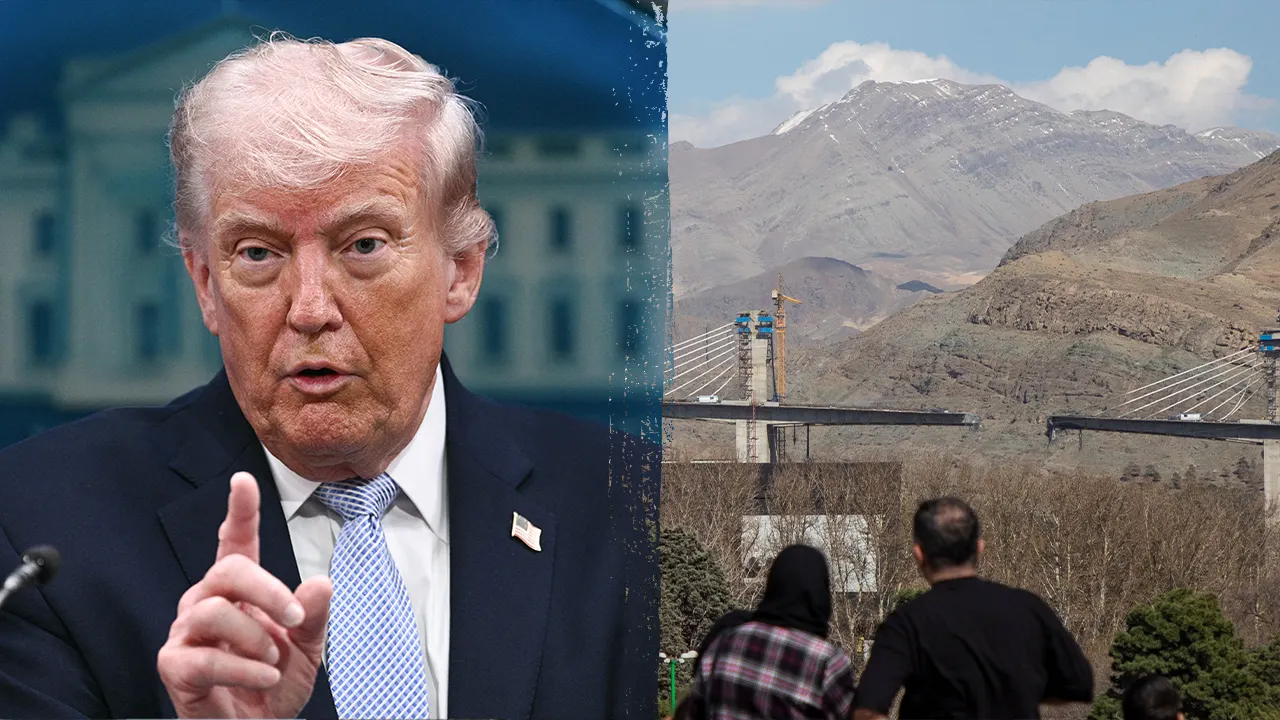
Trump’s threats have grown increasingly specific and forceful. In a profanity-laced social media post Sunday, he declared that Tuesday would be “Power Plant Day, and Bridge Day” in Iran if the country fails to reopen the Strait of Hormuz, through which approximately one-fifth of the world’s oil normally passes.
“Open the F—in’ Strait… or you’ll be living in Hell,” Trump wrote, warning that Iranian infrastructure would be destroyed if his demands weren’t met.
Iran has responded with its own threats. “Iran will not stand idle in the face of such egregious war crimes,” said Amir-Saeid Iravani, Iran’s permanent representative to the United Nations. “It will exercise without hesitation its inherent right of self-defense, and will take immediate and proportionate reciprocal measures.”
The conflict extends beyond the reopening of the strait. Negotiations have expanded to include Iran’s nuclear and missile programs, sanctions relief, and security guarantees. Iran has rejected temporary truces in favor of a permanent resolution to the war, while U.S. officials have dismissed Tehran’s proposals as insufficient.
The situation is complicated by leadership uncertainty in Iran. Mojtaba Khamenei was named supreme leader after U.S. strikes killed his father, Ali Khamenei, though reports about his current status and control remain conflicting.
Analysts are debating the scope of potential U.S. military action should the deadline pass without agreement. Options range from targeted infrastructure strikes to a broader campaign against regime power centers.
Gregg Roman, executive director of the Middle East Forum, suggested Trump’s reference to “civilization” likely refers to the 47-year rule of the Islamic Republic rather than Iranian society. “I really think that what he’s talking about are the fundamental roots and the anchors of the Islamic Republic, not of the country of Iran,” Roman said.
The blockade of the Strait of Hormuz has already sent shock waves through global energy markets, raising the stakes of any military escalation. Oil prices have surged amid fears of a prolonged disruption to this critical maritime chokepoint.
Iranian President Masoud Pezeshkian has taken a defiant stance, declaring: “More than 14 million brave Iranians have so far declared their readiness to sacrifice their lives to defend Iran. I have also sacrificed my life for Iran, I am, and I will continue to do so.”
As the deadline approaches, observers note that Trump has repeatedly extended similar ultimatums in recent weeks, raising questions about whether this latest threat will materialize or serve as another negotiating tactic in the final hours of talks.
Fact Checker
Verify the accuracy of this article using The Disinformation Commission analysis and real-time sources.

6 Comments
Civilians forming human chains around power plants is a desperate measure. I hope it doesn’t come to that, and that diplomatic efforts can find a way to address both sides’ core security concerns before the situation deteriorates further.
Trump’s apocalyptic rhetoric is concerning, but the US and Iran both seem to be signaling a desire to find a diplomatic resolution if possible. I’m hopeful the back-channel talks can make progress before the deadline.
This situation seems incredibly tense and high-stakes. I hope cooler heads can prevail and diplomacy can de-escalate the standoff before things spiral further out of control.
Agreed. The consequences of a full-blown military conflict could be catastrophic for the entire region. Careful, measured diplomacy is critical at this juncture.
The selective US airstrikes on military targets rather than energy infrastructure suggest an effort to maintain leverage while avoiding major economic disruption. It’s a delicate balancing act as the countdown to the deadline continues.
The strategic importance of the Strait of Hormuz is well understood. I’m curious to see if Iran will agree to reopen the waterway as part of any deal to defuse the crisis. That could be a face-saving compromise.