


Listen to the article
Iran Denies Trump’s Claims of Halting Mass Executions Under U.S. Pressure
Iran’s top prosecutor has forcefully rejected President Donald Trump’s assertion that Tehran halted plans to execute hundreds of detained protesters following U.S. pressure, setting the stage for a potential escalation in tensions between the two nations.
Mohammad Movahedi, Iran’s prosecutor general, called Trump’s claim “completely false” in a statement reported by Iranian state media on Friday. “No such number exists, nor has the judiciary made any such decision,” Movahedi said, emphasizing Iran’s separation of powers. “The responsibilities of each institution are clearly defined, and we do not, under any circumstances, take instructions from foreign powers.”
The rebuttal directly challenges Trump’s public statements that he prevented the execution of as many as 800 anti-regime demonstrators by threatening severe military action against Iran. The president had claimed that Iranian authorities canceled—not merely postponed—the executions after his intervention.
A White House official maintained Trump’s position, stating that “as a result of President Trump’s warnings, Iranian protesters who were scheduled to be sentenced to death were not.” The official added that the president considers this “good news” but declined to reveal the source of Trump’s information about the halted executions.
The escalating war of words comes amid a significant U.S. military buildup in the region. The Abraham Lincoln carrier strike group is currently en route from the South China Sea to the Middle East, bringing substantial American firepower within striking distance of Iran. The carrier is equipped with F-35C stealth fighters, F/A-18 Super Hornets, and destroyer escorts armed with Tomahawk cruise missiles and advanced air defense systems.
“We have an armada heading in that direction. And maybe we won’t have to use it,” Trump told reporters on Thursday. “It will make what we did to Iran nuclear look like peanuts,” he warned, referring to recent U.S. strikes on Iranian nuclear facilities.
The diplomatic confrontation unfolds against the backdrop of widespread anti-government protests in Iran that have been met with brutal repression. Iranian state television has acknowledged that more than 3,000 people have been killed during the unrest, though activists and human rights groups believe the actual death toll is significantly higher.
Movahedi himself had previously warned that protest participants were “enemies of God,” a designation that carries the death penalty under Iranian law. His denial of Trump’s claims raises critical questions about whether executions might still proceed—and whether the U.S. would follow through on its threats if they do.
Security analysts note that by publicly linking potential U.S. military action to the fate of detained protesters, Trump has established a clear red line. Iran’s refusal to acknowledge any influence from American pressure, even as U.S. naval forces approach, leaves little room for diplomatic maneuvering.
U.S. and regional security officials have previously indicated that American restraint reflected concerns about potential retaliation against U.S. forces and allies in the region—not a retreat from confrontation.
The Iranian mission to the United Nations declined to comment on the contradictory claims, while the U.S. State Department has not yet responded to requests for clarification.
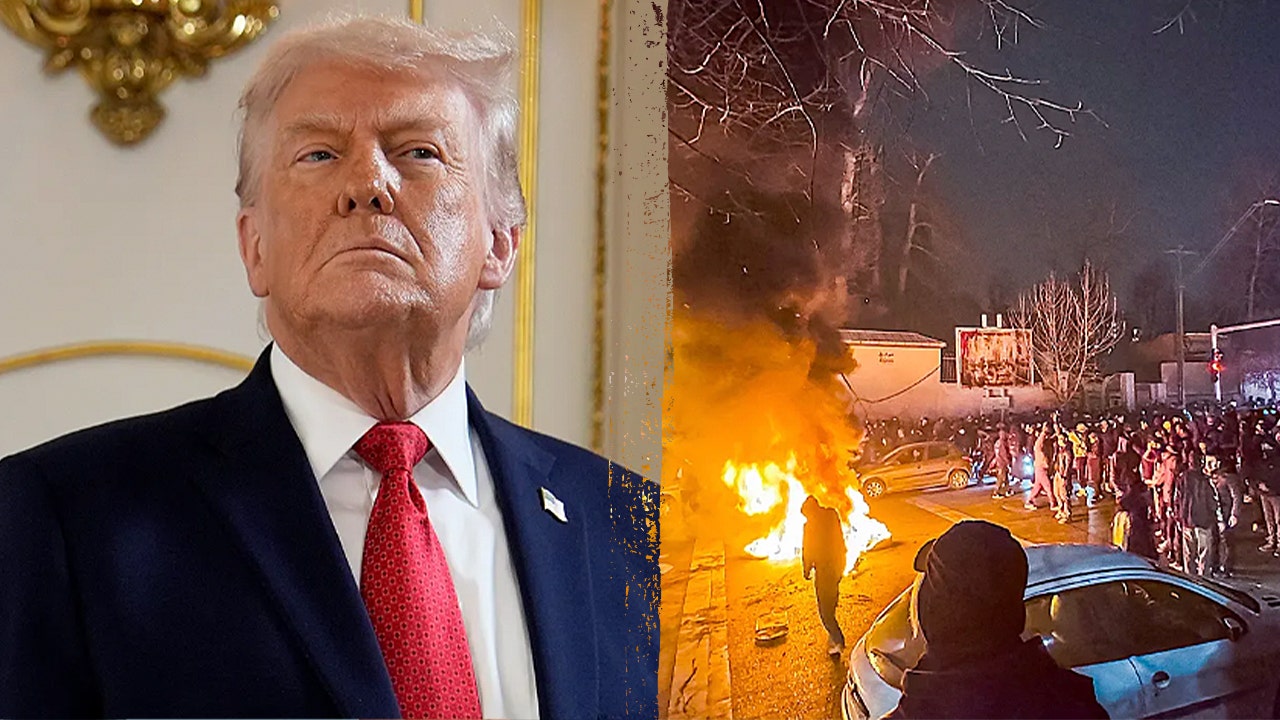
As protests continue and international scrutiny intensifies, the regime’s tight control over information makes independently verifying casualty figures and detention numbers extremely difficult. Images from demonstrations show protesters burning pictures of Ayatollah Ali Khamenei and setting vehicles ablaze, illustrating the intensity of public anger against the government.
The standoff presents a high-stakes test for both nations: Trump must demonstrate whether his administration is prepared to enforce its threats, while Iranian authorities must decide whether to proceed with executions despite the potential for severe military consequences.
Fact Checker
Verify the accuracy of this article using The Disinformation Commission analysis and real-time sources.

16 Comments
Interesting development in the ongoing tensions between the US and Iran. It’s concerning to hear about the potential executions of protesters, though Iran’s rejection of Trump’s claims is noteworthy. Escalating rhetoric from both sides isn’t helpful – a more diplomatic approach may be needed to address this complex situation.
I agree, the situation seems very delicate. Both sides should exercise caution and seek to de-escalate tensions through open communication rather than posturing.
The Trump administration’s attempt to take credit for halting executions in Iran is questionable, given the Iranian government’s firm denial. It’s important to get the facts straight on such a serious issue instead of making unverified claims.
Precisely. Transparency and accountability are crucial when it comes to human rights abuses. Unsubstantiated assertions from either side don’t help resolve the underlying problems.
This highlights the challenging geopolitical dynamics at play. While the potential for mass executions is deeply concerning, the conflicting narratives make it difficult to determine the truth. Continued dialogue and diplomatic efforts may be the best path forward.
You make a good point. Reaching a mutual understanding through open communication, rather than escalating rhetoric, seems the wiser approach here.
The conflicting narratives around the potential executions in Iran highlight the need for impartial, fact-based reporting. It’s crucial to verify claims from both sides before drawing conclusions on such a serious matter.
Absolutely. Reliable, unbiased information is essential for understanding the true nature of the situation and formulating an appropriate response.
The back-and-forth between the US and Iran on this issue is concerning. While the potential executions are extremely worrying, the conflicting narratives make it difficult to determine the truth. A more measured, diplomatic approach may be needed to address this complex situation.
I agree. Escalating rhetoric and unverified claims are unlikely to resolve the underlying human rights issues. A collaborative effort to establish the facts and find a peaceful solution would be a more constructive path forward.
The Iranian government’s firm rejection of Trump’s claims raises questions about the accuracy of the information being presented. In sensitive matters like this, it’s crucial that all parties strive for transparency and engage in good-faith dialogue to address the concerns.
Exactly. Maintaining an objective, evidence-based approach is essential when dealing with complex geopolitical issues that have serious humanitarian implications. Jumping to conclusions without verified information could undermine efforts to find a lasting solution.
Maintaining pressure on Iran to respect human rights is important, but the effectiveness of Trump’s approach is questionable. Iran’s rejection of the claim about halted executions suggests a more nuanced situation that requires careful handling.
I agree. Simplistic posturing is unlikely to resolve this complex issue. A more measured, diplomatic response from all parties may yield better results.
This dispute underscores the importance of clear communication and transparency when it comes to human rights issues. Unsubstantiated claims, even from high-profile figures, can muddy the waters and undermine efforts to address the problem.
Well said. Constructive dialogue and a focus on verifiable facts are crucial for making meaningful progress on this sensitive matter.