


Listen to the article
Trump Faces Credibility Test as Iran Diplomacy Efforts Collide with Military Posturing
President Donald Trump’s dual-track approach toward Iran faces a critical juncture as diplomatic efforts scheduled for Friday in Istanbul come amid escalating tensions and continued military buildup in the region.
For weeks, Trump has promised the Iranian people that “help is on the way” while positioning a substantial U.S. naval force within striking distance of Iran’s coast. This rhetoric, coupled with threats of “speed and fury” against a regime accused of killing thousands of protesters, has established what analysts describe as a clear red line.
The upcoming diplomatic summit, however, appears to be hitting early obstacles. Iran has requested a change of venue from Istanbul to Oman, according to sources familiar with the situation, raising questions about whether the talks will proceed as planned. The negotiations aim to address Iran’s nuclear enrichment program, ballistic missile development, and support for proxy groups such as Hamas and Hezbollah.
Meanwhile, tensions in the region continue to intensify. This week, U.S. Central Command (CENTCOM) reported that American forces shot down an Iranian drone after it aggressively approached the USS Abraham Lincoln in international waters in the Arabian Sea. The incident occurred after the drone ignored de-escalatory measures, prompting an F-35C fighter jet to down it in self-defense.
In a separate incident hours later, Iranian naval forces harassed a U.S.-flagged commercial tanker transiting the Strait of Hormuz. CENTCOM reported that Iranian gunboats and a surveillance drone repeatedly threatened to board the vessel before the guided-missile destroyer USS McFaul intervened and escorted the tanker to safety.
“Continued Iranian harassment in international waters increases the risk of miscalculation and regional destabilization,” CENTCOM warned in its statement.
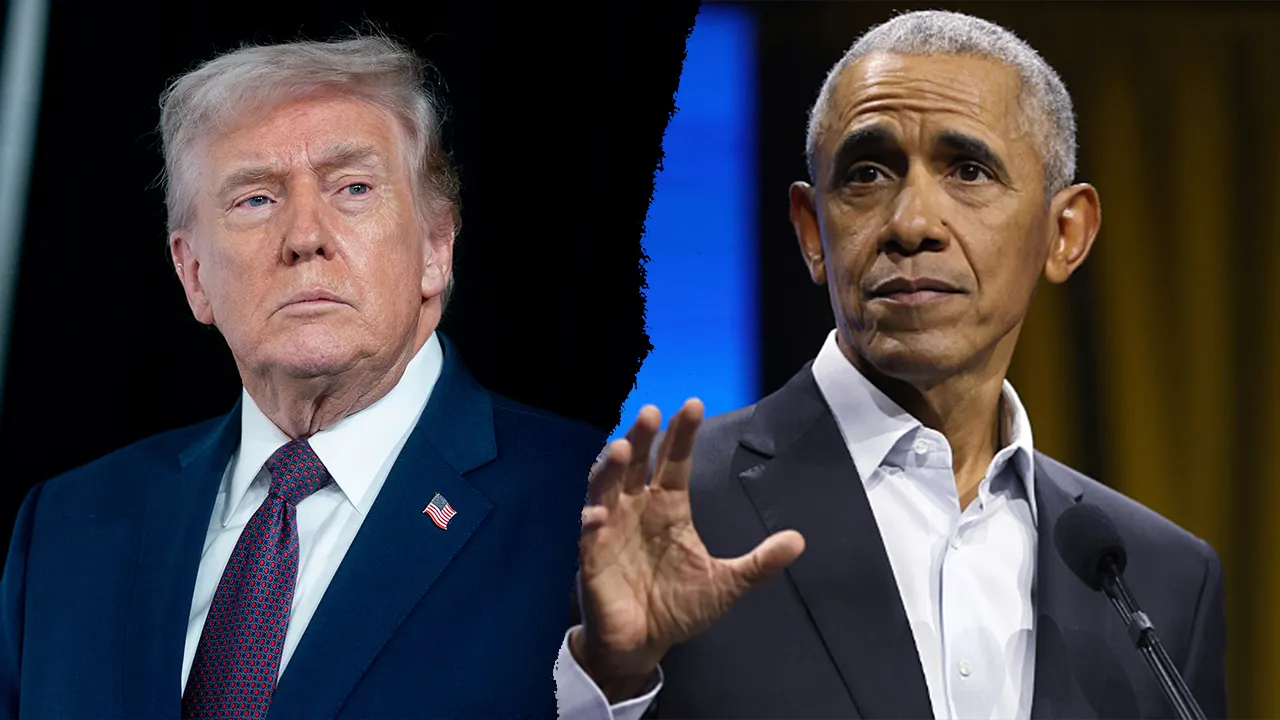
The current situation has drawn comparisons to President Barack Obama’s 2013 decision regarding Syria, when he warned that the use of chemical weapons would cross a “red line” but ultimately chose diplomacy over military strikes. Critics argued that Obama’s decision signaled weakness and emboldened adversaries, while supporters maintained it prevented a broader war and successfully removed significant portions of Syria’s chemical arsenal.
“They have challenged the president now to try to turn him into Obama in 2013 in Syria, rather than Donald Trump in 2025 in Iran,” said Rich Goldberg, a former Trump National Security Council official now at the Foundation for Defense of Democracies.
White House Press Secretary Karoline Leavitt emphasized that the president remains “committed to always pursuing diplomacy first,” but noted that “in order for diplomacy to work, of course, it takes two to tango, you need a willing partner to engage.” She added that the president maintains “a range of options on the table, and that includes the use of military force.”
Despite weeks of apparent delay in taking military action, foreign policy analysts suggest that such options remain viable. “If you just look at force movements and the president’s past statements of policy, you would have to bet on the likelihood that military action remains something that is coming,” Goldberg told Fox News Digital.
Michael Makovsky, president of the Jewish Institute for National Security of America, concurred: “I don’t think the window is closed. If the president doesn’t do something militarily, it would damage his credibility.”
U.S. officials have characterized the measured approach as reflecting caution rather than retreat, citing concerns about potential retaliation against American forces and uncertainty over who might lead Iran if the current regime were significantly weakened. Trump himself raised such questions in January, publicly expressing doubt about whether opposition figures could effectively govern after decades in exile.
Some analysts reject the notion that the administration has meaningfully slowed its military posture. “I don’t think they’ve paused action,” said Gregg Roman, executive director of the Middle East Forum. “The more assets that the president deploys to the theater gives the U.S. more maneuvering room, rather than less.”
As diplomatic efforts continue alongside military preparations, the administration faces the delicate task of maintaining credibility with both allies and adversaries while pursuing multiple tracks simultaneously. The outcome of Friday’s planned talks—if they proceed—could determine whether the crisis moves toward de-escalation or military confrontation.
Fact Checker
Verify the accuracy of this article using The Disinformation Commission analysis and real-time sources.

19 Comments
With the tensions in the region continuing to escalate, the stakes are high for these talks. Both sides will have to be willing to make concessions to find a mutually acceptable path forward on the nuclear and missile programs.
Absolutely. Compromise will be essential, even if it means both sides having to swallow some difficult political pills at home.
This is a high-stakes diplomatic game, with both military posturing and negotiation efforts in play. Trump will need to carefully calibrate his approach to avoid miscalculation and find a path to a negotiated solution.
The upcoming diplomatic summit in Istanbul will be a critical test of Trump’s Iran strategy. His administration will need to demonstrate a deft touch, combining tough rhetoric with pragmatic negotiating to achieve meaningful results.
The comparisons to Obama’s Syria decision are understandable, but the contexts are quite different. Trump seems to be trying a dual-track approach of military pressure and diplomatic engagement. Let’s see if it can yield better results.
Agreed, the situations are not directly comparable. Trump appears to be pursuing a more assertive strategy, though the ultimate outcome remains to be seen.
Interesting to see the venue change request from Iran. Speaks to the challenges in getting these talks off the ground. Trump will need to balance tough rhetoric with a pragmatic approach to broker a resolution.
It’s a delicate diplomatic dance between Trump and Iran. Military posturing and rhetoric need to be matched with substantive progress on the negotiating table. Let’s hope the Istanbul talks can make meaningful progress on the nuclear and missile issues.
Absolutely. Both sides will have to be willing to compromise and make concessions if they hope to reach an acceptable agreement.
The upcoming diplomatic summit in Istanbul will be a critical test of Trump’s Iran strategy. His administration will need to demonstrate a deft touch, combining tough rhetoric with pragmatic negotiating to achieve meaningful results.
Agreed. Trump’s team will need to show flexibility and a willingness to find common ground, even if it means making some difficult political trade-offs.
With the tensions in the region continuing to escalate, the stakes are high for these talks. Both sides will have to be willing to make concessions to find a mutually acceptable path forward on the nuclear and missile programs.
Shifting the venue from Istanbul to Oman is an interesting development. It could signal Iran’s desire for a more neutral setting, or perhaps concerns about the optics of meeting in Turkey. Either way, flexibility will be key to keeping the talks on track.
Good point. A neutral location may help create an environment more conducive to constructive dialogue between the parties.
It’s a delicate diplomatic dance between Trump and Iran. Military posturing and rhetoric need to be matched with substantive progress on the negotiating table. Let’s hope the Istanbul talks can make meaningful progress on the nuclear and missile issues.
Agreed. With so much at stake, both sides will need to show flexibility and compromise to reach an acceptable deal.
The comparisons to Obama’s Syria decision are understandable, but the contexts are quite different. Trump seems to be trying a dual-track approach of military pressure and diplomatic engagement. Let’s see if it can yield better results.
Interesting to see the venue change request from Iran. Speaks to the challenges in getting these talks off the ground. Trump will need to balance tough rhetoric with a pragmatic approach to broker a resolution.
You’re right, venue changes can signal underlying tensions. Flexibility and good-faith negotiations will be key to making progress on the thorny issues.