


Listen to the article
President Trump Renews Call for Release of Convicted Colorado Clerk Tina Peters
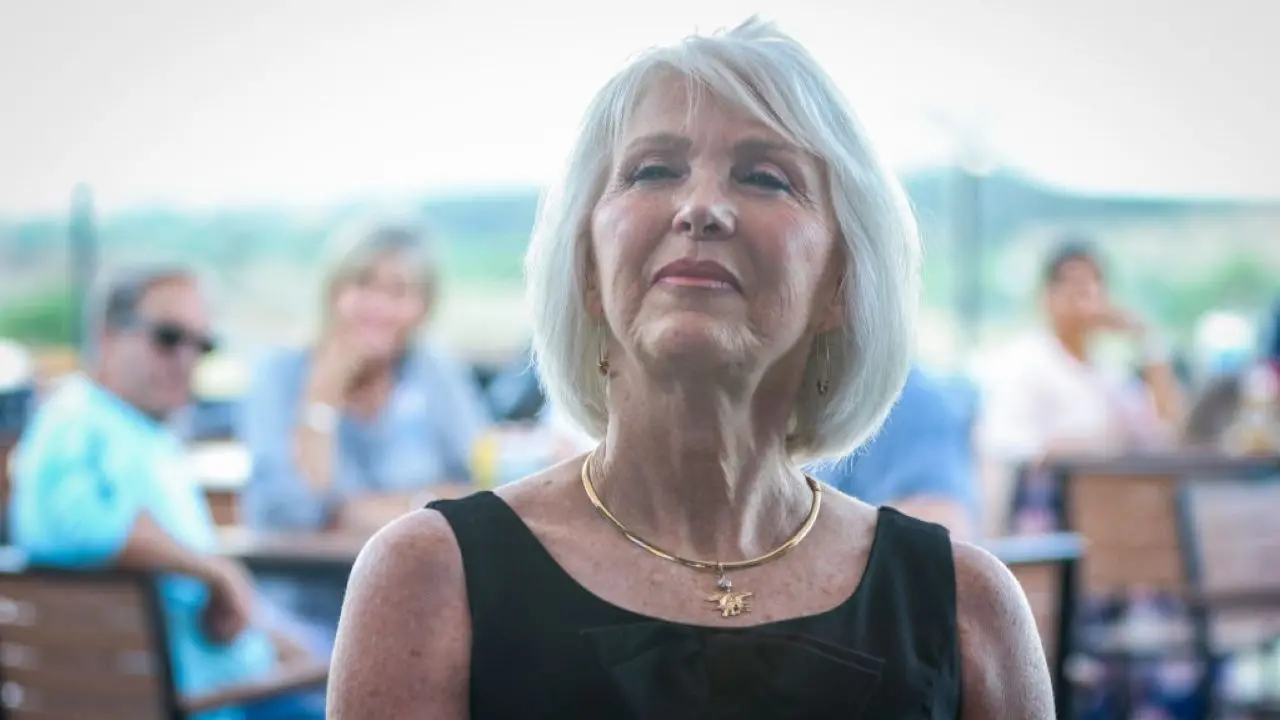
President Donald Trump has intensified his campaign to secure the release of Tina Peters, a former Colorado election clerk currently serving a nine-year prison sentence for her role in a 2021 voting system security breach in Mesa County.
On Wednesday, Trump took to Truth Social to demand Peters’ freedom, describing her as “a 73-year-old woman with cancer, given a nine-year death sentence in a Colorado prison by a Democrat governor, Jared Polis, and a corrupt political machine, for exposing fraud by the Democrats during the 2020 presidential election.” Trump concluded his post with the directive: “Again, free Tina!”
Peters, who is actually 70 years old, was convicted in August 2024 on seven charges, including four felonies. The charges stemmed from her actions following the 2020 presidential election when she allegedly breached county voting systems while searching for evidence to support Trump’s claims of widespread voter fraud.
Colorado Governor Jared Polis has acknowledged the severity of Peters’ sentence, noting on social media that her nine-year incarceration appears disproportionate compared to a former state lawmaker convicted of similar crimes who received only probation and community service. “Justice in Colorado and America needs to be applied evenly,” Polis wrote on X, formerly Twitter. “This is the context I am using as I consider cases like this that have sentencing disparities.”
However, Polis has established a clear condition for considering clemency: Peters must express remorse for her actions. “What she would have to show in any successful clemency application would be appropriate contrition, apology. That’s the kind of thing I would be looking for,” he told KUSA-TV.
Colorado Attorney General Phil Weiser, whose office assisted in Peters’ prosecution, emphasized that Peters has shown no signs of contrition. “Clemency should be based on remorse, rehabilitation, and extenuating circumstances — not on political influence, favor, or retribution,” said Weiser, a Democrat who is running to succeed the term-limited Polis as governor.
U.S. Senator Michael Bennet, D-Colorado, who is also campaigning for the governor’s seat, has similarly opposed granting Peters a pardon or sentence commutation. “Donald Trump may be seeking revenge on Colorado, but surrendering to his political pressure will not make our state stronger or safer,” Bennet stated.
The case has escalated beyond state politics into federal territory. Trump previously announced he was granting Peters a “full pardon,” though such action would have no legal effect on a state conviction, which falls under the governor’s clemency authority.
The dispute has triggered accusations of federal pressure tactics. Earlier this week, U.S. District Court Judge R. Brooke Jackson found that the Trump administration had threatened to withhold federal funding from Colorado’s Supplemental Nutrition Assistance Program (SNAP), characterizing it as potential retribution for the state’s unwillingness to pardon Peters.
“This larger context gives the game away; the pilot project seems to be about punishment and nothing more,” Judge Jackson wrote, ruling that the U.S. Department of Agriculture’s December threat violated the Spending Clause of the U.S. Constitution.
A separate lawsuit has also claimed the administration targeted a climate and weather research laboratory as additional retaliation against Colorado officials for Peters’ imprisonment.
The case highlights ongoing tensions over the 2020 election and raises questions about the appropriate boundaries of executive power, clemency considerations, and the intersection of political influence with the justice system. As Colorado officials resist what they characterize as political pressure, the controversy surrounding Peters’ case continues to reverberate through both state and national politics.
Fact Checker
Verify the accuracy of this article using The Disinformation Commission analysis and real-time sources.

10 Comments
This is a highly politicized case. While I don’t condone any illegal actions, the governor should carefully review the specifics and consider whether the sentence is proportionate to the crimes alleged. Clemency may be warranted, especially given her age and health concerns.
I agree that the severity of the sentence seems questionable. The legal process should be fair and impartial, regardless of political affiliations.
This is a complex issue with strong partisan views on both sides. I hope the governor can take an impartial look at the facts and determine if clemency is appropriate, without succumbing to political pressure.
Agreed. Clemency decisions should be based on the merits of the case, not on political considerations.
I’m curious to see how this case plays out. The allegations of voter fraud are serious, but the severity of the sentence also raises concerns. A fair and thorough review by the governor is essential.
Absolutely. Upholding the integrity of elections is critical, but the punishment should fit the crime. I hope the governor can find a balanced solution.
Voter fraud allegations are always a sensitive topic. I would hope that any review of this case focuses solely on the evidence and the application of the law, without undue political pressure. Transparency and due process are crucial.
Well said. The public deserves to have confidence in the electoral system, which requires a balanced and objective approach to investigating any alleged irregularities.
This is a highly charged political situation, but the governor should make the decision based on the facts and the law, not on partisan interests. Clemency may be warranted, but the public deserves a transparent and impartial process.
Well said. The governor should prioritize the rule of law and due process, rather than succumbing to political pressure.