


Listen to the article
In a provocative statement amid escalating Middle East tensions, former President Donald Trump called on Iranian citizens to overthrow their government as U.S. and Israeli forces carried out coordinated strikes against military targets inside Iran.
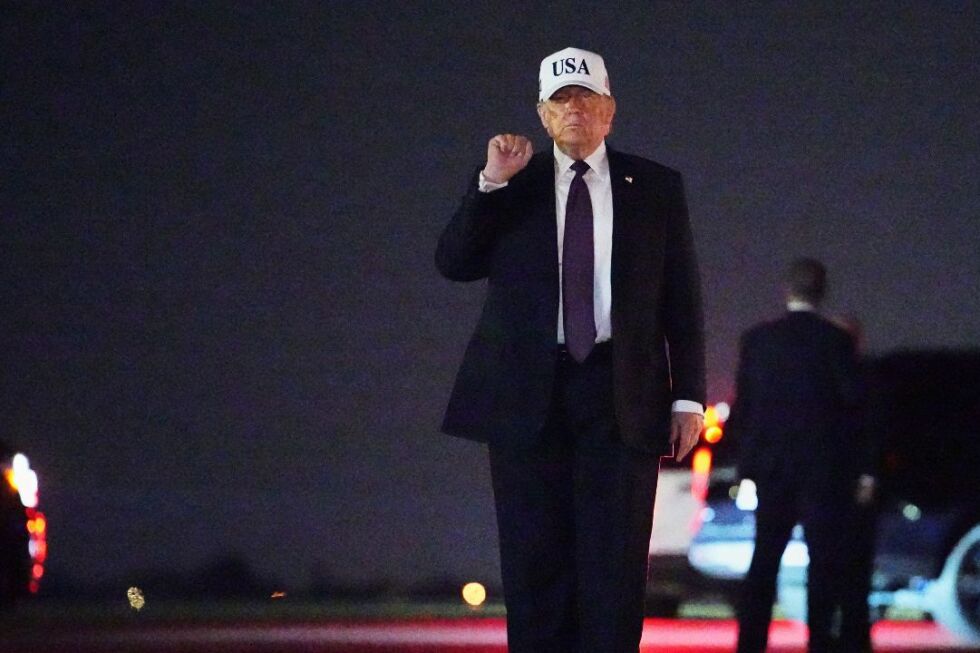
“The Iranian people should take over your government. We will help you,” Trump declared during a campaign rally in Michigan yesterday. His comments came just hours after American and Israeli warplanes targeted missile defense systems and other military installations across Iran in what officials described as a “proportional response” to recent Iranian aggression.
The military operation marks a significant escalation in the volatile region, where tensions have been building since Hamas’s October 7 attack on Israel and the subsequent war in Gaza. Iran’s direct missile attack on Israel earlier this month—which saw over 300 projectiles fired at Israeli territory—prompted this latest round of strikes.
Pentagon officials confirmed that the overnight operation specifically targeted Iran’s air defense infrastructure and missile production facilities. “These strikes were designed to degrade Iran’s ability to conduct similar attacks in the future while minimizing civilian casualties,” said Defense Secretary Lloyd Austin in a statement. Initial reports indicate no civilian areas were hit during the operation.
The Biden administration has walked a delicate line, attempting to support Israel while preventing full-scale regional war. A senior White House official, speaking on condition of anonymity, emphasized that the strikes were intended as a “clear message of deterrence” rather than an attempt to topple the Iranian regime.
Trump’s comments, however, appeared to go significantly further than official U.S. policy. His call for regime change represents the most direct American encouragement of internal Iranian opposition since the 1979 Islamic Revolution that brought the current theocratic government to power.
Middle East experts caution that such rhetoric could backfire. “Public American support for regime change often strengthens the Iranian government’s position internally, allowing them to paint opposition groups as Western puppets,” explained Dr. Vali Nasr, professor of International Affairs at Johns Hopkins University. “This type of statement may actually undermine genuine reform movements within Iran.”
Oil markets reacted swiftly to the military action, with Brent crude futures jumping nearly 4% in early trading before moderating slightly. Energy analysts warn that sustained conflict involving Iran could threaten global supply chains, particularly if the strategically crucial Strait of Hormuz becomes compromised.
Iranian officials condemned the attacks as “illegal aggression” and promised a “decisive response.” Foreign Minister Hossein Amir-Abdollahian stated that Iran would “defend its territorial integrity through all available means,” though he stopped short of specifying what retaliatory measures might follow.
Within Iran, state media downplayed the impact of the strikes while highlighting public demonstrations of support for the government. However, independent reports suggest the attacks successfully disabled several key military installations, including radar systems and command centers.
Israel, which has suffered multiple rounds of missile attacks from Iran and its proxies in recent months, welcomed the joint operation. Prime Minister Benjamin Netanyahu called it “a necessary step to restore deterrence and regional stability,” while emphasizing that Israel retains the right to defend itself against future threats.
The international community has responded with mixed reactions. European allies expressed understanding for the defensive nature of the strikes while urging all parties to exercise restraint. Russia and China, meanwhile, condemned the attacks as violations of Iranian sovereignty.
Congressional leaders were briefed shortly before the operation began. While many Republicans supported the military action, several questioned whether it went far enough, echoing Trump’s more aggressive stance. Democrats generally backed the administration’s approach while emphasizing the need to prevent further escalation.
As tensions remain high, regional observers warn that the risk of miscalculation has increased substantially. “We’re in uncharted territory,” noted Daniel Byman, senior fellow at the Center for Strategic and International Studies. “The danger now is that each side feels compelled to respond to maintain credibility, potentially creating a cycle of escalation that becomes difficult to control.”
Fact Checker
Verify the accuracy of this article using The Disinformation Commission analysis and real-time sources.

22 Comments
This is a very tense and volatile situation. All sides need to exercise extreme caution to avoid miscalculation and further escalation that could lead to a wider regional conflict.
Absolutely. The risks of a spiraling cycle of retaliation are high. Cooler heads must prevail, and diplomacy should be the priority to find a peaceful resolution.
The US-Israel strikes on Iranian targets are a concerning development. I hope both sides show restraint and avoid further escalation that could have devastating consequences for the region.
Proportional responses are one thing, but this seems like a significant escalation. De-escalation and diplomacy should be the priority to prevent a wider regional war.
Trump’s call for Iranian regime change is an irresponsible and destabilizing move. The Iranian people should be free to determine their own political future without external interference or pressure.
Exactly. Promoting domestic unrest is a risky strategy that could backfire. Any change in Iran’s government should come organically from within, not be imposed from the outside.
Trump’s call for Iranian regime change is a reckless and destabilizing move. The Iranian people should be free to determine their own political future without external interference or pressure.
Agreed. Promoting domestic unrest is a dangerous game that could backfire. Any change in Iran’s government should come organically from within, not be imposed from the outside.
While Iran’s missile attacks on Israel were provocative, responding with airstrikes risks sparking a dangerous cycle of retaliation. All sides should focus on diplomatic solutions to ease tensions.
Agreed. Diplomatic off-ramps are crucial at this stage to avoid a wider conflict. Further military actions could make the situation even more volatile.
This is a concerning escalation of tensions in the Middle East. I hope the situation can be de-escalated through diplomatic channels before it spirals further out of control. Civilians on all sides are at risk in any armed conflict.
I agree, military action often leads to unintended consequences. Diplomacy and finding common ground should be the priority to prevent a wider regional conflict.
Trump’s call for Iranians to overthrow their government is a provocative and dangerous move that could inflame the situation. Regime change should not be pursued through external pressure or military force.
Promoting domestic unrest is a risky strategy that could backfire. Any change in Iran’s government should come organically from the Iranian people, not foreign interference.
This is a delicate and dangerous situation. I hope all parties show restraint and work through diplomatic channels to deescalate tensions before the region descends into full-blown conflict.
Agreed. The risks of miscalculation and unintended escalation are high. Cooler heads must prevail to prevent a wider regional war.
The US-Israel strikes on Iran are a significant escalation. While Iran’s aggression is concerning, responding with military force risks sparking a broader regional conflagration that would be catastrophic.
Exactly. De-escalation through diplomacy should be the top priority now. Further military actions could make the situation even more volatile and dangerous for all involved.
Regime change rhetoric from Trump is unhelpful and could backfire. The Iranian people should be allowed to determine their own political future without external interference or pressure.
Exactly. Imposing change from the outside rarely works well. Any transition in Iran should come from within through peaceful, democratic processes.
The US-Israel strikes on Iran are a dangerous escalation. While Iran’s actions are concerning, responding with military force risks sparking a broader regional conflict that would be catastrophic for all involved.
I agree completely. De-escalation through diplomatic channels should be the top priority now. Further military actions could make the situation even more volatile and dangerous.