


Listen to the article
Trump’s Legislative Agenda Faces Congressional Hurdles After State of the Union
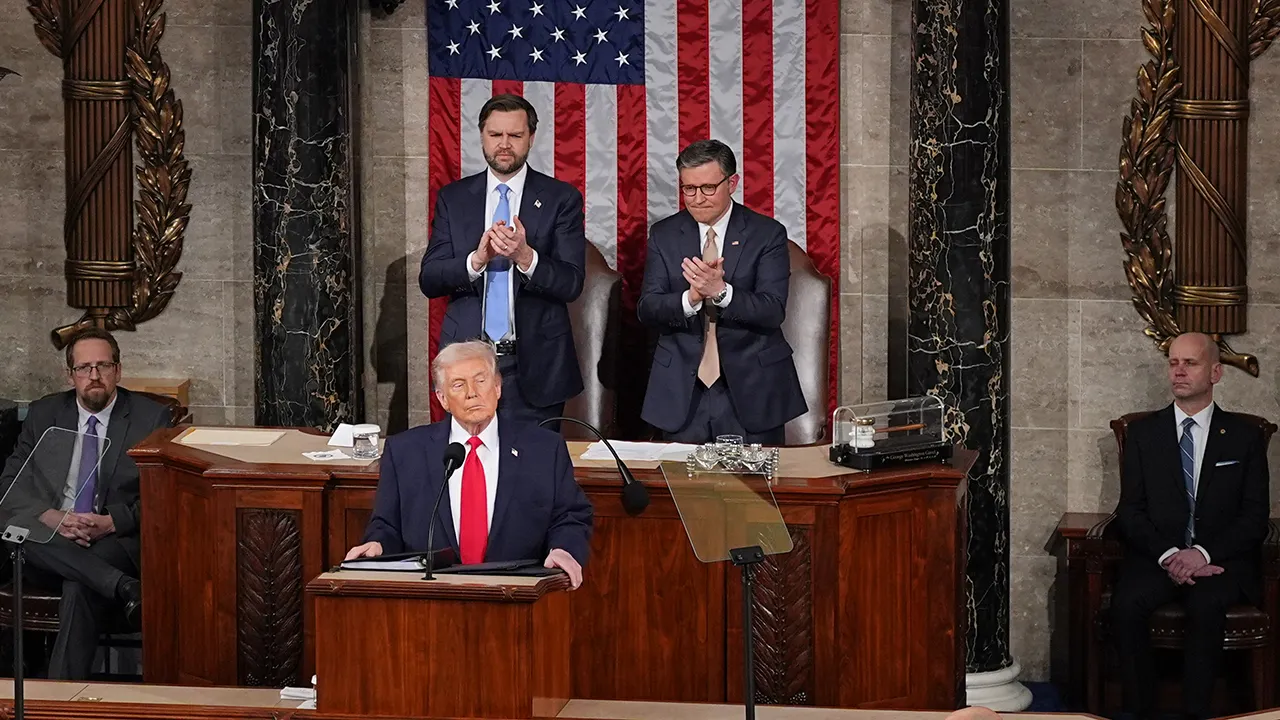
In his recent State of the Union address, President Donald Trump outlined several key legislative priorities while simultaneously attempting to limit congressional authority on tariffs, setting up potential conflicts with lawmakers—even those within his own party.
The President made two significant requests of Congress: passage of the SAVE Act, which would require proof of citizenship for voting in federal elections, and approval of legislation banning members of Congress from trading stocks. He also delivered a clear message regarding tariffs, declaring that “congressional action will not be necessary” for his new trade policies.
Trump’s stance on tariffs represents a direct challenge to constitutional powers. While the Constitution explicitly grants Congress authority over tariffs—a position recently upheld by the Supreme Court—Trump has proceeded with implementing new tariffs on imports from all nations, citing different legal justifications.
This approach has created friction with some House Republicans whose districts are feeling economic impacts from the tariffs. These lawmakers recently voted to eliminate a special rule that had blocked members from unwinding tariffs for a year, and subsequently approved a plan to reverse tariffs on Canadian goods.
“Like most presidents, Trump wants to control legislation. That includes precluding Congress from tampering with his tariffs,” noted a congressional observer. However, many Republican lawmakers facing reelection are receiving pressure from constituents concerned about tariff impacts on local economies.
Regarding the SAVE Act, which aligns with Trump’s narrative on illegal immigration and voter fraud, the House has already approved the legislation. The challenge now lies in the Senate, where Republicans have reached the 50-vote threshold of support but face the significant hurdle of the 60-vote requirement to overcome a filibuster.
Despite some calls to alter Senate rules, Senate Majority Leader John Thune, R-S.D., has consistently resisted changes to filibuster procedures. “The talking filibuster issue is one on which there is not a unified Republican conference,” Thune stated, adding that there isn’t sufficient support within the party to alter current rules.
Some Republican senators, including Mike Lee of Utah and Ted Cruz of Texas, have advocated for a “talking filibuster” that would require senators to actually hold the floor for hours rather than silently object. However, this proposal lacks unanimous GOP support.
The divide has reportedly created tension between House and Senate Republicans. Senate Republicans, particularly those facing difficult reelection campaigns, are reluctant to eliminate procedural protections that could force them to cast politically dangerous votes on contentious amendments.
Trump’s call for prohibiting lawmakers from trading stocks received bipartisan support during his address, with even Senator Elizabeth Warren, D-Mass., standing to applaud. House Speaker Mike Johnson indicated that leadership is trying to “move the bill as aggressively and as quickly as we can,” but acknowledged they currently lack the votes needed for passage.
The Heritage Foundation, a conservative think tank, has challenged Trump’s claims of widespread election fraud. Their study found that actual instances of voter fraud are extremely rare—Pennsylvania, a key swing state, has documented only 39 cases over the past three decades.
As the old political adage goes, the president “proposes” and Congress “disposes.” Even with Republican majorities in both chambers, the institutional dynamics and political realities of Congress mean that Trump’s legislative agenda faces significant procedural and political obstacles.
Whether these aspirational policy requests will translate into actual legislation remains to be seen, particularly as lawmakers balance their support for the President with their own electoral concerns and constitutional responsibilities.
Fact Checker
Verify the accuracy of this article using The Disinformation Commission analysis and real-time sources.

20 Comments
Banning members of Congress from trading stocks seems like a reasonable reform to address conflicts of interest. However, the details and enforcement mechanism will be crucial. Curious to see if this proposal can gain bipartisan traction in a divided Congress.
Overall, Trump’s State of the Union proposals seem to set up some major clashes with Congress, both on election laws and trade policy. Lawmakers will need to carefully scrutinize these initiatives and defend their constitutional responsibilities.
Trump’s aggressive stance on tariffs sets up an interesting separation of powers clash with Congress. While the President has some flexibility, the Constitution is clear that trade policy is a congressional responsibility. Will lawmakers assert their authority, or will Trump prevail?
You’re right, this sets up a potential constitutional showdown. Trump may claim legal justifications, but the Supreme Court has upheld Congress’s tariff powers. It will be important to see how lawmakers, including Republicans, respond to defend their authority.
The SAVE Act proposal to require proof of citizenship for federal voting is controversial and likely to face strong opposition. While election integrity is important, such a measure could disenfranchise many eligible voters. Congress will need to carefully weigh the impacts.
I agree, the SAVE Act raises significant concerns around voter access and rights. Implementing strict proof of citizenship requirements could create barriers for many citizens. Congress will need to closely examine the implications before considering such legislation.
The SAVE Act and stock trading ban proposals are politically charged. I’m curious to see if Trump can build enough bipartisan support to get them through Congress, or if they’ll face significant opposition.
Given the partisan divides in Congress, those proposals may face an uphill battle. But the tariff issue could be an even bigger flashpoint between the legislative and executive branches.
Trump’s agenda seems to put him at odds with Congress on several fronts – the SAVE Act, stock trading ban, and his unilateral tariff actions. This could lead to a messy political battle in the coming months.
Agreed, the separation of powers is being tested here. It will be critical to see how the branches of government navigate these conflicts over the legislative process and executive authority.
The SAVE Act and stock trading bans for Congress are two very different legislative proposals. One raises concerns about voter rights, the other about conflicts of interest. Congress will have to carefully weigh the merits and implications of each idea.
Tariffs are a complex issue – while they may protect some domestic industries, they can also hurt consumers and trading partners. Trump’s stance seems to challenge congressional authority, which could spark a separation of powers dispute.
You’re right, the tariff issue pits the executive branch against Congress. It will be a test of how the system of checks and balances plays out on trade policy.
The SAVE Act seems like a reasonable measure to ensure the integrity of federal elections, though its implementation could be tricky. Curious to see how Congress responds to Trump’s push for it and the stock trading ban.
Agreed, election security is critical but these proposals could face legal and political hurdles. It will be interesting to see how the debate unfolds.
Interesting to see Trump doubling down on his signature trade policies despite pushback from some in his own party. The SAVE Act also raises thorny questions around voting rights and election integrity.
Trump’s aggressive moves on tariffs could create economic disruption in some congressional districts. That may spur more Republicans to join Democrats in challenging the President’s actions and asserting Congress’s constitutional role on trade policy.
Absolutely, the economic impacts in GOP-held districts could motivate more Republican lawmakers to resist Trump’s tariff agenda and defend Congress’s authority. It will be an interesting dynamic to watch play out.
Interesting to see Trump trying to limit Congress’s authority on tariffs. While he may claim different legal justifications, the Constitution is clear that trade policy is a congressional power. I wonder how lawmakers, including Republicans, will respond to this challenge.
You raise a good point. The Supreme Court has upheld Congress’s authority over tariffs, so Trump’s approach could face legal scrutiny. It will be important to see how the legislative branch reacts and asserts its constitutional role.