


Listen to the article
In a significant shift from diplomatic tradition, President Donald Trump has deployed military leaders to spearhead critical international negotiations, placing top military officials at the forefront of delicate talks with Iran and Russia.
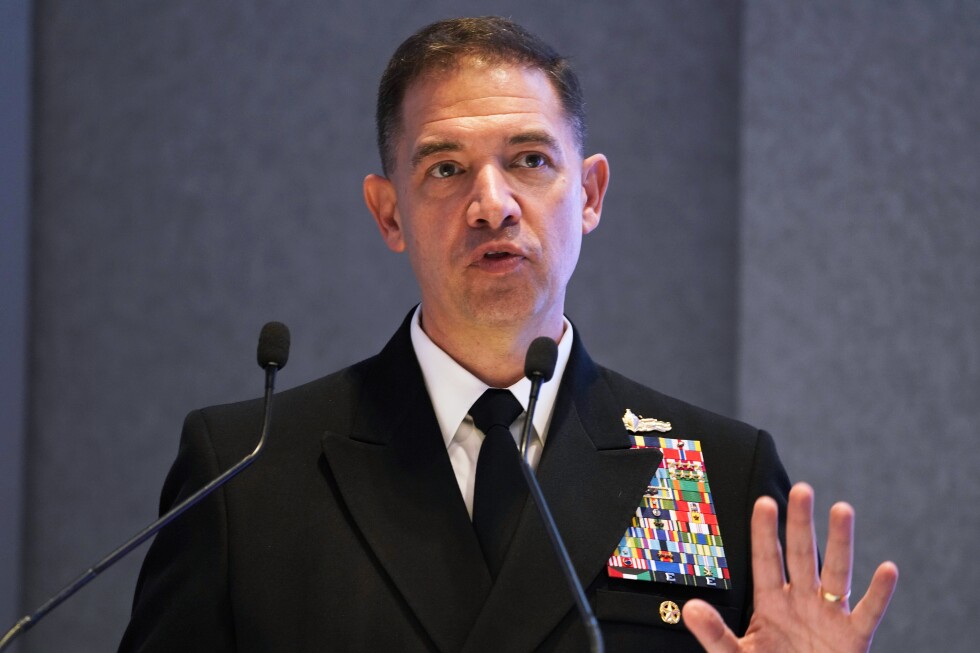
Last Friday, Admiral Brad Cooper, commander of U.S. Central Command, participated in indirect U.S.-Iran negotiations in Oman, appearing in his formal dress uniform. His presence served as a visible reminder of America’s military capabilities in the region as tensions continue to simmer between the two nations.
Meanwhile, Army Secretary Dan Driscoll has taken on a central role in Russia-Ukraine peace negotiations, including recent talks in Abu Dhabi. Sources familiar with the process indicate Driscoll has established himself as a valuable liaison between Ukrainian officials and the Trump administration’s diplomatic team.
Both sets of negotiations are being overseen by special envoy Steve Witkoff and Trump’s son-in-law Jared Kushner, highlighting the administration’s preference for trusted insiders and unconventional diplomatic approaches.
Trump characterized the Iran talks as “very good” and indicated more discussions would follow early next week. However, he issued a stark warning to Tehran, stating that failure to reach an agreement on its nuclear program would have “very steep” consequences. This rhetoric aligns with Trump’s previous threats to use military force against Iran, underscored by his deployment of the USS Abraham Lincoln carrier group to the region during Tehran’s crackdown on domestic protests.
The administration’s diplomatic strategy has drawn mixed reactions from foreign policy experts. Elisa Ewers, who served in national security roles during the Bush and Obama administrations, criticized what she sees as a devaluation of traditional diplomatic expertise. “It often takes an enormous amount of time, investment and hard work to get to the point where you can say diplomacy has succeeded,” Ewers remarked, suggesting the administration’s approach overlooks diplomatic nuance.
Others view these appointments more pragmatically. Eliot Cohen, a former State Department counselor under George W. Bush, pointed to historical precedents where American generals participated in Cold War arms control negotiations with the Soviet Union. “There’s a long tradition of American presidents using unusual people as emissaries if they trust them and think they can deliver the message,” Cohen noted.
Michael O’Hanlon, a defense analyst at the Brookings Institution, interpreted Admiral Cooper’s presence as deliberately symbolic. “Including the CENTCOM commander is quite unusual and seems intended to send a message more than to add to the heft of the negotiating team,” O’Hanlon observed, though he expressed skepticism about whether this approach would significantly influence Iran’s nuclear ambitions.
Michael Singh, who served as senior director for the Middle East at the National Security Council under Bush, offered a more practical explanation, emphasizing Cooper’s regional expertise. Unlike the generalist backgrounds of Witkoff and Kushner, Cooper brings specialized knowledge of Iran’s nuclear and military capabilities, which he detailed extensively during his nomination hearing in June, shortly after U.S. strikes on Iranian nuclear facilities.
In the Russia-Ukraine negotiations, Driscoll’s role has evolved since November, when he was unexpectedly assigned to the talks. His military background as a former Army officer who served in Iraq, combined with his current position as Army Secretary, has apparently facilitated effective communication with Ukrainian officials, including President Volodymyr Zelenskyy.
During the recent Abu Dhabi sessions, U.S. General Alexus Grynkewich, commander of U.S. and NATO forces in Europe, joined Driscoll. Their joint efforts helped reestablish high-level military-to-military dialogue between the United States and Russia for the first time in four years, which a U.S. military statement described as providing “consistent military-to-military contact as the parties continue to work towards a lasting peace.”
This unconventional diplomatic strategy reflects the Trump administration’s broader approach to foreign policy, which often bypasses traditional State Department channels in favor of trusted advisors and military leaders who can project both expertise and strength at the negotiating table.
Fact Checker
Verify the accuracy of this article using The Disinformation Commission analysis and real-time sources.

14 Comments
Trump’s move to use military leaders for Iran and Ukraine negotiations is a bold and unconventional strategy. It signals a shift towards a more aggressive, capability-focused diplomatic posture.
This approach could bring more muscle to the table, but also raises concerns about over-militarizing foreign policy and the potential for further escalation of conflicts.
This is an unconventional approach that could shake up the diplomatic landscape. Using military leaders to spearhead talks with Iran and Russia/Ukraine is an unexpected tactic from the Trump administration.
It remains to be seen if the involvement of military commanders will help or hinder progress on these complex geopolitical issues. Their participation could lend gravitas, but also escalate confrontation.
Leveraging military commanders for high-stakes diplomatic efforts on Iran and Ukraine is an unexpected tactic from the Trump administration. It reflects their preference for unconventional approaches and a desire for tangible results.
While this could add credibility and leverage, it also carries risks of exacerbating tensions and undermining traditional diplomatic channels. It will be interesting to see how this plays out.
Trump’s shift towards using military officials for diplomatic efforts is a bold move. It could add credibility and leverage, but also raises concerns about over-militarizing foreign policy.
Tapping military leaders for sensitive negotiations like Iran and Ukraine is a risky strategy. It will be interesting to see if it yields results or creates further tensions.
Placing military leaders at the forefront of these negotiations is an unusual strategy. It seems Trump is looking to bring a more assertive, capability-focused approach to delicate diplomatic challenges.
I’m curious to see how this plays out. Military leaders may be able to bring a unique perspective, but diplomacy still requires nuance and relationship-building that the military is not always known for.
Deploying military leaders for sensitive international negotiations is a significant departure from traditional diplomacy. Trump appears to be betting that a more assertive, capability-focused approach can yield results.
Inserting military officials into these delicate talks carries risks of further inflaming tensions. However, it could also provide a new dynamic and leverage that conventional diplomacy has failed to achieve.
Interesting move by Trump to deploy military leaders for diplomatic efforts. It reflects his unconventional approach and desire for results-oriented negotiations on critical issues like Iran and Ukraine.
Using military officials in this capacity could bring a different dynamic to the talks, leveraging their credibility and connections. But it also carries risks of escalating tensions.