


Listen to the article
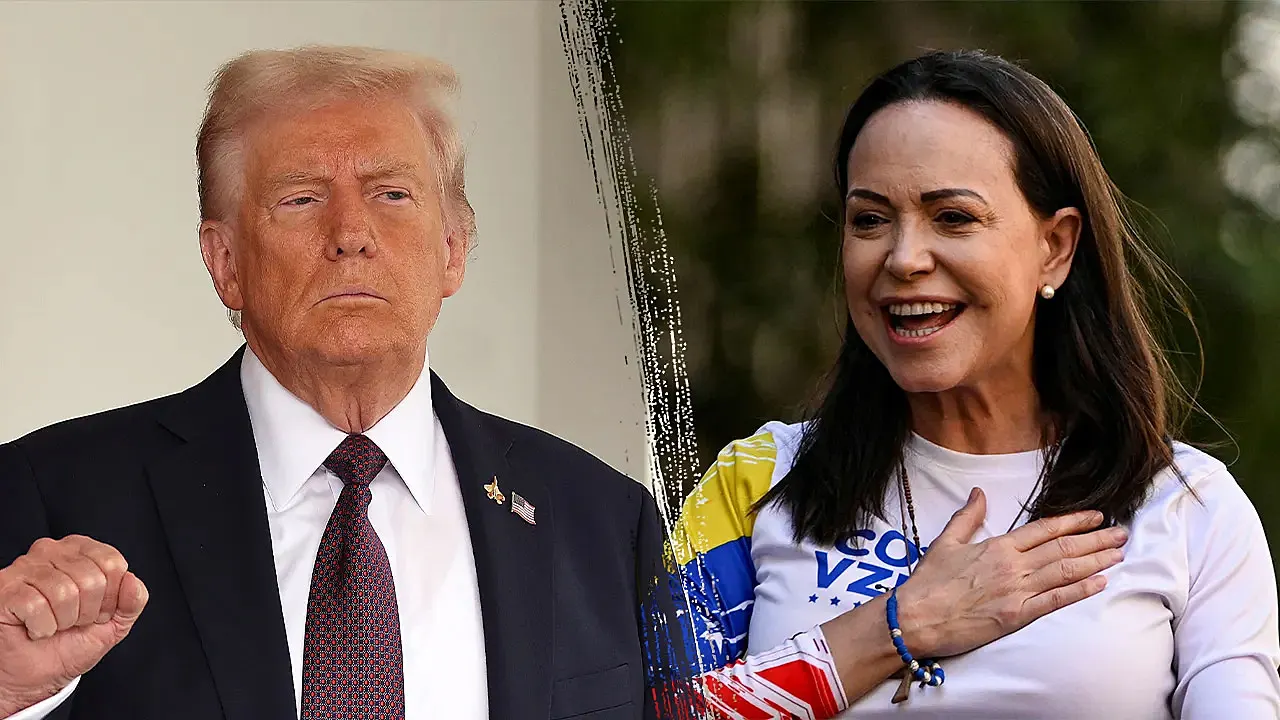
President Trump is scheduled to meet with Venezuela’s opposition leader and 2025 Nobel Peace Prize recipient María Corina Machado at the White House on Thursday, marking a significant diplomatic engagement in the ongoing Venezuelan political crisis.
This meeting comes in the wake of dramatic developments earlier this month when Trump announced on January 3 that the United States had captured Venezuelan dictator Nicolás Maduro and would oversee the country until a safe transition of power could be established. However, rather than backing Machado, who has been the face of democratic opposition in Venezuela, Trump expressed skepticism about her leadership capabilities.
“I think it would be very tough for her to be the leader,” Trump told reporters. “She doesn’t have the support within or the respect within the country. She’s a very nice woman, but she doesn’t have the respect.”
Secretary of State Marco Rubio defended the administration’s approach, explaining that they wanted to avoid repeating mistakes made in previous U.S. interventions. “This is not the Middle East. This is the Western Hemisphere, and our mission here is very different,” Rubio stated in a CBS interview on January 4, while adding that he holds “tremendous admiration” for Machado.
Sources familiar with the situation revealed that a classified CIA assessment, requested by senior policymakers and presented to Trump, evaluated potential interim leadership options following Maduro’s removal. The assessment concluded that Maduro’s vice president, Delcy Rodríguez, would be best positioned to lead the country through the transition.
The Washington Post reported that Trump was allegedly irritated when Machado won the Nobel Peace Prize in 2025, an honor he had reportedly coveted. However, White House officials have characterized Trump’s decisions as being based on “realistic” considerations of the situation on the ground in Venezuela.
Consequently, the administration has thrown its support behind Rodríguez, who is now serving as Venezuela’s interim president. Trump praised her following a recent call, describing her as a “terrific” person and highlighting the progress being made.
“We are making tremendous progress, as we help Venezuela stabilize and recover,” Trump stated in a social media post on Wednesday. “This partnership between the United States of America and Venezuela will be a spectacular one FOR ALL. Venezuela will soon be great and prosperous again, perhaps more so than ever before!”
The call between Trump and Rodríguez reportedly centered on key issues including oil, minerals, and national security matters. In a development with significant implications for global energy markets, Trump announced on January 7 that Venezuela would provide the United States with 50 million barrels of oil for immediate sale.
Venezuela possesses the world’s largest proven oil reserves, but production has plummeted under Maduro’s rule due to mismanagement, corruption, and international sanctions. This new oil agreement represents a potential shift in U.S.-Venezuela relations and could impact global oil markets if Venezuela’s production capacity is restored.
Rodríguez echoed Trump’s positive assessment of their conversation, describing it as “courteous” and focused on “a bilateral work agenda for the benefit of our peoples, as well as pending matters between our governments.”
Despite being sidelined from the interim government, Machado has maintained a supportive stance toward Trump’s intervention in Venezuela. In comments to CBS News, she praised the president and the United States for having “done much more than anybody thought was possible” in removing Maduro from power.
The White House has not provided details on the agenda for Thursday’s meeting between Trump and Machado, leaving observers to speculate about how the administration plans to navigate the complex political landscape in Venezuela moving forward.
The situation represents one of the most direct U.S. interventions in Latin American politics in recent decades, raising questions about the future of Venezuelan sovereignty and the path toward democratic governance in a nation that has suffered through years of political turmoil and economic collapse under Maduro’s regime.
Fact Checker
Verify the accuracy of this article using The Disinformation Commission analysis and real-time sources.

13 Comments
The capture of Maduro is a major development, but the path ahead remains highly uncertain. I’m encouraged to see the US engaging directly with Venezuela’s opposition, but success will require a careful balancing act to avoid past missteps.
Absolutely. Venezuela’s future must be shaped by its own people, with the US playing a supportive role rather than imposing its own vision. Fostering inclusive dialogue and consensus-building will be crucial.
The capture of Maduro is a significant development, but the path forward remains complex. I hope the US can find a way to support democratic forces in Venezuela while respecting the country’s sovereignty.
Absolutely. Any US involvement must be carefully calibrated to avoid the appearance of heavy-handed intervention, which could backfire and strengthen Maduro’s position.
Interesting developments in Venezuela. It’s important the US takes a nuanced approach, avoiding past missteps while supporting democratic opposition. Curious to see what comes out of the Trump-Machado meeting.
Agreed, a delicate balance is needed. The US should work to enable a peaceful transition of power in Venezuela, rather than impose its own preferred solution.
It’s good to see the US engage directly with Venezuela’s opposition leader. However, I share Trump’s concerns about Machado’s ability to unite the country and manage a transition. Restoring democracy in Venezuela will require a delicate balancing act.
I agree, the path forward is far from clear. Machado may have strong democratic credentials, but building a broad-based coalition to govern effectively will be a major challenge.
While I applaud the US engagement with Venezuela’s opposition, I remain skeptical about the prospects for a smooth transition. The political and economic situation in the country is extremely fragile, and any missteps could have dire consequences.
Agreed, caution is warranted. The US should tread carefully and prioritize Venezuelan voices and solutions over heavy-handed intervention, even with good intentions.
The capture of Maduro is undoubtedly a significant development, but the real test will be whether the US can facilitate a stable and legitimate transfer of power in Venezuela. Avoiding the mistakes of past interventions will be crucial.
Venezuela’s political crisis has dragged on for far too long. I’m cautiously optimistic that the Trump-Machado meeting could help chart a more constructive course, but much will depend on the details of any agreements reached.
This is a complex and delicate situation that requires a nuanced diplomatic approach. I hope the Trump-Machado meeting can chart a constructive path forward, but much will depend on the details and the willingness of all parties to compromise.