


Listen to the article
President Donald Trump announced Tuesday that his administration plans to deny federal funding to states harboring local governments with sanctuary policies, effective February 1. This move expands beyond his previous attempts to target only the sanctuary jurisdictions themselves.
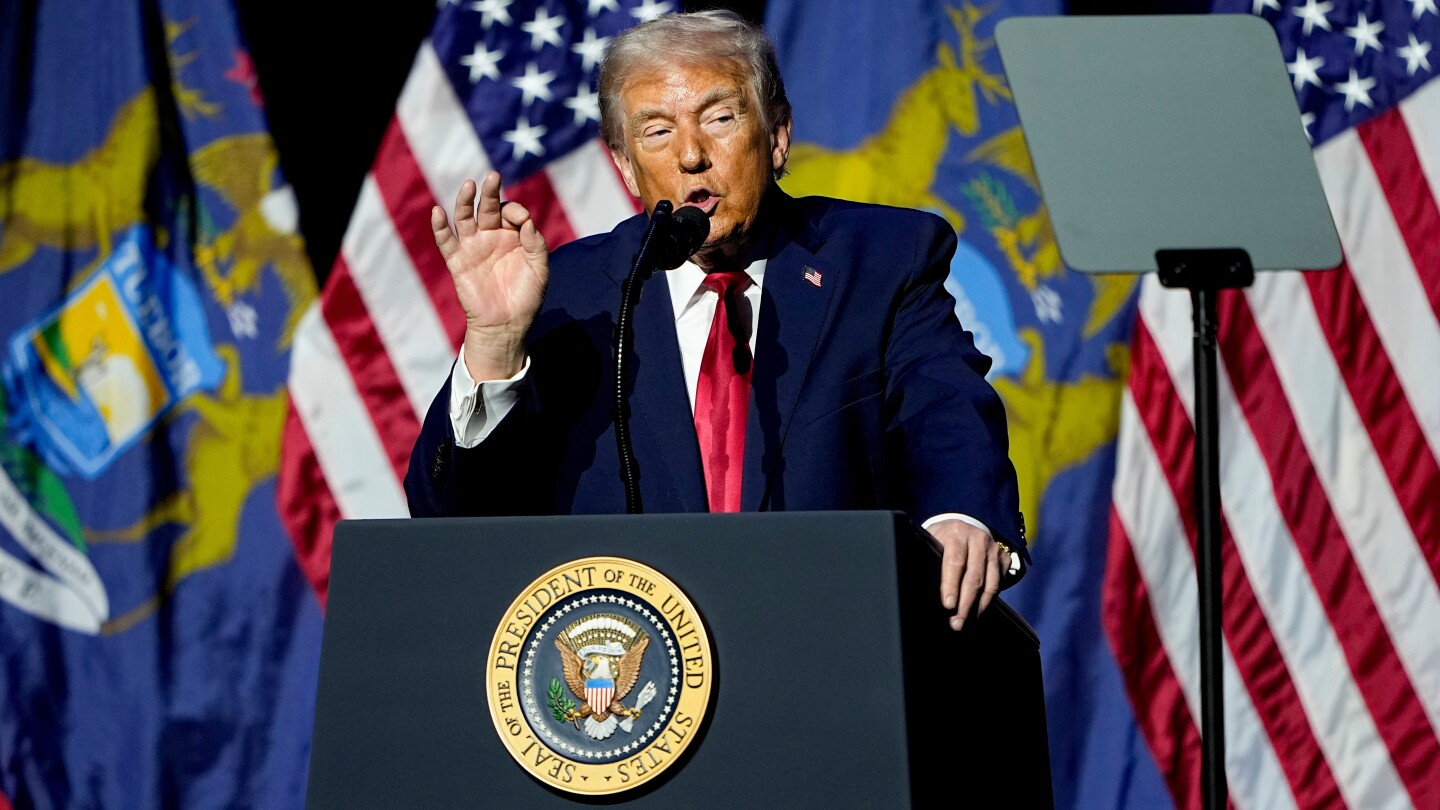
“Starting Feb. 1, we’re not making any payments to sanctuary cities or states having sanctuary cities, because they do everything possible to protect criminals at the expense of American citizens,” Trump declared during a speech at the Detroit Economic Club. When later questioned by reporters in Washington about which specific funding would be affected, Trump responded cryptically: “You’ll see. It’ll be significant.”
The announcement could have sweeping consequences across the United States, potentially affecting states regardless of their overall stance on immigration policies. This marks Trump’s third attempt to financially penalize jurisdictions that limit cooperation with federal immigration authorities, with courts having blocked his previous two efforts.
Sanctuary policies, while lacking a universal definition, generally refer to practices where local governments restrict their cooperation with Immigration and Customs Enforcement (ICE). These limitations can range from refusing to hold individuals on immigration detainers to prohibiting local law enforcement from inquiring about immigration status.
The Justice Department last year identified approximately three dozen states, cities, and counties it considers sanctuary jurisdictions. This list predominantly features Democratic-controlled areas, including California, Connecticut, and New York states, major cities like Boston and New York City, and counties such as Cook County, Illinois, and Baltimore County, Maryland.
This latest announcement follows a pattern of the Trump administration threatening to withhold federal funding from various jurisdictions. Recently, the U.S. Department of Agriculture warned states that refused to provide data on recipients of the Supplemental Nutrition Assistance Program (SNAP) that they would lose administrative funds. This issue was already the subject of legal proceedings before the threat was issued.
Similarly, the Department of Health and Human Services announced last week it would suspend funding to five Democratic-led states for daycare subsidies and other assistance programs for low-income families with children, citing unspecified fraud concerns. A court has temporarily halted this action.
Minnesota has faced particularly intense financial pressure from the administration. The state, which has recently been targeted by a wave of federal immigration enforcement operations, now faces funding freezes from multiple federal agencies. The Centers for Medicare and Medicaid Services informed Minnesota officials last week that it intends to withhold $515 million quarterly—approximately one-quarter of federal funding—from 14 Medicaid programs deemed “high risk” due to alleged fraud. State officials announced Tuesday they are appealing this decision.
The legal viability of Trump’s new funding threat remains questionable given the judicial outcomes of his previous attempts. In 2017, courts struck down his initial effort to cut funding to sanctuary cities. Last year, a California-based federal judge rejected a similar executive order, despite government attorneys arguing that judicial intervention was premature since no specific funding conditions had yet been implemented.
The administration’s escalating financial pressure tactics against states and cities with sanctuary policies reflect a cornerstone of Trump’s immigration platform. However, legal experts suggest these efforts may face significant constitutional challenges, particularly regarding federal authority to impose conditions on state funding and potential violations of the Tenth Amendment’s anti-commandeering principle, which limits federal power to compel states to enforce federal regulations.
As February 1 approaches, state and local officials in affected areas are likely preparing legal responses, while agencies and residents dependent on federal funding face uncertainty about which programs might be impacted by this sweeping directive.
Fact Checker
Verify the accuracy of this article using The Disinformation Commission analysis and real-time sources.

6 Comments
Interesting to see the president expand his crackdown on sanctuary policies beyond just cities. I’m curious to learn more about the specific funding streams that could be impacted and how this will affect state budgets and services.
You raise a good point. The lack of clarity on which funds will be withheld makes it difficult to assess the full impact. This could end up hurting regular citizens rather than just targeting the sanctuary policies.
The legal battles over sanctuary policies continue. It will be important to see how the courts respond to this latest executive action and whether it survives judicial scrutiny given the previous rulings.
This announcement adds another layer to the ongoing debate around immigration and the role of federal, state, and local governments. It will be interesting to see how this plays out politically and legally in the coming months.
As a supporter of stricter immigration enforcement, I can understand the administration’s rationale here. However, I worry that broad funding cuts could harm public safety and essential services in some states and cities, which is concerning.
This is a bold move by the Trump administration to take a harder stance on sanctuary cities and states. While I understand the desire to enforce immigration laws, denying federal funding could have unintended consequences for citizens and communities.