


Listen to the article
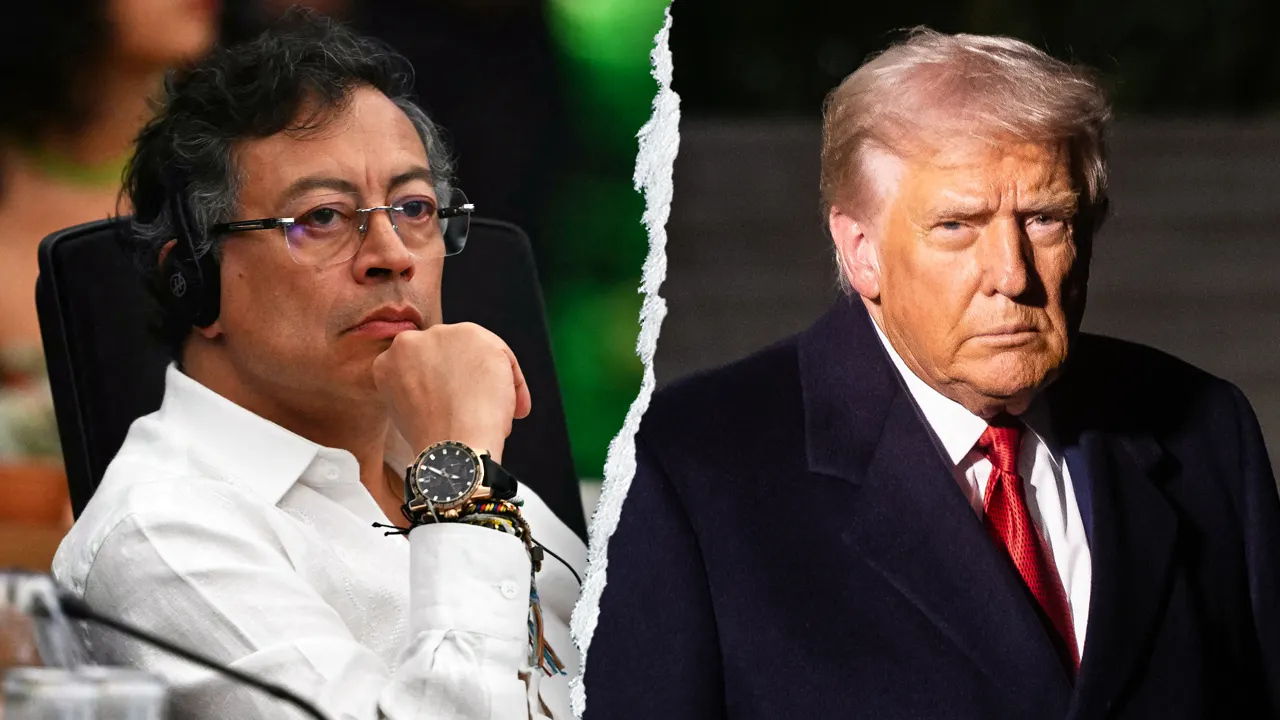
President Trump issued a stark warning to Colombian President Gustavo Petro on Wednesday, suggesting the South American leader could face consequences similar to those directed at Venezuelan President Nicolás Maduro amid escalating tensions over drug trafficking and U.S. military operations in the Caribbean.
“He’s been fairly hostile to the United States,” Trump said during remarks to reporters in the Oval Office. “He’s going to have himself some big problems if he doesn’t wise up. He better wise up or he’ll be next. I hope he’s listening. He’s going to be next.”
The comments represent a significant escalation in diplomatic tensions between the United States and Colombia, traditionally one of Washington’s strongest allies in Latin America. Relations have deteriorated since Petro, Colombia’s first leftist president, took office in 2022.
Trump’s warning comes as the U.S. has intensified military operations targeting suspected drug trafficking vessels in Caribbean waters near Venezuela. These operations have drawn fierce criticism from Petro, who has called Trump a “barbarian” and recently ordered Colombian security forces to stop sharing intelligence with the U.S. until Washington halts the strikes.
The Colombian president has claimed that many casualties of these operations are “poor fishermen” who transport cocaine out of necessity. “The U.S. is mistaking its allies. Its allies cannot be the narcos,” Petro wrote on social media Sunday.
Trump dismissed these concerns, emphasizing Colombia’s role in drug production. “I haven’t given him a lot of thought,” Trump said when asked whether he had spoken with Petro, whom he has previously labeled an “illegal drug dealer.”
The confrontation highlights Trump’s renewed focus on drug trafficking from Latin America. Colombia remains the world’s largest producer of cocaine, despite billions in U.S. aid over decades aimed at combating narcotics production and trafficking. The country has traditionally been a crucial security partner for the United States in the region.
Petro further inflamed tensions by criticizing Trump’s recent pardon of former Honduran President Juan Orlando Hernández, who was serving a 45-year sentence in the U.S. for facilitating cocaine shipments into the country. The Colombian leader suggested this action undermined U.S. credibility in the fight against narcotics.
The diplomatic row occurs against the backdrop of changing regional dynamics in Latin America, where several left-leaning governments have come to power in recent years, complicating Washington’s traditional approach to the region. Colombia’s strategic importance to the U.S. extends beyond drug control to include regional security, trade, and countering Chinese and Russian influence in the hemisphere.
Analysts note that Trump’s threatening language could further strain bilateral relations at a time when cooperation on shared challenges like migration and transnational crime is particularly needed. Colombia also hosts more than 2.5 million Venezuelan migrants who have fled the economic collapse and political repression under Maduro’s regime.
The reference to Petro being “next” raises questions about potential U.S. actions against Colombia should relations continue to deteriorate. The Biden administration had maintained generally cordial relations with Petro despite policy differences, but Trump’s return to office signals a more confrontational approach to leaders perceived as hostile to U.S. interests.
For now, Colombian officials have not publicly responded to Trump’s latest remarks, though they will likely intensify domestic debates about the country’s relationship with the United States and its sovereignty over security operations in the region.
Fact Checker
Verify the accuracy of this article using The Disinformation Commission analysis and real-time sources.

14 Comments
The dispute over drug trafficking and US military operations in the Caribbean is clearly a complex and sensitive issue. I’m curious to learn more about the perspectives and concerns of both the US and Colombian governments.
Absolutely. There are likely valid concerns and perspectives on both sides that need to be carefully understood and addressed through diplomatic channels.
I’m curious to learn more about the specific issues driving this conflict, such as the details of the drug trafficking and military operations. A nuanced understanding of the context is important before drawing conclusions.
Absolutely. There are likely valid national security concerns on both sides that need to be carefully weighed and balanced. Rushing to judgment without full information is unwise.
I’m a bit skeptical of Trump’s heavy-handed approach here. Threatening consequences for the Colombian president seems unlikely to resolve the underlying issues in a constructive manner. A more nuanced, diplomatic approach may be more effective.
Agreed. Threats and ultimatums rarely lead to positive outcomes in geopolitics. A collaborative, problem-solving approach would be much more likely to yield a mutually acceptable resolution.
The drug trafficking and military operations in the Caribbean are clearly sensitive issues with high stakes for both countries. I hope the US and Colombia can engage in frank, honest dialogue to find a peaceful resolution.
Agreed. Open communication and a willingness to compromise will be essential in navigating this dispute. Resorting to threats or unilateral action is unlikely to produce a satisfactory outcome for either side.
This situation underscores the importance of maintaining constructive diplomatic relations, even with ideological differences. I hope the US and Colombia can find a way to work through their disagreements without resorting to threats or escalation.
Well said. Diplomacy and mutual understanding are critical, even in the face of challenging issues. Preserving strong alliances should be the priority, not antagonism.
This is an alarming escalation of tensions between the US and Colombia. Threats against foreign leaders are concerning and could undermine diplomatic relations. I hope cooler heads prevail and the two countries can work through their differences constructively.
Agreed. Threats and hostility rarely lead to positive outcomes. Dialogue and diplomacy are the best path forward, even in difficult circumstances.
This dispute highlights the complexities of US relations with Latin American countries. It’s important that both sides work to understand each other’s concerns and find common ground, rather than resorting to inflammatory rhetoric.
Well said. Maintaining strong diplomatic ties and open communication channels is crucial, even when there are disagreements. Escalating tensions is counterproductive.