


Listen to the article
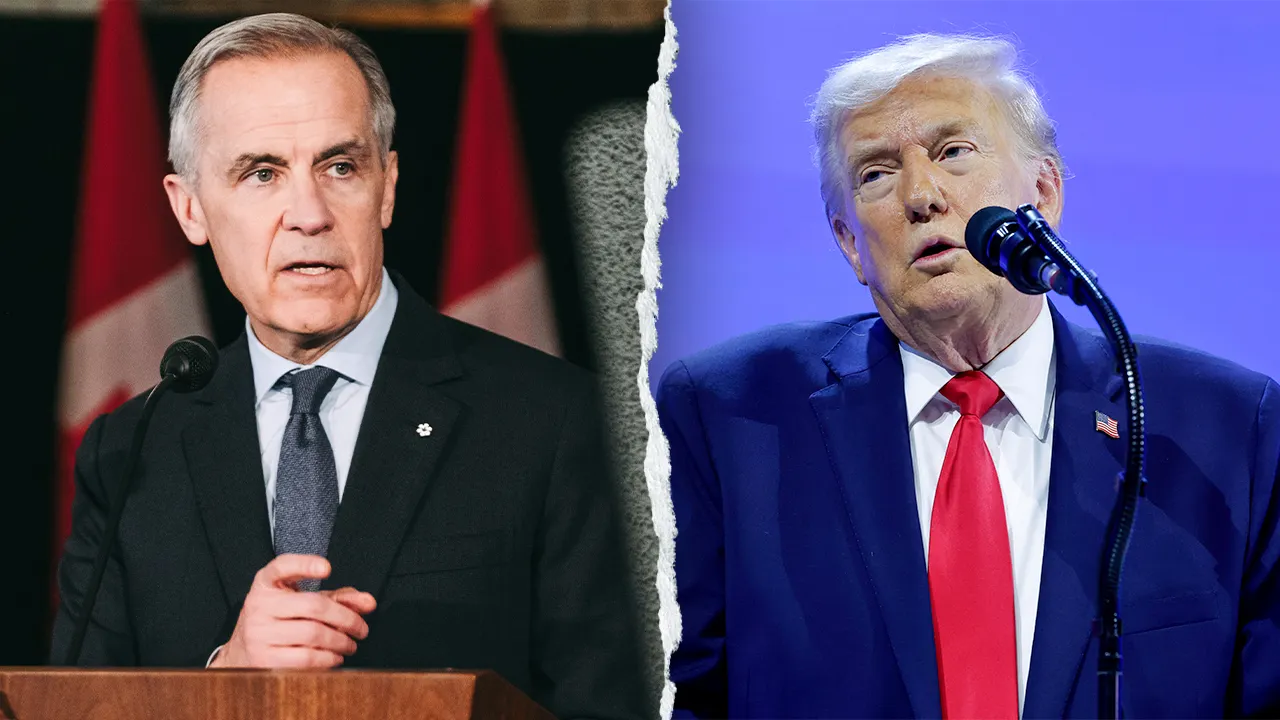
President Donald Trump issued a stark warning to Canada on Saturday, threatening to impose 100% tariffs on Canadian goods if the country establishes itself as what he termed a “drop off port” for Chinese products entering the United States.
“If Governor Carney thinks he is going to make Canada a ‘drop off port’ for China to send goods and products into the United States, he is sorely mistaken,” Trump wrote on his Truth Social platform. “China will eat Canada alive, completely devour it, including the destruction of their businesses, social fabric, and general way of life.”
The former president went on to promise immediate punitive measures should such an arrangement materialize: “If Canada makes a deal with China, it will immediately be hit with a 100% tariff against all Canadian goods and products coming into the U.S.A.”
In his statement, Trump referred to Canadian Prime Minister Mark Carney as “governor,” continuing a pattern from his campaign rhetoric where he similarly addressed Carney’s predecessor, Justin Trudeau. This terminology has previously raised eyebrows as it echoed comments Trump made during his campaign about potentially annexing Canada.
The warning comes in the wake of Carney’s recent diplomatic mission to China from January 14-17, where the Canadian leader met with Chinese President Xi Jinping in an effort to strengthen bilateral relations. During this visit, the two countries reached several trade agreements, including one that would allow up to 49,000 Chinese electric vehicles to enter the Canadian market at a reduced tariff rate of 6.1%, according to a statement from the Prime Minister’s office.
Additionally, the visit yielded a commitment from China to lower its tariff on Canadian canola seed to a combined rate of 15% by March 1, representing a significant agricultural trade development between the two nations.
Trump’s latest threat underscores his continued focus on protectionist trade policies that defined his first administration. The United States and Canada share one of the world’s largest trading relationships, with approximately $2.7 billion in goods and services crossing their border daily. Any disruption to this trade flow would have significant economic implications for both countries.
The U.S.-Canada trade relationship is particularly vital to border states and communities whose economies are deeply integrated with their northern neighbors. Industries ranging from automotive manufacturing to agriculture and energy would face severe disruption if Trump’s threatened tariffs were to materialize.
This confrontational stance also comes at a time when North American supply chains are still recovering from pandemic-related disruptions, and as the automotive industry undergoes a significant transition toward electric vehicles – a sector specifically addressed in the recent Canada-China agreement.
Trade experts note that using Canada as a backdoor for Chinese products to enter the U.S. market would likely violate existing trade rules under the United States-Mexico-Canada Agreement (USMCA), which contains provisions regarding rules of origin specifically designed to prevent such transshipment.
Despite Trump’s specific threat regarding a potential China deal, it remains unclear exactly which aspects of Canada’s recent agreements with China would trigger the promised tariff response, as Carney’s office has already announced several specific trade measures resulting from his visit to Beijing.
The situation continues to develop, with neither the Canadian government nor Chinese officials having issued formal responses to Trump’s statements as of this reporting.
Fact Checker
Verify the accuracy of this article using The Disinformation Commission analysis and real-time sources.

5 Comments
Interesting to see Trump go after Canada on this issue. While the US-China trade dynamic is complex, punishing Canada over potential ties with China seems like an aggressive move. Economic interdependence requires nuanced diplomacy.
This is an interesting move by Trump. While trade policy can be complex, unilateral tariffs are often counterproductive and harm domestic consumers. I wonder how this would impact US-Canada relations and broader North American trade.
The potential for a US-Canada trade war is concerning. Both countries benefit greatly from integrated North American supply chains. I hope cooler heads can prevail and they find a pragmatic solution.
Trump is really playing hardball here. Imposing such steep tariffs on a close ally like Canada could backfire and disrupt important supply chains. I’d be curious to hear Canada’s perspective on this situation.
Threatening 100% tariffs on Canada over potential China trade ties seems like a heavy-handed approach. I hope the two countries can find a diplomatic solution that balances their respective economic interests.