


Listen to the article
Trump Administration Intensifies Pressure on Media Over War Coverage
President Donald Trump and his administration have dramatically escalated their confrontational stance toward journalists covering the Middle East conflict, employing tactics ranging from public scoldings to regulatory threats that some experts view as potentially challenging First Amendment protections.
In recent days, Trump has used social media to express frustration with news coverage he deems unfavorable. He specifically criticized reports about damage to planes attacked by Iran at a Saudi Arabian airport, claiming the damage was exaggerated. The president also accused “Corrupt Media Outlets” of amplifying AI-generated false information created by Iran, while complaining that journalists “hate to report” on U.S. military successes.
During a Sunday flight on Air Force One, Trump publicly berated ABC News reporter Mariam Khan, who was serving as the pool reporter, after she asked about a campaign fundraising message featuring photos from a dignified transfer ceremony for fallen U.S. service members. “I think it’s maybe the most corrupt news organization on the planet. I think they’re terrible,” Trump told Khan after learning she worked for ABC.
Perhaps most concerning to media law experts was Federal Communications Commission Chairman Brendan Carr’s warning to broadcasters about potential license revocation. “Broadcasters that are running hoaxes and news distortions — also known as fake news — have a chance now to correct course before their license renewals come up,” Carr wrote on X. “The law is clear. Broadcasters must operate in the public interest, and they will lose their license if they do not.”
First Amendment attorney Floyd Abrams noted in an interview that such threats likely conflict with established legal precedent. “The broadcast media is always at risk of a sort that newspapers are not. But at its core, they are protected by the First Amendment,” Abrams said, “and these statements by the chairman seem to me are directly threatening First Amendment interests and First Amendment principles.”
The scope of Carr’s regulatory power is actually limited. The FCC does not regulate major networks like CBS, NBC and ABC directly, though it can review license renewals for their affiliates. Cable news networks including CNN, Fox News Channel, and MSNBC fall outside FCC jurisdiction entirely, as do newspapers like The New York Times and The Wall Street Journal, which Trump specifically mentioned in his criticisms.
Barbara Starr, former CNN Pentagon correspondent, suggested the administration’s goal may be to create a climate of intimidation. “The risk is the climate they create. Are people going to be afraid to talk to reporters? Some of them will be, and that’s a serious matter,” she said.
The administration has received support for its media criticism from allies at Fox News. “Fox & Friends” co-host Ainsley Earhardt echoed the president’s sentiments, stating, “The president has said enough with this coverage, from other networks that are not telling you the truth, that are so negative about what is going on. This is a pro-America fight, and every network needs to get on board with that.”
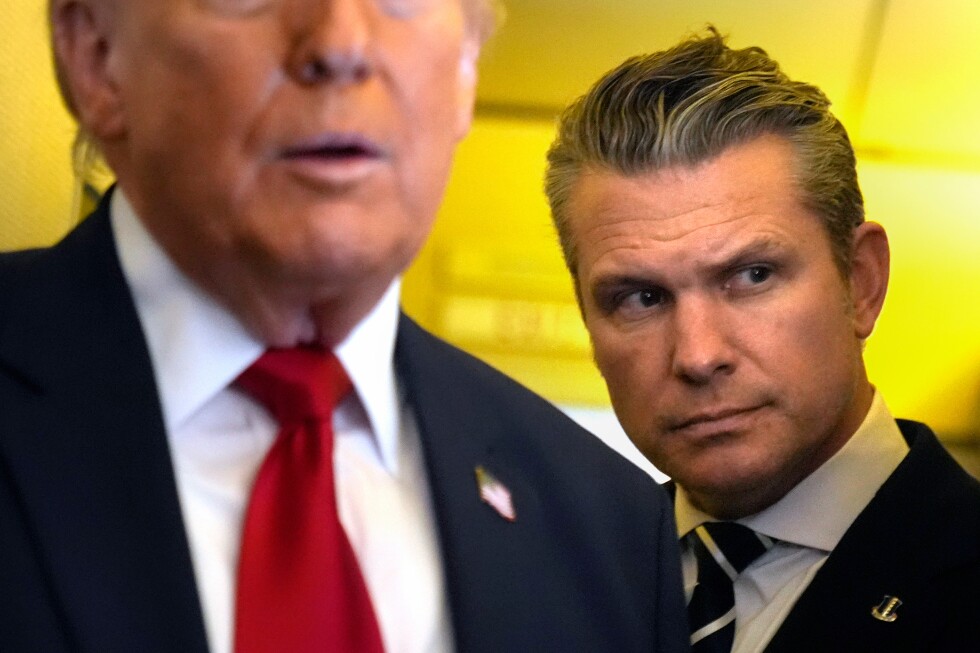
Defense Secretary Pete Hegseth has similarly questioned media patriotism while restricting press access at the Pentagon. Most legacy news outlets have been removed from their traditional spaces in the Pentagon press room after refusing to accept new operational restrictions. Hegseth has specifically targeted CNN, criticizing its reporting on administration preparedness for Iranian attacks on global oil supplies.
During a briefing, Hegseth even suggested headlines that a “patriotic press” should use and expressed hope that CNN’s expected new ownership under Paramount Global chief David Ellison would result in more favorable coverage.
CNN Chief Executive Mark Thompson defended his organization’s reporting: “Politicians have an obvious motive for claiming that journalism which raises questions about their decisions is false. At CNN, our only interest is telling the truth to our audiences in the U.S. and around the world, and no amount of political insults and threats is going to change that.”
Despite the increased pressure, Starr observed that journalists continue to break important stories. “The level of intimidation has definitely ramped up and, in response to that, the commitment to the First Amendment and quality journalism has ramped up even further,” she said.
Fact Checker
Verify the accuracy of this article using The Disinformation Commission analysis and real-time sources.

11 Comments
This situation highlights the ongoing tension between the government’s desire for control over the narrative and the media’s role as a watchdog. While both sides have valid concerns, undermining press freedom ultimately harms the public interest. I hope they can find a way to work together that upholds democratic principles.
It’s concerning to see the administration putting pressure on the media over war coverage. A free and independent press is crucial for informing the public and holding the government accountable. I hope they can find a way to work together constructively despite their differences.
I agree, a healthy democracy requires a balance between the government and the media. Both sides should recognize their important and complementary roles.
Putting pressure on the media over war coverage is concerning and could have serious implications for press freedom and the public’s right to information. Both sides need to recognize the importance of their respective roles and find ways to work together productively, even when they disagree.
I agree, the relationship between the government and the media is critical for maintaining a healthy democracy. Resorting to attacks and threats is counterproductive – they should focus on open communication and finding common ground.
The administration’s aggressive stance towards the media on war coverage is troubling. A free press is essential for a functioning democracy, even when there are disagreements over reporting. I hope they can find a way to have a constructive dialogue and recognize their complementary roles in informing the public.
Well said. The government and media should strive to build mutual understanding and respect, even in the face of disagreements. Maintaining an open and constructive relationship is crucial for ensuring the public has access to reliable information.
This is a complex issue with valid concerns on both sides. The media has a responsibility to report the facts, while the government needs to provide accurate information. I hope they can find a way to have a constructive dialogue and balance their respective roles for the good of the public.
Exaggerating or downplaying military events is a serious matter. The media should strive to report the facts objectively, while the government should provide accurate information to facilitate truthful coverage. Attacking the press doesn’t help anyone understand the complex realities of war.
You make a good point. Transparent and constructive dialogue between the administration and media is crucial to ensure the public has access to reliable information about military operations and their impact.
The relationship between the government and media is often contentious, but it’s important they find ways to work together productively. Attacking the press undermines public trust and makes it harder to have an informed citizenry. Hopefully cooler heads can prevail and they can focus on their shared goal of informing the public.