


Listen to the article
President Trump’s White House Ballroom Project Faces Legal Challenge from Preservationists
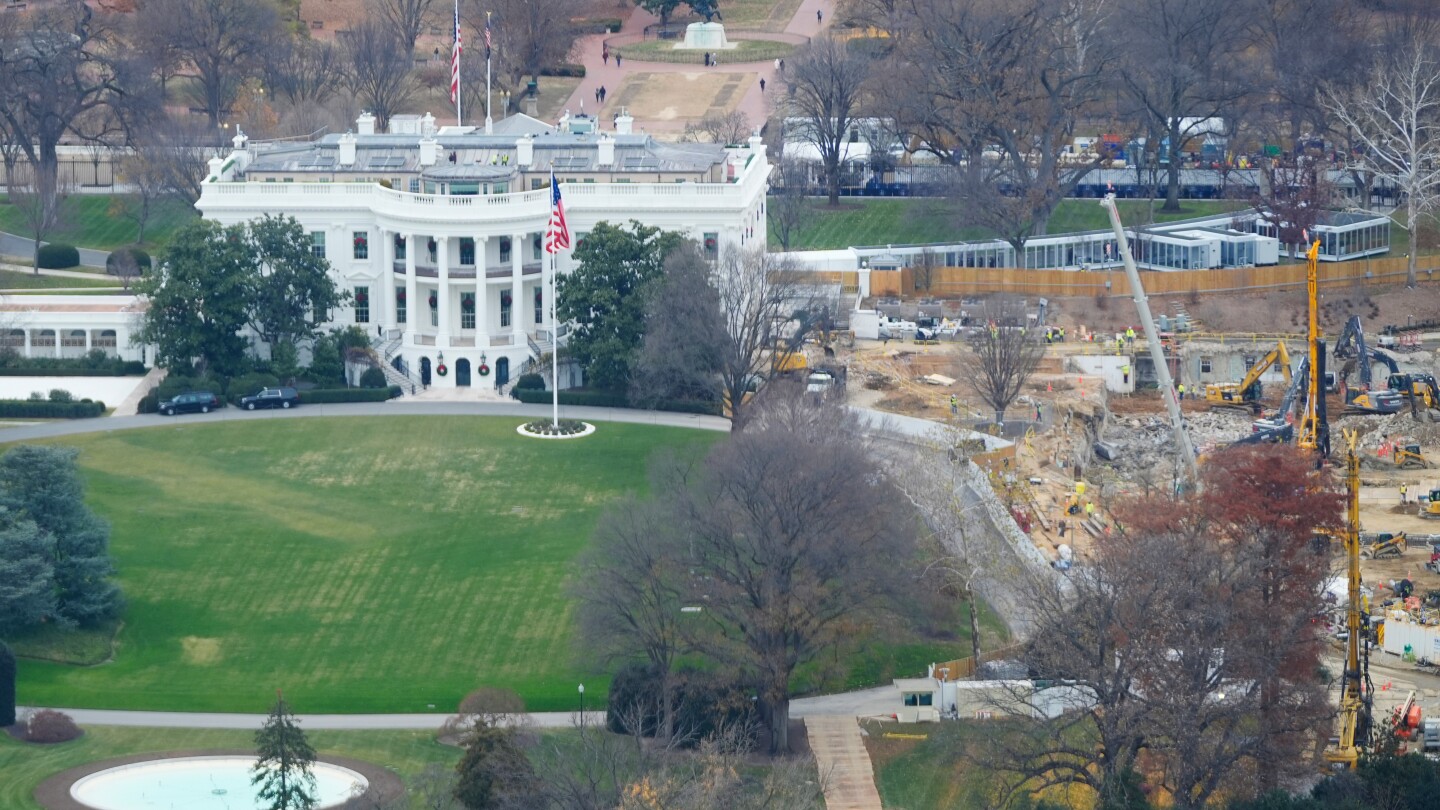
The National Trust for Historic Preservation filed a federal lawsuit on Friday seeking to halt President Donald Trump’s controversial White House ballroom project, which has already resulted in the demolition of the East Wing. The suit asks the U.S. District Court to block further construction until the project undergoes comprehensive design reviews, environmental assessments, public comment periods, and receives explicit congressional approval.
The lawsuit represents the most significant attempt yet to challenge the president’s ambitious renovation plans. Trump’s proposed ballroom would nearly double the size of the White House compared to its footprint before the East Wing demolition began.
“No president is legally allowed to tear down portions of the White House without any review whatsoever — not President Trump, not President Biden, and not anyone else,” the lawsuit states. It further argues that no president can construct a ballroom on public property without allowing public input on the project.
The preservation group is seeking a court declaration that Trump violated multiple federal regulations, including the Administrative Procedures Act and the National Environmental Policy Act, by fast-tracking the construction. The Trust also alleges the president exceeded his constitutional authority by proceeding without congressional consultation.
In response to questions about the lawsuit, White House spokesman David Ingle issued a broad statement asserting that Trump has “full legal authority to modernize, renovate and beautify the White House — just like all of his predecessors did.” Ingle did not specifically address whether the president would eventually consult Congress about the project.
While presidential renovations to the White House are common throughout history, Trump’s project represents the most extensive structural changes since President Harry Truman’s tenure. During Truman’s administration, the deteriorating interior of the oldest portion of the mansion underwent a near-complete renovation. However, Truman sought and received explicit congressional authorization and funding for the work, consulted with engineering and arts commissions, and appointed a bipartisan oversight committee.
Trump has emphasized that his ballroom project is being funded with private money, including his own personal contributions. However, the lawsuit contends that private funding does not exempt the project from federal laws governing U.S. government properties.
The president has already bypassed standard federal building protocols and historical reviews with the East Wing demolition. He recently added another architectural firm to the project team.
Trump has long advocated for a White House ballroom, frequently complaining that state events required outdoor tents because existing venues like the East Room and State Dining Room cannot accommodate larger crowds. He has specifically mentioned guests getting their feet wet during rainy outdoor functions.
Will Scharf, Trump’s appointee as chairman of the National Capital Planning Commission, announced at a recent meeting that the White House plans to submit formal plans for the ballroom in December, approximately three months after construction began. Scharf, who also serves as a top presidential aide, indicated the review process would proceed at a “normal and deliberative pace.”
The National Trust for Historic Preservation argues this timeline is inadequate and comes too late. Their lawsuit asserts that plans should have been submitted to multiple agencies, including the National Capital Planning Commission, the Commission of Fine Arts, and Congress before any construction activity began.
The legal challenge cites numerous federal statutes governing U.S. government construction projects, including one that explicitly states: “A building or structure shall not be erected on any reservation, park, or public grounds of the Federal Government in the District of Columbia without express authority of Congress.”
The Trust emphasizes that proper review processes would include opportunities for public input, which they consider “particularly critical here, where the structure at issue is perhaps the most recognizable and historically significant building in the country.”
The lawsuit names several defendants alongside President Trump, including the National Parks Service, Department of the Interior, General Services Administration, and leaders of those federal agencies.
Fact Checker
Verify the accuracy of this article using The Disinformation Commission analysis and real-time sources.

12 Comments
I’m curious to see how this lawsuit plays out. The White House is a national treasure, and any major renovations should involve public input and congressional approval, not just a president’s personal preferences.
Absolutely, the American people deserve a voice in the stewardship of their iconic presidential residence. This is a reasonable legal challenge to an overreaching executive action.
It’s good that the National Trust for Historic Preservation is stepping in to try to protect the integrity and history of the White House. A project of this scale deserves thorough scrutiny, not just presidential whims.
I agree, the public should have a voice in how the people’s house is altered, even by the president. Transparency and accountability are important.
While I understand the president’s desire to put his stamp on the White House, I’m skeptical that demolishing the East Wing and nearly doubling the size is necessary or appropriate. The lawsuit seems justified to me.
Agreed, the president shouldn’t be able to make such drastic changes without going through the proper channels. This is an important check on executive power.
This is an interesting legal challenge against the president’s proposed White House ballroom project. I’m curious to see how the court rules on the need for environmental assessments, public input, and congressional approval for such a major renovation.
The preservationists seem to have a strong case that the president can’t simply demolish and rebuild parts of the White House without proper oversight and reviews.
I’m glad to see the National Trust for Historic Preservation taking action to protect the White House from potentially unnecessary and damaging renovations. The president should not be able to unilaterally reshape this national symbol.
Yes, the president’s plans seem overly ambitious and lacking in proper oversight. Preserving the White House’s history and architecture should be a priority.
The preservation group raises valid concerns about the lack of environmental assessments and public comment periods for this project. Transparency and oversight are crucial, even for a sitting president.
Agreed, the public has a right to be involved in decisions that could significantly alter such an important historical landmark. The lawsuit seems well-justified.