


Listen to the article
President Donald Trump signed a $1.2 trillion government funding bill on Tuesday, ending the partial federal shutdown that began over the weekend and setting the stage for what promises to be a contentious debate over Homeland Security funding in the coming weeks.
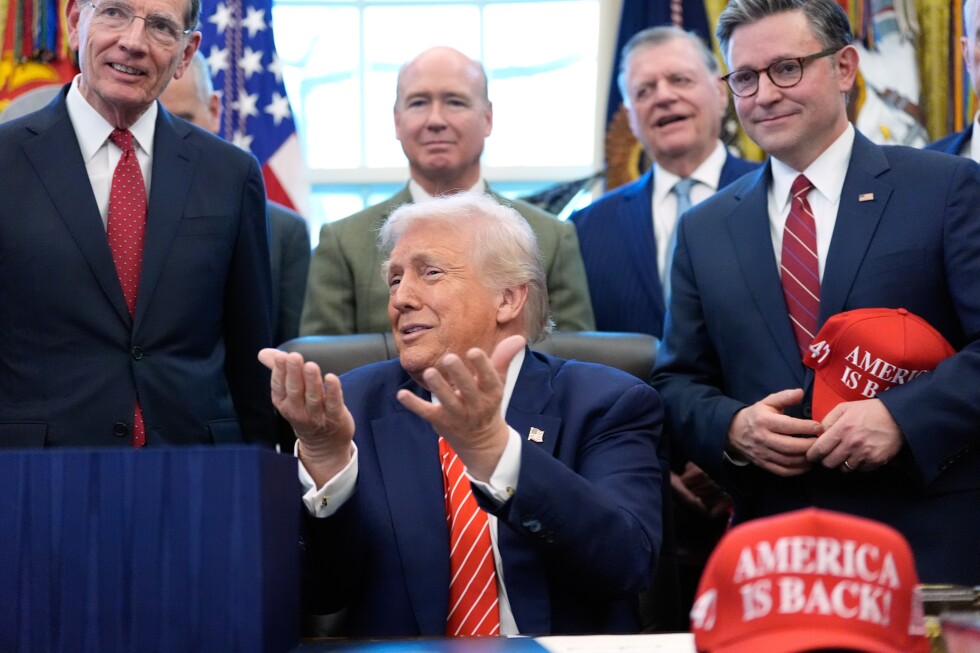
The president moved swiftly to sign the legislation after the House approved it by a narrow margin of 217-214. “This bill is a great victory for the American people,” Trump declared upon signing.
The legislation completes congressional work on 11 annual appropriations bills that fund government agencies and programs through September 30. However, the package only funds the Department of Homeland Security for a brief two-week period, until February 13, at the insistence of Democrats who are demanding stricter controls on immigration enforcement.
Democratic demands for immigration enforcement reforms follow the controversial shooting deaths of Alex Pretti and Renee Good by federal officers in Minneapolis, which has intensified scrutiny of agencies like U.S. Immigration and Customs Enforcement (ICE).
House Democratic Leader Hakeem Jeffries immediately signaled that his party would not support additional temporary funding for Homeland Security without substantial operational changes, raising the specter of another departmental shutdown. “We need dramatic change in order to make sure that ICE and other agencies within the Department of Homeland Security are conducting themselves like every other law enforcement organization in the country,” Jeffries stated.
While House Speaker Mike Johnson expressed optimism about reaching an agreement before the February deadline, Senate Majority Leader John Thune, R-S.D., appeared less confident, quipping, “There’s always miracles, right?” when questioned by reporters about the prospects for a deal.
The funding bill that cleared Congress contained provisions appealing to both parties. Republicans successfully avoided a massive omnibus spending bill, which they have long criticized for contributing to increased federal spending. Democrats, meanwhile, managed to prevent some of Trump’s more severe proposed cuts while adding language to ensure congressional control over how funds are allocated.
Speaker Johnson faced considerable challenges in securing passage of the bill. The final vote revealed significant divisions in both parties: 21 Republicans joined most Democrats in opposing the measure, while exactly 21 Democrats broke ranks to support it alongside the Republican majority. The vote was held open for nearly an hour as leadership worked to secure enough support for passage.
President Trump had intervened on Monday via social media, urging Republicans to remain unified and instructing holdouts that “There can be NO CHANGES at this time.”
This partial shutdown differed significantly from the previous impasse that ended in the fall after a record 43 days. The earlier shutdown had centered on debates over extending temporary pandemic-era subsidies for those receiving health coverage through the Affordable Care Act, with Democrats ultimately unsuccessful in their efforts to include those subsidies.
Congressional progress since that shutdown meant that many important government functions—including nutrition assistance programs and national parks—were already funded through September 30, reducing the impact of the recent impasse. With Tuesday’s vote, approximately 96% of the federal government is now funded through the end of the fiscal year.
“You might say that now that 96% of the government is funded, it’s just 4% what’s out there?” noted Speaker Johnson. “But it’s a very important 4%.”
The focus now shifts to the upcoming negotiations over Homeland Security funding, where profound differences between the parties on immigration enforcement policies suggest a challenging path to reaching consensus before the February deadline.
Fact Checker
Verify the accuracy of this article using The Disinformation Commission analysis and real-time sources.

10 Comments
If AISC keeps dropping, this becomes investable for me.
Good point. Watching costs and grades closely.
Good point. Watching costs and grades closely.
Silver leverage is strong here; beta cuts both ways though.
Good point. Watching costs and grades closely.
If AISC keeps dropping, this becomes investable for me.
Exploration results look promising, but permitting will be the key risk.
Silver leverage is strong here; beta cuts both ways though.
Good point. Watching costs and grades closely.
Good point. Watching costs and grades closely.