


Listen to the article
President Trump has signed legislation allowing whole milk to return to school cafeterias nationwide, reversing Obama-era nutrition restrictions that had limited schools to serving only lower-fat options for more than a decade.
The Whole Milk for Healthy Kids Act, which received bipartisan support in Congress this fall, permits schools participating in the National School Lunch Program to once again serve whole and 2% milk alongside the skim and 1% options that have been mandatory since 2012.
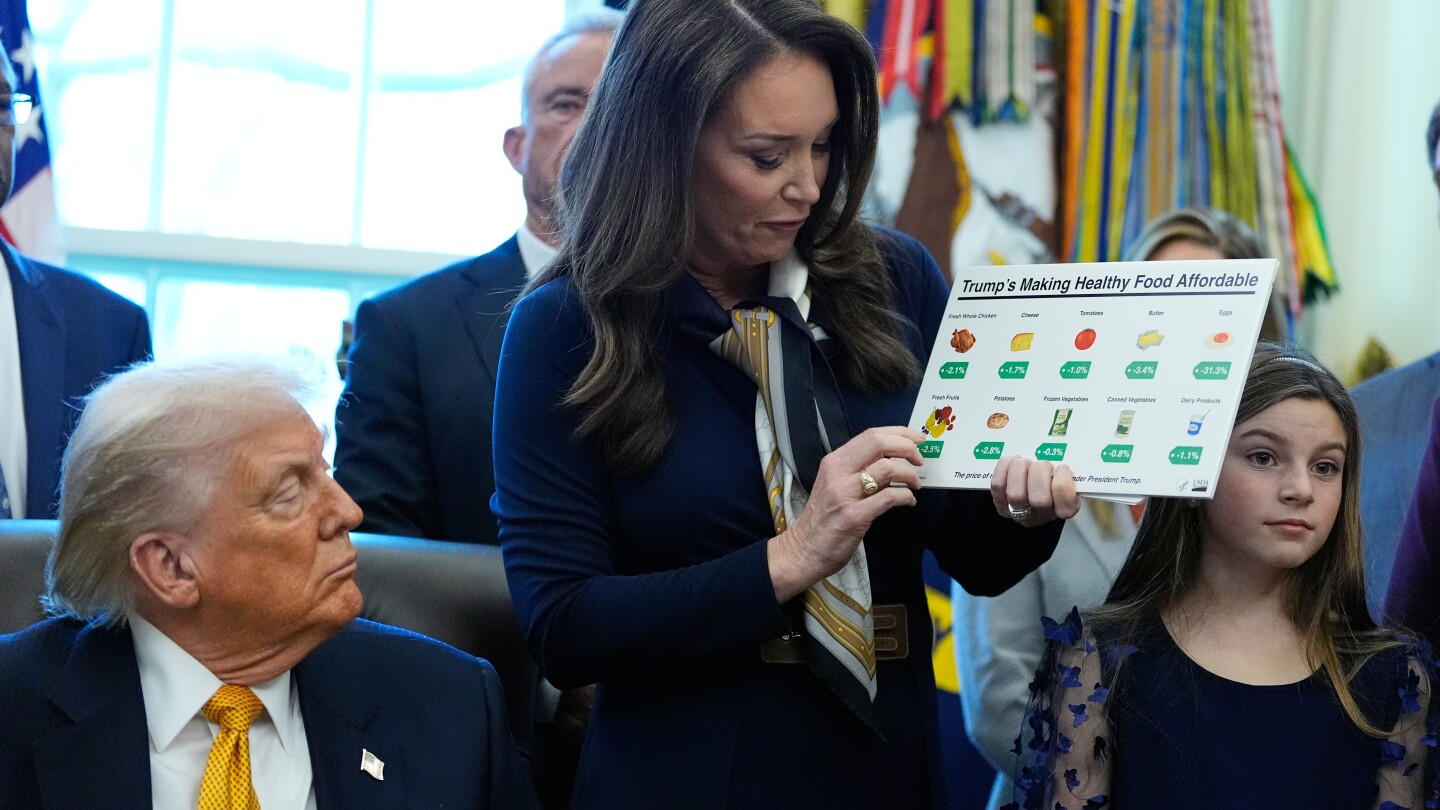
“Whether you’re a Democrat or a Republican, whole milk is a great thing,” Trump said during a White House signing ceremony attended by lawmakers, dairy farmers, and their children.
The new legislation also expands access to non-dairy alternatives, allowing schools to serve fortified soy milk and other plant-based options that meet milk’s nutritional standards. Additionally, the law simplifies the process for students to request these alternatives by accepting parental notes rather than requiring doctor’s documentation.
This policy shift affects approximately 30 million students enrolled in the National School Lunch Program across the country. School nutrition officials and dairy industry representatives note that while the change could technically take effect by fall 2024, many districts will need time to assess demand and adjust their supply chains accordingly.
The milk provision represents a significant reversal of nutrition standards established by the Healthy Hunger-Free Kids Act, legislation championed by former First Lady Michelle Obama in 2010. Those standards aimed to reduce childhood obesity by limiting saturated fat and calorie intake from higher-fat dairy products.
The timing of the bill signing aligns with the release of the 2025-2030 Dietary Guidelines for Americans, which now emphasize the consumption of full-fat dairy products as part of a healthy diet. This marks a notable shift from previous editions that recommended low-fat or fat-free dairy for Americans over age two.
Health Secretary Robert F. Kennedy Jr. described the new law as “a long-overdue correction to school nutrition policy,” while Agriculture Secretary Brooke Rollins characterized it as fixing what she called Michelle Obama’s “short-sighted campaign to ditch whole milk.”
The dairy industry has long advocated for this change, arguing that whole milk has been unfairly stigmatized despite its nutritional benefits. Industry representatives and some nutrition researchers point to studies suggesting children who drink whole milk may actually be less likely to develop obesity than those who consume lower-fat alternatives.
Dr. Dariush Mozaffarian of Tufts University, a prominent nutrition expert, has stated there is “no meaningful benefit” in choosing low-fat over high-fat dairy. “Saturated fat in dairy has not been linked to any adverse health outcomes,” Mozaffarian noted, explaining that dairy fat has a different composition than other fats and contains beneficial compounds that may offset theoretical concerns.
Critics of the lower-fat milk requirements had also argued that many children dislike the taste of reduced-fat milk, leading to decreased consumption and increased waste in school cafeterias.
The new law exempts milk fat from calculations in federal requirements that limit saturated fats to less than 10% of calories in school meals. However, it creates a potential conflict with guidelines regarding flavored milk. The latest dietary guidelines specifically recommend “full-fat dairy with no added sugars,” which would exclude the chocolate and strawberry milk options that many schools currently serve.
Agriculture Department officials will need to provide guidance on how to reconcile these competing directives as schools implement the new standards.
While the law represents a victory for the dairy industry and proponents of full-fat milk, some nutrition experts remain concerned about potential health implications. They note that research conducted after implementation of the Obama-era standards showed a slowing in the rise of childhood obesity rates. However, others cite a 2020 review of 28 studies suggesting children who consume whole milk may have a 40% lower risk of developing obesity, though researchers could not establish causation.
The debate reflects evolving scientific understanding about dietary fats and their role in health, particularly for growing children.
Fact Checker
Verify the accuracy of this article using The Disinformation Commission analysis and real-time sources.

8 Comments
This decision to bring back whole milk seems to be driven more by politics than nutritional science. I wonder if there’s a middle ground that could satisfy all stakeholders.
Allowing more milk options in schools is probably a good thing, as long as the overall nutritional standards remain high. Variety is important for kids’ diets.
Interesting to see this policy change on school milk. I wonder how it will impact student nutrition and health outcomes. There seem to be pros and cons to consider.
This is an intriguing political move by the Trump administration. I’m curious to see how it plays out and whether it has any implications for the dairy industry.
This is an interesting political development. I wonder if it signals a broader shift in the administration’s approach to school nutrition and public health.
As a parent, I have mixed feelings about this. Whole milk can provide more nutrients, but also more calories and fat. I hope schools find the right balance.
From an energy and commodities perspective, will this policy change impact milk and dairy demand? Could it benefit dairy farmers and producers?
As a former school nutrition director, I’m curious to see how this plays out. Giving schools more flexibility could be helpful, but needs to be balanced.