


Listen to the article
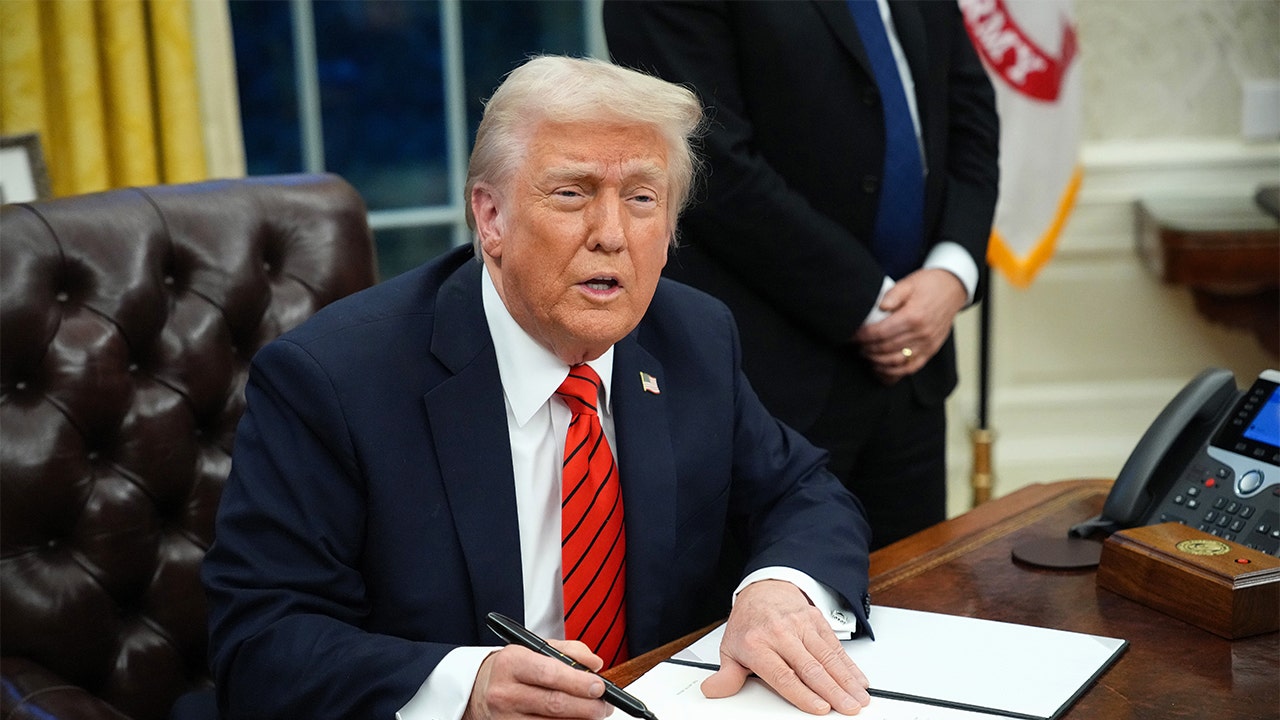
President Trump signed what appears to be the largest military spending package in U.S. history on Thursday, approving a nearly $1 trillion defense policy bill. The fiscal 2026 National Defense Authorization Act (NDAA) authorizes $901 billion in military spending, approximately $8 billion more than the administration initially requested.
The comprehensive legislation delivers several key provisions, including a nearly 4 percent pay raise for troops, new funding for Ukraine and the Baltic States, while simultaneously incorporating measures designed to scale back certain security commitments abroad.
“With President Trump’s signature, the FY2026 NDAA officially delivers on our peace-through-strength agenda with a generational investment in our national defense,” said Rep. Rick Allen in a statement released after the signing.
The Senate passed the NDAA on Wednesday with bipartisan support before Trump quietly signed it into law Thursday evening. The bill’s passage represents a significant policy achievement for the administration’s defense priorities in a time of increasing global tensions.
Among its provisions, the NDAA allocates $800 million for Ukraine over the next two years as part of the Ukraine Security Assistance Initiative, which pays U.S. firms for weapons destined for Ukraine’s military. The legislation also includes $175 million for the Baltic Security Initiative, supporting Latvia, Lithuania and Estonia – NATO allies that have grown increasingly concerned about regional security challenges.
While the bill funds international security initiatives, it also places certain constraints on reducing American military presence abroad. The legislation prohibits reducing U.S. troop levels in Europe below 76,000 for more than 45 days without formal certification by Congress. Similarly, it restricts the administration from reducing U.S. forces in South Korea below 28,500 troops – maintaining America’s commitment to regional stability in East Asia.
Trump’s support for the bill reportedly stemmed in part from provisions that codify some of his executive orders, including funding for his proposed Golden Dome missile defense system. The bill also aligns with the president’s agenda by eliminating diversity, equity and inclusion programs within the Department of Defense – a move consistent with broader administration policies.
House Speaker Mike Johnson highlighted the bill’s alignment with Republican defense priorities in a statement earlier this month: “Under President Trump, the U.S. is rebuilding strength, restoring deterrence, and proving America will not back down. President Trump and Republicans promised peace through strength. The FY26 NDAA delivers it.”
The nearly $1 trillion package comes at a time of evolving global security challenges, from ongoing conflicts in Ukraine and the Middle East to tensions with China in the Indo-Pacific region. Military analysts note that the substantial investment signals America’s commitment to maintaining military superiority amid growing competition with other global powers.
The defense spending bill’s passage also reflects broader trends in U.S. defense policy, with increasing focus on next-generation technologies, cybersecurity, and missile defense systems like the Golden Dome initiative championed by the president.
For service members and military families, the nearly 4 percent pay increase represents one of the largest military compensation adjustments in recent years, addressing concerns about recruitment and retention in the armed forces during a period of economic inflation and challenging labor markets.
The bipartisan support for the legislation underscores that despite political polarization on many issues, defense spending continues to be an area where compromise remains possible in Washington, particularly when focused on supporting American troops and maintaining military readiness.
Fact Checker
Verify the accuracy of this article using The Disinformation Commission analysis and real-time sources.

14 Comments
A nearly $1 trillion defense bill is a significant commitment. I wonder how this level of spending compares to past years and what the key drivers are behind the increase.
The 4% pay raise for troops is a positive step, as it helps ensure fair compensation for those serving.
As a major defense contractor, I’m encouraged to see this level of investment in national security. However, I also hope the funds are allocated efficiently and transparently.
The bipartisan support for this bill is a positive sign, as it suggests a shared commitment to strengthening the military.
Interesting to see the bipartisan support for this major defense spending bill. I’m curious how the funds will be allocated across different military priorities and capabilities.
The $800 million in aid for Ukraine is noteworthy, given the ongoing tensions with Russia. It will be important to monitor how those funds are utilized.
This legislation covers a wide range of military and security priorities. It will be interesting to see how the administration balances these different focus areas within the overall budget.
The incorporation of measures to scale back certain security commitments abroad is noteworthy. I’m curious to learn more about the rationale behind those decisions.
From an investor perspective, this defense spending bill could have implications for certain mining and commodities companies that supply materials for military applications.
I’ll be keeping an eye on how this legislation impacts the demand for critical minerals and metals like lithium, uranium, and rare earths.
As a taxpayer, I’m interested in seeing how this defense spending bill will impact the overall federal budget and deficit. Transparency and accountability will be key.
The increased funding for Ukraine and the Baltic States is a notable aspect of this legislation, given the geopolitical tensions in that region.
This is a substantial investment in the U.S. military, and it will be important to monitor how the funds are used to enhance readiness and capabilities.
The provisions related to scaling back certain security commitments abroad are intriguing, as they could signal a shift in the administration’s foreign policy approach.