


Listen to the article
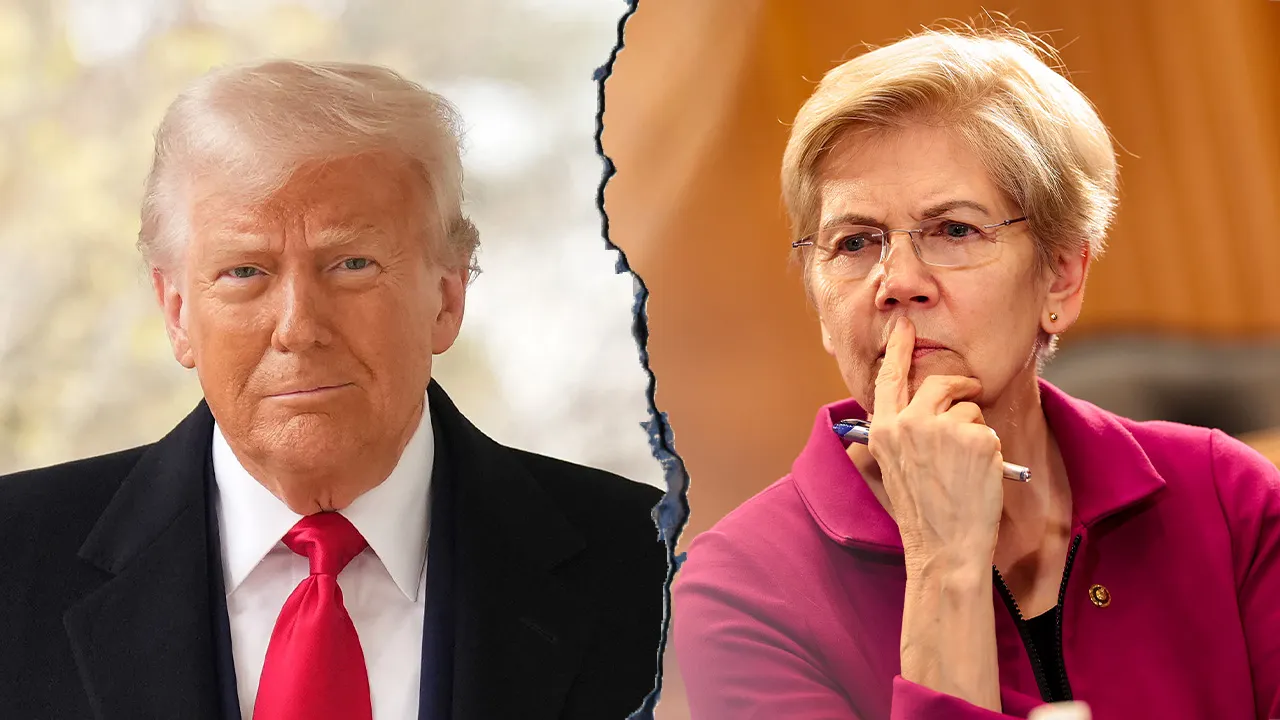
President Trump has been reaching out to progressive Democrats to discuss affordability issues, finding an unexpected ally in Senator Elizabeth Warren on the issue of capping credit card interest rates.
Warren confirmed to Fox News Digital that Trump called her Monday following her speech on affordability, during which she had criticized the president’s economic efforts. During their conversation, they found common ground on Trump’s proposal to cap credit card interest rates at 10% for one year.
“I supported it for years and when he first floated the idea over a year ago,” Warren said. “I’m all in, and so far, Trump hasn’t done anything.”
White House spokesman Kush Desai framed these bipartisan discussions as part of Trump’s mandate to “smash Washington, D.C.’s obsession with consensus orthodoxy.” A White House official described the call with Warren as “productive,” focusing specifically on credit card interest rates and broader affordability concerns.
However, securing Republican support in the Senate presents a significant challenge. Senate Majority Leader John Thune quickly expressed skepticism about the proposal, suggesting it could restrict access to credit for many Americans.
“I think that would probably deprive an awful lot of people of access to credit around the country. Credit cards will probably become debit cards,” Thune said. “So, yeah, I mean, that’s not something I’m out there advocating for.”
Despite this resistance, there is some bipartisan momentum on credit card reform. Sens. Josh Hawley (R-Mo.) and Bernie Sanders (I-Vt.) have already been working on legislation to cap credit card interest rates. Additionally, Sens. Roger Marshall (R-Kan.) and Dick Durbin (D-Ill.) plan to reintroduce a bill aimed at boosting competition among credit card payment networks, a measure Trump endorsed late Monday.
Trump’s outreach to Warren is part of a broader pattern of engaging with left-wing Democrats on economic issues. In November, he met with newly-elected New York City Mayor Zohran Mamdani at the White House, despite having previously described Mamdani as a “communist.” During their meeting, the two discussed lowering costs and improving affordability.
“When we spoke to those voters who voted for President Trump, we heard them speak about cost of living. We focused on that same cost of living. And that’s where I am really looking forward to delivering for New Yorkers, in partnership with the president, on the affordability agenda,” Mamdani said from the Oval Office.
Trump’s pivot toward emphasizing “affordability” comes after Democrats successfully used the issue in several high-profile elections in late 2025, including the New York City mayoral race and gubernatorial contests in New Jersey and Virginia. In all three cases, Democratic candidates prevailed after focusing their campaigns on lowering prices they attributed to Trump administration policies.
The president has pushed back against Democrats’ use of the affordability message, calling it a “con job” and arguing that he inherited high inflation from the Biden administration. “You just say it. Affordability. I inherited the worst inflation in history. There was no affordability. Nobody could afford anything,” Trump said during his administration’s final Cabinet meeting of 2025. He has insisted that affordability “should be our word, not theirs.”
In recent months, the White House has highlighted various initiatives aimed at easing financial pressures on Americans. These include directing Fannie Mae and Freddie Mac to purchase $200 billion in mortgage-backed securities to lower mortgage rates and make homeownership more accessible. Trump has also proposed banning large institutional investors from purchasing additional single-family homes, an approach that aligns with Democratic efforts to limit hedge fund and private equity involvement in the housing market.
Trump’s first term saw strong economic indicators before the pandemic, with unemployment reaching 50-year lows and inflation remaining under control until 2020. The president traveled to Pennsylvania in December to highlight his economic record and outline his vision for the future.
The president’s visit to Michigan on Tuesday is expected to focus on promoting manufacturing in the Rust Belt state, continuing his emphasis on economic issues that resonate with working-class voters.
Fact Checker
Verify the accuracy of this article using The Disinformation Commission analysis and real-time sources.

12 Comments
While I’m skeptical of government price controls, I acknowledge the predatory nature of some credit card interest rates. If Trump and Warren can craft a balanced approach that protects consumers without disrupting credit markets, it could be a win-win.
Valid concerns about unintended consequences. A balanced approach is key, as overly restrictive rate caps could backfire. Interested to see the details they come up with.
As an investor, I’ll be watching how this plays out. Caps on credit card rates could impact the profitability of financial institutions, so there may be pushback from that industry. But protecting consumers should be the priority here.
That’s a fair point. The banking lobby will likely oppose any rate caps, so it will take political will to overcome that resistance. Curious to see if Trump and Warren can build a broader coalition.
This is an unusual alliance, but the issue of affordability is a critical one that deserves bipartisan attention. I hope Trump and Warren can find a workable compromise that provides relief for consumers without causing broader disruption in the financial sector.
Agreed. Addressing affordability challenges through pragmatic, bipartisan policymaking is exactly what we need more of in these divisive times.
Interesting to see Trump and Warren find common ground on capping credit card rates. Affordability is a major issue that cuts across party lines. I’m curious to see if they can build bipartisan support for this proposal despite skepticism from Republican leadership.
Exactly, it’s rare to see Trump and Warren align on an economic policy issue. This could be a pragmatic move to address a pressing concern for many Americans.
I’m glad to see the President and a leading progressive Democrat finding common ground on this issue. Affordability challenges are real for many Americans, and bipartisan solutions are sorely needed. Hope they can get something meaningful done.
Me too. Crossing party lines to address bread-and-butter economic concerns is the kind of pragmatic policymaking we need more of in Washington.
Credit card interest rates have been a growing burden on consumers, so I’m glad to see the possibility of a bipartisan solution. Capping rates at 10% could provide meaningful relief, but the details and implementation will be crucial.
Agreed, the devil will be in the details. But any effort to improve affordability and rein in predatory lending practices is worth exploring further.