


Listen to the article
President Donald Trump appeared to signal a willingness to reduce tensions in Minneapolis following a second deadly shooting by federal immigration agents, though evidence of substantive changes remained scarce Wednesday despite recent conciliatory rhetoric toward local Democratic officials.
The administration sent Trump’s top border adviser to Minnesota to oversee the ongoing immigration enforcement operations, a leadership change that came alongside seemingly more diplomatic language. Trump claimed he and Governor Tim Walz were on “a similar wavelength” after a phone conversation, and he praised a discussion with Mayor Jacob Frey, declaring that “lots of progress is being made.”
On Minneapolis streets, however, immigration operations and confrontations with activists continued unabated. In one incident, protesters tracked federal officers through north Minneapolis streets, blowing whistles and following their vehicles. When Associated Press journalists attempted to document the encounter, officers from the federal Bureau of Prisons physically confronted them, threatened arrest, and ordered them back to their vehicle despite the reporters identifying themselves as press.
The AP journalists witnessed at least one person being pepper sprayed and another detained during the operation. Agents also damaged car windows during the confrontation.
Attorney General Pam Bondi, currently visiting Minnesota, announced that 16 people were arrested Wednesday on charges related to impeding law enforcement in the state, with more arrests expected. “NOTHING will stop President Trump and this Department of Justice from enforcing the law,” Bondi declared on social media.
In the suburb of Brooklyn Center, agents visited a residential neighborhood seeking a twice-deported man with a domestic abuse conviction. One agent told the AP they lacked a judicial warrant to enter the home where they believed the man was hiding. When activists blew whistles in apparent warning, an agent remarked, “They’d rather call the police on us than to help us.”
As agents prepared to leave, local resident Kari Rod defended her neighbors, telling the AP, “I don’t trust a single thing they said about who they are. From my interactions, I know them way better than anyone else does, any one of those federal agents.”
The impacts of the enforcement operations continue to reverberate through immigrant communities. Daniel Hernandez, owner of Colonial Market in Minneapolis, reported that many immigrant families remain fearful of leaving their homes. Of the dozen immigrant-run businesses that previously rented space in his grocery store, all but one have closed since late December with no plans to reopen.
“The reality is the community is still very worried and afraid,” Hernandez said. He noted that while Border Patrol commander Gregory Bovino, who helped lead the enforcement operations, has reportedly been reassigned, “the tactics so far are still the same. Nobody now is trusting the government with those changes.”
The federal judiciary has begun to push back against Immigration and Customs Enforcement (ICE) tactics. Minnesota Chief Judge Patrick Schiltz said the agency had violated 96 court orders in 74 cases this month alone. “This list should give pause to anyone — no matter his or her political beliefs — who cares about the rule of law,” he wrote. “ICE has likely violated more court orders in January 2026 than some federal agencies have violated in their entire existence.”
After Schiltz ordered ICE’s acting director to personally appear in court following the agency’s failure to release an Ecuadorian man from detention, the agency complied by freeing the man. Separately, another federal judge granted a temporary restraining order preventing federal officers from arresting resettled refugees in Minnesota, requiring immediate release of those detained. Deputy White House Chief of Staff Stephen Miller criticized the decision on social media, calling it “judicial sabotage of democracy.”
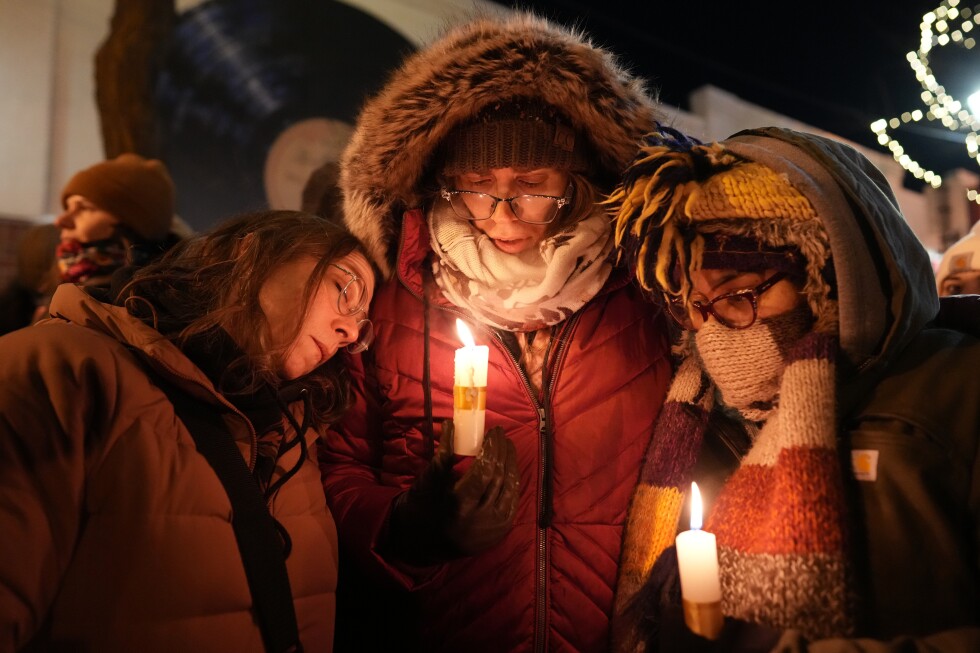
The community continues to mourn Alex Pretti, an intensive care unit nurse killed by immigration agents on Saturday. Hundreds gathered Wednesday night for a vigil at the location where he died. Harmonie Pirius, a registered nurse who attended, expressed feeling “depressed, heartbroken and enraged” over the incident. “It could have been any of us,” she said. “He was trying to help someone and that’s kind of what we’re all about.”
The Department of Homeland Security confirmed that two federal agents involved in Pretti’s death have been placed on leave since the shooting.
U.S. Representative Ilhan Omar, speaking to journalists after being attacked with a strong-smelling substance at a town hall meeting, condemned the administration’s approach. “What is unfolding in our state is not accidental. It is part of a coordinated effort to target Black and brown, immigrant and Muslim communities through fear, racial profiling and intimidation,” Omar said. “This administration’s immigration agenda is not about law enforcement — it is about making people feel they do not belong.”
Fact Checker
Verify the accuracy of this article using The Disinformation Commission analysis and real-time sources.

11 Comments
Interesting developments in Minneapolis. It’s good to see some de-escalation rhetoric from the administration, but the on-the-ground reality appears to still be tense and confrontational. I wonder what concrete steps, if any, are being taken to address the underlying issues.
Agreed, the mixed signals are concerning. Hopefully the officials can find a way to lower tensions and find a constructive path forward.
The mixed signals coming out of Minneapolis are troubling. While the political discourse may have shifted, the reality on the ground appears to be one of continued confrontation and lack of progress. Meaningful change will require good faith efforts from all parties involved.
The ongoing clashes between federal agents and local activists in Minneapolis are concerning. While the political rhetoric may be softening, the continued confrontations on the streets suggest deeper divides that need to be addressed.
Absolutely. Rhetoric is cheap – meaningful change requires real dialogue and compromise from all sides.
It’s encouraging to see some attempts at de-escalation and communication between federal and local officials in Minneapolis. However, the continued confrontations on the streets suggest that there are deeper divides that need to be addressed through substantive, sustained efforts at reconciliation.
This situation in Minneapolis reflects the broader tensions and divisions in the country. While the administration’s rhetoric may have softened, the continued confrontations on the streets suggest there is still a lot of work to be done to find a constructive resolution.
It’s good to see some outreach and communication between the federal and local officials, but the lack of tangible progress on the ground is disappointing. De-escalating these volatile situations requires both sides to act in good faith and find common ground.
Agreed. The standoff in Minneapolis highlights the challenges of bridging political and ideological divides, even when there are public attempts at reconciliation.
The situation in Minneapolis highlights the challenges of bridging political and ideological divides, even when there are public attempts at reconciliation. Rhetoric is not enough – what’s needed is a genuine commitment to finding common ground and implementing concrete solutions.
The ongoing clashes between federal agents and local activists in Minneapolis are deeply concerning. Rhetoric alone won’t resolve these issues – there needs to be a genuine commitment to dialogue, compromise, and addressing the root causes of the tensions.