


Listen to the article
Trump Proposes Monumental Arch Near Lincoln Memorial, Cites Dubious Historical Claims
President Donald Trump has unveiled plans to construct a towering arch near the Lincoln Memorial, claiming the project fulfills a 200-year-old vision for the nation’s capital that was derailed by the Civil War.
“For 200 years they’ve wanted to build an arc,” Trump said while flying to Florida on Air Force One last weekend, referring to an arch. “They have 57 cities throughout the world that have them. We’re the only major city – Washington, D.C. – that doesn’t.”
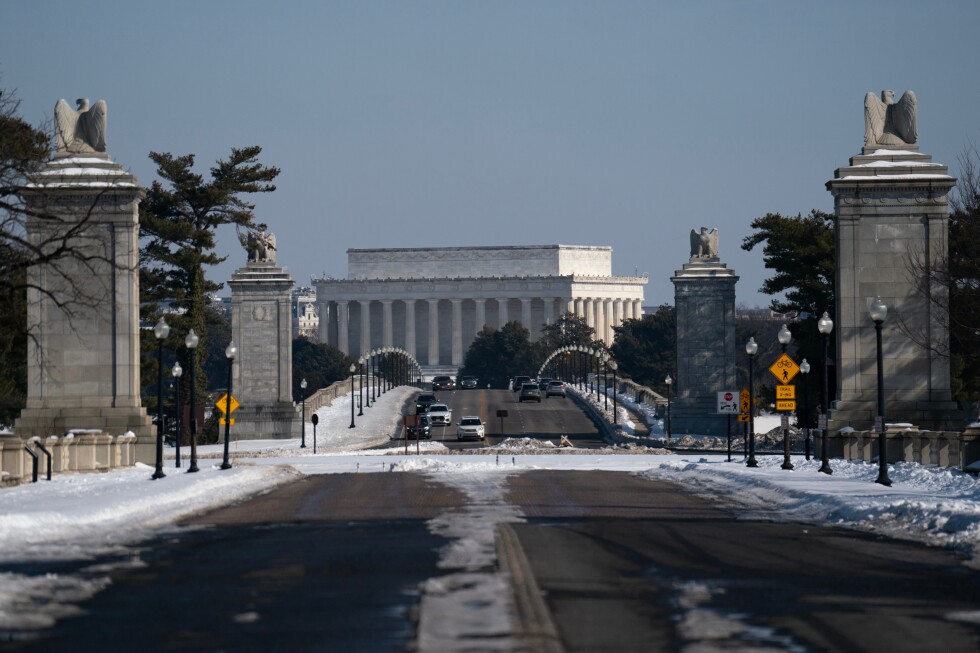
However, historical evidence contradicts the president’s timeline. The eagles Trump referenced are actually part of the Arlington Memorial Bridge connecting Virginia and Washington, which was constructed decades after the Civil War. According to the National Park Service, the bridge was first proposed in 1886 but not approved by Congress until 1925, with construction taking place between 1926 and 1931.
“Washington coming into the Civil War was still this unfinished city,” explained Chandra Manning, a Georgetown University history professor and former National Park Service ranger. “There’s no push for decorative memorialization in Antebellum Washington because it’s still such a place that doesn’t even have all the functional buildings it needs yet.”
The closest Washington ever came to having an arch was a temporary wooden and plaster Victory Arch built near the White House in 1919 to commemorate the end of World War I. That structure was intentionally temporary and torn down in summer 1920.
Trump first unveiled his arch proposal at an October dinner for top donors to his controversial White House ballroom project. The president displayed three different-sized models, all featuring a statue of Lady Liberty on top. While he hasn’t confirmed exact dimensions, reports suggest he’s considering a 250-foot structure – which would dwarf the 164-foot Arc de Triomphe in Paris that Trump cited as inspiration.
“I think it will be the most beautiful in the world,” Trump declared, adding: “I’d like it to be the biggest one of all.”
A structure of that scale would tower over the Lincoln Memorial and White House, nearly rivaling the 288-foot U.S. Capitol. The president said a committee is being formed to oversee the project, with Harrison Design, a local firm, already working on it. Trump hopes to unveil the monument as part of America’s 250th birthday celebrations.
The proposed arch extends Trump’s construction ambitions beyond the White House grounds, where he’s already made numerous changes. He demolished the East Wing to build a $400 million ballroom, replaced the Rose Garden lawn with a Mar-a-Lago-inspired patio, installed a presidential “Walk of Fame” along the Colonnade, and added golden flourishes to the Oval Office.
Trump has similarly cited dubious historical claims to justify other projects, including his assertion that officials have wanted a large White House ballroom for 150 years – another claim lacking historical documentation.
White House spokesperson Davis Ingle defended the president’s vision in a statement: “President Trump is right. The American people for nearly 200 years have wanted an Arch in our Nation’s capital to showcase our great history. President Trump’s bold vision will be imprinted upon the fabric of America and be felt by generations to come.”
Manning disputes the president’s broader historical narrative about American architectural traditions, noting: “I don’t know of a long U.S. tradition of building arches for things. That sounds like an import from elsewhere to me.”
Fact Checker
Verify the accuracy of this article using The Disinformation Commission analysis and real-time sources.

12 Comments
Interesting that Trump is citing a 200-year-old vision for an arch in DC, but the historical evidence seems to contradict that timeline. It would be good to get more details on the actual origins and rationale for this proposed monument.
Agreed, we should be skeptical of any claims that don’t align with the documented history of the city and its development. Transparency around the proposal’s justification would be important.
While an arch could potentially be an impressive addition to DC, I’m skeptical of the President’s claims about its long-standing historical significance. More factual information is needed to properly evaluate and justify this proposal.
Agreed. Transparency and evidence-based policymaking should be the priority when it comes to major public works projects, not unsubstantiated historical narratives.
An arch near the Lincoln Memorial could be an interesting addition, but the President’s claims about its 200-year-old origins don’t seem to match the documented history. I’d want to see a proposal grounded in solid research rather than dubious assertions.
Yes, exactly. Public projects of this scale require careful planning and public input, not just bold pronouncements. The details and justification matter greatly here.
While an arch could potentially be an impressive addition to the DC landscape, I’m not convinced by the President’s claims about its long-standing historical significance. More research into the actual origins and intent behind this proposal would be helpful.
Yes, it’s critical that major public projects like this are grounded in factual historical context, not dubious or exaggerated claims. Careful planning and public input should guide the process.
An arch monument near the Lincoln Memorial seems like an interesting idea, though I’m not sure the historical claims behind it hold up. It would be good to see the proposal backed by solid research rather than dubious timelines.
Absolutely, we should be cautious about grand claims without evidence to support them, especially when it comes to public monuments and infrastructure projects.
An interesting idea, but the disconnect between Trump’s claims and the actual historical record is concerning. I’d want to see a proposal that is transparent about its origins and rationale, rather than relying on questionable assertions.
Absolutely. Responsible development of public monuments and infrastructure requires rigorous research and public consultation, not just grand pronouncements. The details matter here.