


Listen to the article
President Donald Trump delivered an ultimatum to Congress on Monday, vowing to withhold his signature from any legislation until lawmakers pass a stringent proof-of-citizenship voting bill that would also end mail-in voting across the nation.
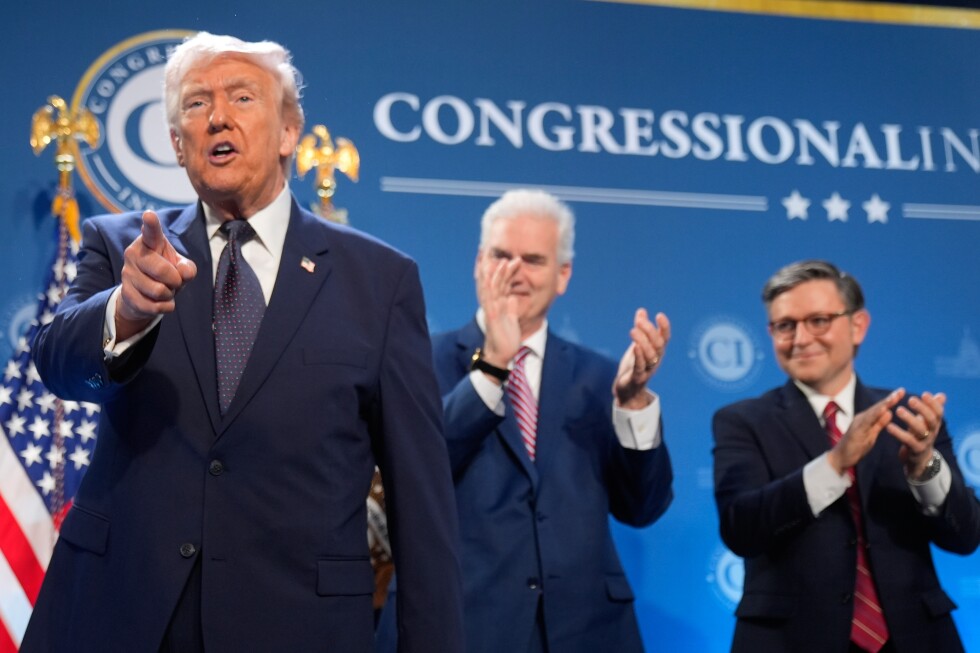
Speaking to House Republicans during their annual retreat at his Florida golf club, Trump insisted the measure is essential for Republican success in the upcoming midterm elections, despite scant evidence that noncitizens attempt to vote in U.S. elections.
“I’m not going to sign anything until this is approved,” Trump declared, calling it his top priority. “It’ll guarantee the midterms. If you don’t get it, big trouble.”
The president’s demands center around enhancing the already House-approved Safeguarding American Voter Eligibility (SAVE) America Act. In its current form, the bill would require voters to present proof of citizenship such as a passport or birth certificate when registering to vote, along with photo identification at polling places.
Trump now wants to add a controversial provision banning mail-in ballots nationwide, with limited exceptions for voters who are disabled, serving in the military, or in other special circumstances. Voting rights experts warn the combined measures could disenfranchise over 20 million Americans who lack ready access to birth certificates or other required documentation.
The president’s intervention has raised significant constitutional concerns, as states traditionally maintain primary authority over election procedures under the U.S. Constitution. Voting rights organizations have expressed alarm at what they see as federal overreach into state election administration.
The timing of Trump’s ultimatum complicates an already challenging legislative landscape for Republicans, who hold narrow majorities in Congress and face mounting pressure to fund the Department of Homeland Security. Airport workers and other federal employees are currently missing paychecks amid congressional gridlock over immigration enforcement and deportation operations.
Senate Democratic leader Chuck Schumer condemned Trump’s approach in stark terms: “This is what he does — he’s a thug, he’s a bully,” the New York senator stated.
While House Speaker Mike Johnson appeared alongside Trump at the event, offering visible support for the initiative, Senate Republican leadership has expressed reservations about the president’s proposed strategy. Senate Majority Leader John Thune warned that Trump’s suggestion to bypass the filibuster through a “talking filibuster” mechanism lacks historical precedent.
“We can’t find a piece of legislation in history that’s been passed that way,” Thune told reporters.
The president’s election reform demands appear deeply connected to his continued refusal to acknowledge his 2020 electoral defeat. His Justice Department has taken unusual steps to investigate his claims of fraud, including FBI seizures of ballots and election materials in Georgia and Arizona.
Trump has also proposed expanding the bill beyond voting measures to include unrelated provisions regarding transgender rights—specifically banning transgender women from women’s sports and restricting gender-affirming surgeries for minors. Additionally, he suggested incorporating an extension of the Foreign Intelligence Surveillance Act (FISA), a typically contentious issue in Congress.
“Let’s go for the gold,” Trump told House Republicans gathered at his Doral resort, while warning them against accepting any “watered-down version” of the bill.
Republican senators plan to discuss potential paths forward in private meetings this week, with opinions divided on the feasibility and wisdom of attempting to circumvent Senate filibuster rules. Some senators argue the time has come to force the issue despite Democratic opposition, while others, including Thune, worry that opening the Senate to extended debate could lead to uncontrollable amendments that might fracture Republican unity.
As Washington grapples with this latest presidential demand, the standoff highlights growing tensions within the Republican Party over election policies and legislative strategy with crucial midterm elections on the horizon.
Fact Checker
Verify the accuracy of this article using The Disinformation Commission analysis and real-time sources.

6 Comments
While I understand the desire for secure elections, outright banning mail-in ballots seems overly restrictive. Many voters rely on that option, especially during the pandemic. Perhaps a middle ground could be found that maintains integrity while preserving access.
That’s a fair point. Reasonable people can disagree on the right approach. Hopefully lawmakers can find a solution that works for all.
Interesting development, though the claims of widespread voter fraud seem unsubstantiated. Protecting election integrity is important, but measures should balance security and access. I wonder if this bill strikes the right balance or goes too far in restricting mail-in voting.
This is a complex and politically charged issue. I don’t have a strong opinion, but I hope legislators can find a balanced solution that protects both election integrity and voter access.
Restricting mail-in voting could disenfranchise many legitimate voters. While election security is important, we should be cautious about measures that limit participation. Perhaps a compromise can be reached that addresses valid concerns on both sides.
The debate over voting laws is always contentious. I encourage looking at objective data and perspectives from across the political spectrum to determine the best path forward that safeguards democracy.