


Listen to the article
President Trump announced Tuesday that he will delay planned military strikes on Iran for two weeks following requests from Pakistani Prime Minister Shehbaz Sharif and Field Marshal Asim Munir. The postponement comes with the condition that Iran must agree to the “complete, immediate, and safe opening” of the strategically vital Strait of Hormuz.
“This will be a double sided CEASEFIRE,” Trump declared in a post on Truth Social. The president stated that the administration has “already met and exceeded all Military objectives” and is making significant progress on a “definitive Agreement concerning Longterm PEACE with Iran, and PEACE in the Middle East.”
The decision represents a dramatic shift from Trump’s earlier ultimatum that threatened military action against Iran beginning at 8 p.m. Eastern Time if no agreement was reached. According to the president, Iran has submitted a 10-point proposal that U.S. officials believe provides “a workable basis on which to negotiate.”
“Almost all of the various points of past contention have been agreed to between the United States and Iran, but a two week period will allow the Agreement to be finalized and consummated,” Trump explained in his statement.
In response, Iran’s Supreme National Security Council issued a statement thanking the Pakistani leaders for their “tireless efforts” to end regional hostilities. Tehran agreed to cease defensive operations if attacks against Iran are halted. The statement also indicated that for the two-week period, safe passage through the Strait of Hormuz “will be possible via coordination with Iran’s Armed Forces” while acknowledging certain “technical limitations.”
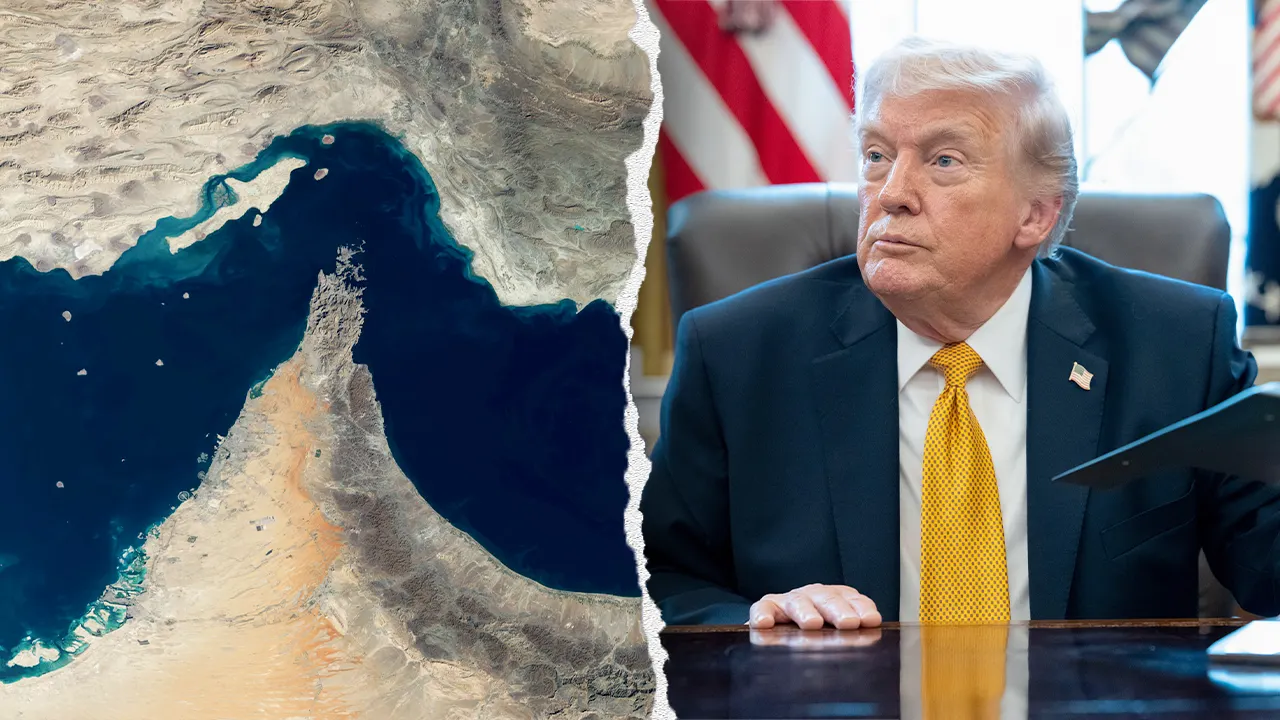
The Strait of Hormuz represents one of the world’s most critical maritime chokepoints, with approximately 20% of global oil shipments passing through the narrow waterway between Iran and Oman. Any disruption to this passage can have immediate and significant impacts on global energy markets and economies worldwide.
As part of the arrangement, Israel has reportedly agreed to suspend its bombing campaign against Iran, further de-escalating tensions in the region that have been building for months.
The White House has taken a cautious approach to the announcement, with Press Secretary Karoline Leavitt telling Fox News that “there are discussions about in person talks, but nothing is final until announced by the President or the White House.” This measured response comes amid reports that further negotiations may take place in Pakistan as soon as Friday.
The temporary ceasefire represents a potential breakthrough in U.S.-Iran relations, which have deteriorated significantly in recent years. Regional tensions have escalated dramatically since October 2023, with Iran’s proxies engaging in attacks against Israel and U.S. forces while Tehran has advanced its nuclear program.
Military analysts suggest that Trump’s strategy of maximum pressure, combined with diplomatic outreach through Pakistani intermediaries, may have created the conditions for this potential diplomatic breakthrough. Pakistan, which maintains relations with both the U.S. and Iran, has emerged as a crucial mediator in the crisis.
The agreement, if finalized, could significantly reshape Middle East geopolitics and potentially provide a framework for resolving longstanding issues between Washington and Tehran.
Energy markets responded immediately to the news, with oil prices moderating as traders anticipated the restoration of full shipping capacity through the vital strait. Maritime security experts emphasized that reopening the waterway would be crucial for global supply chains and energy security.
The two-week window now presents both an opportunity and a challenge for diplomats from all sides, as they work to transform this temporary pause into a more permanent resolution to one of the world’s most volatile regional conflicts.
Fact Checker
Verify the accuracy of this article using The Disinformation Commission analysis and real-time sources.

12 Comments
This ceasefire proposal is an intriguing development, but the devil will be in the details. Ensuring the safe passage of ships through the Strait of Hormuz is crucial for the global economy.
I’ll be closely watching to see if this temporary agreement can pave the way for a more comprehensive and long-lasting peace deal between the US and Iran.
From an economic perspective, keeping the Strait of Hormuz open is crucial for the flow of oil and other commodities. A ceasefire agreement could help stabilize energy markets in the short term.
However, longer-term cooperation between the US and Iran on this issue will be essential to ensure the reliable supply of resources like oil, natural gas, and metals.
Interesting move by Trump to propose a ceasefire with Iran in exchange for opening the Strait of Hormuz. Seems like an attempt to find diplomatic resolution amidst rising tensions in the region.
A temporary ceasefire could provide an opportunity for further negotiations, but the long-term stability of any agreement remains to be seen.
The proposed ceasefire seems like a pragmatic approach to de-escalating tensions, but I remain somewhat skeptical about Iran’s willingness to uphold their end of the bargain.
Nonetheless, any progress towards a diplomatic solution is welcome, as it could have positive implications for global commodity markets and geopolitical stability.
It’s encouraging to see the US and Iran making progress on a potential agreement, but the situation remains delicate. Maintaining an open Strait of Hormuz is a key priority for global energy security.
I’m curious to see if this ceasefire proposal can lead to a more lasting diplomatic solution, or if tensions will flare up again after the two-week period.
This proposed ceasefire could be an important first step towards a more comprehensive peace deal between the US and Iran, if both sides are willing to make concessions.
However, the details of the agreement and Iran’s willingness to open the Strait of Hormuz will be crucial in determining the success of these negotiations.