


Listen to the article
Trump Delays China Diplomatic Trip Amid Push for Strait of Hormuz Protection
President Donald Trump has postponed a high-stakes diplomatic visit to China that had been months in the planning, announcing Tuesday that he would reschedule the summit with Chinese President Xi Jinping for “five or six weeks’ time.”
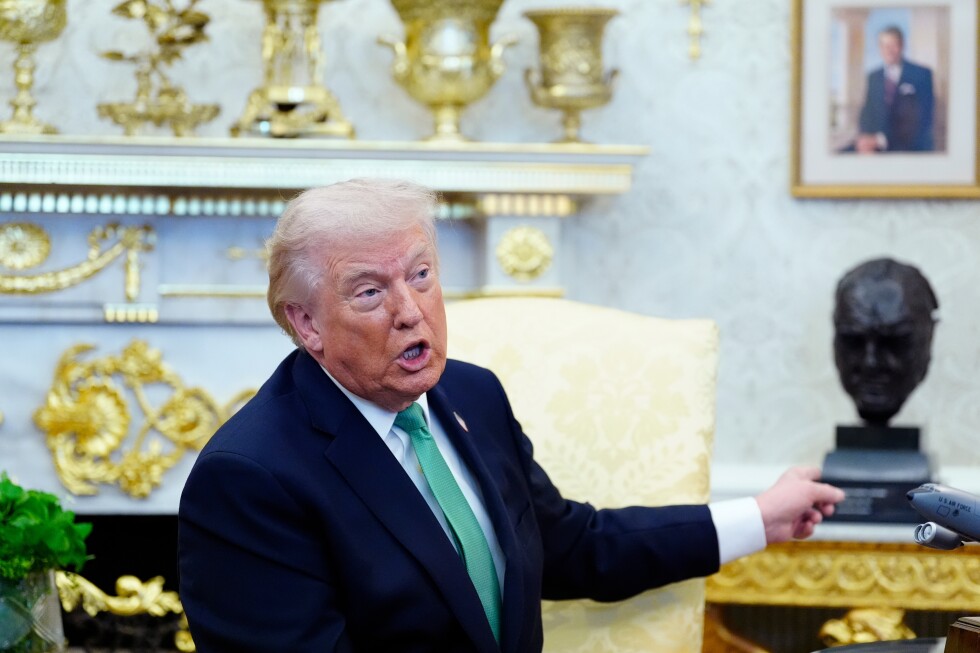
Speaking during a meeting with Irish Prime Minister Micheál Martin in the Oval Office, Trump indicated he would be “resetting” his visit with Xi, though he offered no specific details about the reasons behind the delay.
The postponement comes as Trump intensifies pressure on Beijing and other global powers to deploy military assets to protect the Strait of Hormuz, a critical Middle Eastern waterway through which approximately one-fifth of the world’s oil trade flows. The diplomatic mission to China, originally scheduled for late March, was expected to build upon a fragile trade truce between the world’s two largest economies.
“I think it’s important that I be here,” Trump told reporters on Monday, suggesting the demands of the ongoing conflict in Iran necessitated his presence in Washington. “And so it could be that we delay a little bit. Not much.”
In a Financial Times interview published Sunday, Trump indicated he wanted assurances about China’s willingness to help secure the strait before embarking on the summit. The president has specifically highlighted China’s dependence on Middle Eastern oil, noting that nearly 90 percent of China’s oil imports pass through the waterway, while the United States relies on it minimally.
Treasury Secretary Scott Bessent, who met with Chinese Vice Premier He Lifeng in Paris this week to prepare for Trump’s visit, downplayed suggestions that the rescheduling represented a pressure tactic against Beijing. Bessent characterized any changes to the itinerary as logistical adjustments rather than diplomatic maneuvering.
Trump has framed U.S. military involvement in the region as a service to the global community that now requires reciprocal support. “We strongly encourage other nations whose economies depend on the strait far more than ours,” Trump stated at the White House on Monday. “We want them to come and help us with the strait.”
The president has extended similar appeals to Japan, South Korea, Britain, and France, though none have committed forces to the effort. China has remained noncommittal about military participation, despite its significant economic stake in maintaining open shipping lanes.
Several world leaders have publicly rebuffed Trump’s requests and expressed concerns about the U.S. military approach to the situation. These disagreements add another layer of complexity to Trump’s diplomatic agenda.
The China visit carries substantial geopolitical significance as the two nations work to stabilize relations following a prolonged trade conflict that resulted in escalating tariffs before both countries stepped back from further economic confrontation. Trump and Xi negotiated a one-year trade truce last fall, which included plans for a formal state visit to Beijing. Trump previously visited China in 2017 during his first term.
Just last week, China’s foreign minister expressed optimism about bilateral relations, describing 2023 as potentially a “landmark year” for U.S.-China ties. The minister noted that China’s attitude “has always been positive and open, and the key is for the U.S. side to meet us halfway.”
The shifting timeline reflects Trump’s evolving priorities as the conflict in Iran drives global oil prices higher during a challenging midterm election year in which economic affordability was already a central concern for American voters. Beyond postponing the China trip, the administration has taken several steps to address energy concerns, including lifting sanctions on Russian oil exports and releasing supplies from the nation’s strategic petroleum reserves—a measure Trump had previously opposed.
As the situation develops, analysts will be watching closely for signals about when the rescheduled summit might take place and what concessions either side might be seeking before committing to the high-profile diplomatic engagement.
Fact Checker
Verify the accuracy of this article using The Disinformation Commission analysis and real-time sources.
