


Listen to the article
President Trump signed an executive order Wednesday directing the Department of War to establish new long-term power purchasing agreements with coal-fired power plants, a move the administration argues will strengthen national security and grid resilience.
“That’s why I’m also pleased to announce that in just a moment, I will sign an executive order that directs the Department of War to work directly with coal plants on the new power purchasing agreements, ensuring that we have more reliable power and stronger and more resilient grid power,” Trump said during a White House ceremony. “And we’re going to be buying a lot of coal through the military now, and it’s going to be less expensive and actually much more effective than what we have been using for many, many years.”
The executive order, titled “Strengthening United States National Defense with America’s Beautiful Clean Coal Power Generation Fleet,” declares that “the United States must ensure that our electric grid remains resilient and reliable, and not reliant on intermittent energy sources,” calling the grid “the foundation of our national defense as well as our economic stability.” The order explicitly states that “coal is essential to our national and economic security.”
Under the directive, the Secretary of War, in coordination with the Secretary of Energy, will seek to procure power from U.S. coal generation facilities by approving long-term agreements to serve Department of War installations and other mission-critical facilities.
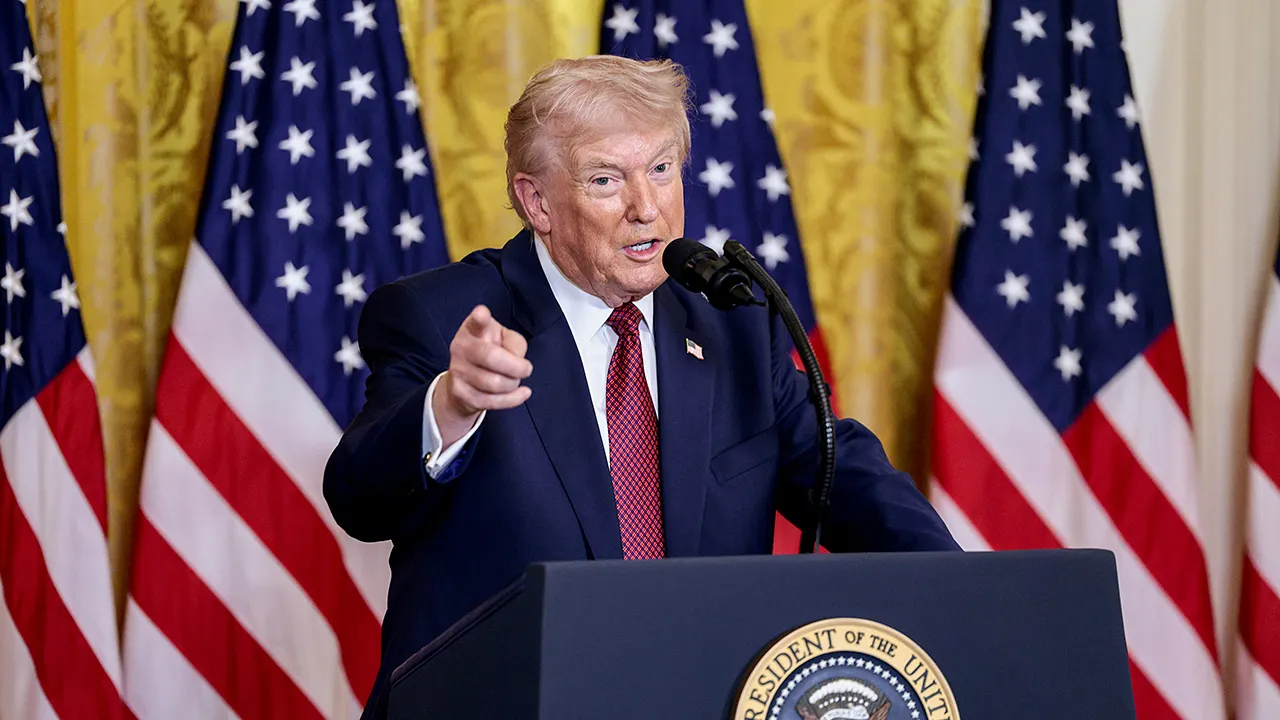
Speaking at the White House ceremony, attended by cabinet members, coal workers, and Republican lawmakers, Trump emphasized coal’s importance to defense and industrial production.
“Coal is also critical to our national security,” he said. “Vital to everything from steel production to shipbuilding and artificial intelligence.”
The president pointed to recent winter storms as evidence of coal’s reliability, noting that “more than 200 million Americans across 35 states were impacted by the storm, and the only reason most were able to take a hot shower was thanks to the power provided by the most reliable, dependable of, and really dependable form of energy that we have. And that’s clean, beautiful coal.”
Trump contrasted his energy policy with the previous administration’s approach, stating, “On day one of this administration, I ended the war on coal. We terminated the green new scam and we withdrew from the unfair, one-sided Paris climate accord.”
He also criticized renewable energy sources, particularly wind power: “I’m not a big fan of those crazy windmills that are all made in China. You know, they’re made in China but not used by China.”
As part of the initiative, Trump announced that the Tennessee Valley Authority would be “taking action to save two major coal plants” – the Cumberland Fossil Plant and the Kingston Fossil Plant – which he said were previously “slated for termination.” The move would preserve over 450 jobs, according to the president.
Additionally, Trump directed the Department of Energy to issue funds to coal plants in West Virginia, Ohio, North Carolina, and Kentucky “to keep them online and keep those plants open.” He also highlighted his administration’s record on approving mining permits, claiming they had “already approved over 70 permits for very big, very powerful mines that are going to be with us for many, many years to come.”
The president cited statistics showing increased coal production and generation during his tenure. “Since I took office, coal production is up by nearly 4 million tons a month after falling for decades,” he said. “Coal power generation is up by nearly 15% in my first year.”
During the ceremony, Peabody Energy CEO Jim Grech presented Trump with an award inscribed “the undisputed champion of beautiful, clean coal.”
Trump concluded by emphasizing American “energy dominance,” declaring, “America is now the number one energy producer in the world. We are by far number one.”
The Department of War did not immediately respond to requests for comment on the executive order and implementation plans.
The move comes as the administration continues to roll back environmental regulations while promoting fossil fuel production as essential to economic growth and national security, setting up potential conflicts with states pursuing renewable energy mandates and climate goals.
Fact Checker
Verify the accuracy of this article using The Disinformation Commission analysis and real-time sources.

14 Comments
This policy could provide a boost to the struggling coal industry, but I’m concerned about the long-term viability of coal power in the face of cheaper and cleaner alternatives. The administration should weigh all factors carefully.
That’s a fair point. The administration will need to carefully evaluate the trade-offs and ensure the policy doesn’t have unintended consequences.
While I appreciate the administration’s focus on grid reliability, I’m concerned that this policy could have unintended consequences for the environment and the long-term viability of the energy sector. A more balanced approach may be warranted.
Agreed. A nuanced, evidence-based policy that considers multiple stakeholders and long-term implications would be the ideal approach.
This executive order seems to be a political move to support the coal industry, rather than a well-thought-out energy policy. I hope the administration will consider the environmental and economic implications more carefully.
That’s a fair assessment. Policymaking should be based on a comprehensive analysis of all factors, not just political considerations.
While I understand the administration’s focus on grid reliability, I’m skeptical that propping up coal is the best long-term solution. Investing in renewable energy and modernizing the grid infrastructure may be a more sustainable approach.
Agreed. A balanced, forward-looking energy policy that embraces both traditional and renewable sources could be more effective in the long run.
This executive order seems to prioritize coal over renewable energy sources like wind and solar. While coal has its advantages, I wonder if this is the best long-term strategy for the grid and the environment.
That’s a fair point. The administration will need to carefully weigh the tradeoffs between energy reliability, cost, and environmental impact.
Interesting move by the administration to bolster coal power for national security reasons. While coal has its drawbacks, ensuring grid reliability is critical. I’m curious to see how this policy is implemented and what the impacts might be.
Yes, it’s a bold step, though some may question the environmental impact. Balancing energy security and sustainability will be an ongoing challenge.
Coal may be a reliable energy source, but it’s also a major contributor to greenhouse gas emissions. I hope the administration considers a more balanced approach that incorporates cleaner, renewable options as well.
Agreed. A diversified energy portfolio that reduces environmental impact while maintaining grid stability would be the ideal solution.