


Listen to the article
US-Israeli Military Operation in Iran Raises Constitutional Questions About War Powers
President Donald Trump’s announcement of a major joint military operation with Israel against Iran has ignited debate over whether he properly consulted Congress before taking action. The operation, dubbed “Operation Epic Fury,” targets Iranian leadership and weapons systems that officials claim pose an imminent threat to both countries.
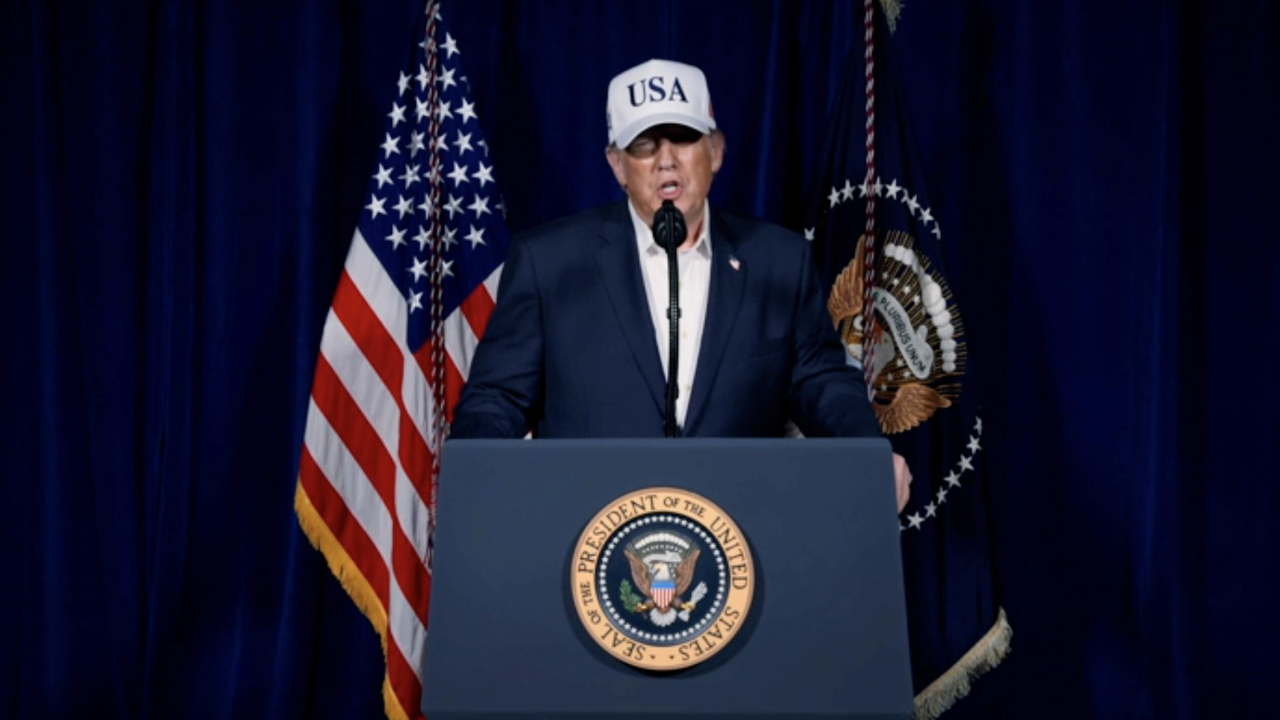
In his Saturday statement, Trump explicitly characterized the mission as a “war,” noting that “the lives of courageous American heroes may be lost, and we may have casualties. That often happens in war.” This language has heightened scrutiny over presidential war powers and congressional oversight.
Legal experts point to the 1973 War Powers Resolution and the 2001 Authorization for Use of Military Force (AUMF) as providing Trump legal justification for the strikes, at least initially. George Washington University law professor Jonathan Turley explained, “The courts have allowed presidents to order such attacks unilaterally… There has historically been deference to presidents exercising such judgments under the War Powers Resolution’s vague standard.”
The War Powers Resolution requires presidents to consult Congress within 48 hours of military action and cease operations within 60 days without congressional approval. Former State Department Iran advisor Gabriel Noronha argued that the 2001 AUMF already authorizes the president’s actions, claiming Iran is “the headquarters of al Qaeda” and falls under the authorization to use force against nations that “harbored” organizations involved in the 9/11 attacks.
“Congress has had 25 years to limit the scope of the 2001 AUMF,” Noronha wrote. “Instead, it has consciously decided to preserve the President’s rights under the law to pursue international terrorists to the end of the earth.”
The White House has emphasized its communication with congressional leadership before the strikes. Secretary of State Marco Rubio briefed the “Gang of 8” — top Democratic and Republican leaders in Congress and intelligence committee members — on the timing of the operation, contacting all but one member. The Pentagon separately briefed Armed Services committees once operations began.
The division of labor between U.S. and Israeli forces appears strategically designed to navigate legal constraints. According to a U.S. official, Israel is targeting Iranian leadership, while American forces focus on missile sites representing an “imminent threat.” Retired Israeli Air Force general Amos Yadlin confirmed this arrangement, noting that Israel carried out strikes on Iran’s leadership because of longstanding U.S. laws restricting the targeting of heads of state.
The Israel Defense Forces released video footage claiming to show strikes against Iranian soldiers who were reportedly preparing missile launchers aimed at Israel. The coordinated operation marks a significant escalation in the regional conflict.
Congressional reaction has largely split along party lines. Republican lawmakers have mostly supported Trump’s decision, with Senate Republican leader John Thune commending the president and citing Iran’s “relentless nuclear ambitions” and diplomatic intransigence.
Democrats have been more critical. House Minority Leader Hakeem Jeffries stated that absent “exigent circumstances,” Trump needs congressional authorization for an “act of war,” adding that “the Trump administration must explain itself to the American people and Congress immediately, provide an ironclad justification for this act of war, clearly define the national security objective and articulate a plan to avoid another costly, prolonged military quagmire in the Middle East.”
Some non-interventionist Republicans have also expressed concern. Senator Rand Paul emphasized that the Constitution gave Congress war-making authority “for a reason, to make war less likely,” quoting James Madison’s warning that “the Executive Branch is the branch most prone to war.”
A bipartisan group of lawmakers, including Jeffries, Senate Minority Leader Chuck Schumer, and Republican Representative Thomas Massie, is planning to introduce a war powers resolution that would block further U.S. military action in Iran without congressional approval. Previous similar efforts failed after Trump ordered targeted strikes on Iran’s nuclear facilities earlier in his term.
As Operation Epic Fury unfolds, the constitutional debate over war powers and executive authority is likely to intensify, particularly if the conflict expands or extends beyond the initial strikes.
Fact Checker
Verify the accuracy of this article using The Disinformation Commission analysis and real-time sources.

14 Comments
Striking Iran is a major escalation that could have serious regional and global consequences. I’m concerned about the lack of clear strategy and the potential for further retaliation and conflict.
Agreed, unilateral military action without a well-defined endgame is risky. I hope there are contingency plans in place to mitigate the fallout and protect American lives and interests.
This is a complex and controversial issue. While the President may have some legal authority for unilateral military action, Congress should still play a key oversight role. I hope there is thorough discussion and debate around the justification and implications of this operation.
I agree, the balance of war powers between the executive and legislative branches is an ongoing debate. Transparency and accountability are crucial, regardless of one’s political views.
As a concerned citizen, I’m worried about the potential for this to escalate into a wider regional conflict. De-escalation and diplomatic solutions should be prioritized to avoid further loss of life and destabilization.
I share your concerns. Diplomacy and conflict resolution should always be the preferred path, even in the face of provocations. Restraint and careful statecraft are critical to preventing an even more dangerous situation.
I’m a mining investor and this development raises concerns about the reliability of global mineral supply chains, especially for critical materials like uranium and rare earths that rely on Iranian production. Sanctions and regional instability could constrain global supplies.
That’s an important consideration. Supply chain resilience and diversification will be crucial, especially for strategic minerals. Policymakers should carefully weigh the economic and geopolitical ramifications of any military actions.
This is a complex and fast-moving geopolitical situation. I’ll be closely following authoritative news sources and expert analysis to better understand the implications for the US, the Middle East, and the global economy.
That’s a wise approach. Staying informed from reliable sources will be crucial as this situation unfolds. It’s a delicate balance, but maintaining an objective, fact-based perspective is important.
From a legal perspective, the President’s justification for bypassing Congress on this seems tenuous. The 2001 AUMF was aimed at al-Qaeda, not Iran. And the War Powers Act’s ‘imminent threat’ threshold appears to be a stretch. There should be robust debate on Capitol Hill.
I agree, the legal rationale appears questionable. Congress has a critical constitutional role in authorizing the use of military force. This merits close scrutiny to ensure the President is acting within the bounds of the law.
As an energy analyst, I’m curious how this operation could impact global oil and gas markets. Disruptions to Iranian supply and potential retaliation could roil commodity prices and disrupt trade flows.
That’s a good point. Geopolitical tensions in the Middle East often have significant impacts on energy markets. We’ll have to watch the situation closely for any volatility or supply shocks in the weeks ahead.