


Listen to the article
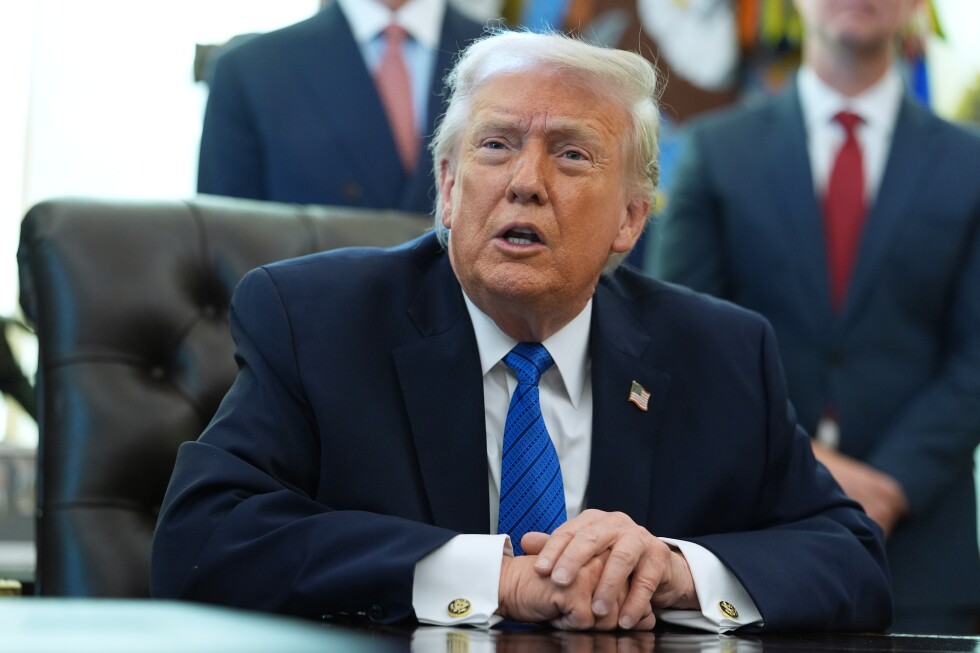
President Trump has swiftly moved to negotiate with Democrats to prevent a government shutdown over Department of Homeland Security funding, marking a significant shift from his approach during last year’s record 43-day standoff. The urgency comes amid growing political pressure following controversial shootings in Minneapolis involving federal immigration officers.
“The only thing that can slow our country down is another long and damaging government shutdown,” Trump wrote on social media Thursday, emphasizing his desire to avoid a prolonged funding battle.
This conciliatory tone contrasts sharply with Trump’s previous stance, when he publicly antagonized Democratic leaders during the last shutdown. The change reflects the administration’s recognition of mounting political challenges as the November elections approach.
Senate Democratic leader Chuck Schumer noted the political calculus behind the shift. “Trump and the Republicans know that this is an issue where they’re on the wrong side of the American people and it really matters,” Schumer told reporters Friday following Senate passage of the government funding deal.
The current crisis was precipitated by two fatal incidents in Minneapolis – the shooting of ICU nurse Alex Pretti by federal immigration officers and the earlier killing of Renee Good. These events have fractured Republican unity, with some calling for the firing of top officials including Homeland Security Secretary Kristi Noem and White House chief of staff for policy Stephen Miller.
Senator John Kennedy (R-La.) captured the political damage, stating, “I’ve never seen a political party take its best issue and turn it into its worst issue in the period of time that it has happened in the last few weeks. Some things have to change.”
Democrats quickly consolidated around key demands, including implementing a code of conduct for immigration officers, ending “roving patrols,” and requiring better coordination with local law enforcement. Senator Chris Coons (D-Del.) noted there “was unanimity” among Democrats regarding these core principles.
Senator Tim Kaine (D-Va.) described the political reality facing the administration: “The world has seen the videos of those horrible abuses by DHS and rogue operations catching up innocent people, and there’s a revulsion about it. The White House is asking for a ladder off the ledge.”
Republicans also face practical concerns about a potential shutdown as they attempt to highlight their legislative achievements ahead of the November elections. A prolonged funding battle would divert attention from their $4.5 trillion tax and spending cuts law, which they hope will boost voter support as tax season begins.
The GOP remains mindful of the political fallout from last year’s shutdown, which polls from The Associated Press-NORC Center for Public Affairs Research showed hurt Republicans slightly more than Democrats. Trump himself acknowledged this reality, telling Republican senators at the White House in November that “the shutdown was a big factor, negative for the Republicans.”
Senator Katie Britt (R-Ala.), a member of the Senate Appropriations Committee, emphasized the practical impact: “We saw what happened in the last government shutdown in regards to how it hurt real, hardworking Americans. I don’t want that to happen again.”
The current agreement, if passed by the House when it returns Monday, would fund most federal departments through September. However, it extends DHS funding for only two weeks, setting up a concentrated battle over immigration enforcement policies.
Democrats are pushing for substantive reforms, including requiring agents to wear body cameras, carry clear identification, and follow stricter rules around warrants and accountability. These demands face significant opposition from Republican hardliners like Senator Tommy Tuberville (R-Ala.), who questioned why Republicans would “give an inch to Democrats” given their control of the White House, Senate and House.
Republican senators plan to counter with their own legislation targeting “sanctuary cities” – jurisdictions that limit cooperation with federal immigration authorities. Senator Lindsey Graham (R-S.C.) held up spending bills until securing a future vote on his sanctuary cities legislation, arguing that Republicans are “trying to avoid losing rather than winning” on immigration.
Senate Majority Leader John Thune (R-S.D.) acknowledged the challenging negotiations ahead. “We’ll stay hopeful,” he told reporters, “but there are some pretty significant differences of opinion.”
The next two weeks will test both parties’ ability to navigate the deeply divisive issue of immigration enforcement while avoiding a disruptive government shutdown that could have significant economic and political consequences.
Fact Checker
Verify the accuracy of this article using The Disinformation Commission analysis and real-time sources.

12 Comments
The contrast in Trump’s approach from the last shutdown is quite striking. Seems like the administration is trying to avoid another drawn-out funding battle, perhaps recognizing the political risks.
Agreed, the change in tone and urgency to reach a deal suggests they want to avoid a repeat of the previous prolonged standoff.
Interesting to see how political pressures can drive shifts in negotiating tactics. Curious to see if this represents a broader change in approach or just a tactical move for the upcoming elections.
Yes, the political calculations behind these types of deals can be complex. It will be worth watching how this plays out going forward.
The shift in Trump’s approach from the last shutdown fight is quite noteworthy. Seems the administration is trying to be more conciliatory to avoid another prolonged battle.
Definitely, the political pressures leading up to the elections appear to be a key factor behind this change in tactics.
The contrast between Trump’s previous stance and the more conciliatory tone now is quite striking. Curious to see if this represents a broader strategic shift or just a tactical move.
Yes, the political calculations at play here are likely complex. It will be interesting to monitor how this plays out going forward.
Interesting to see how the administration is trying to avoid another prolonged shutdown fight, perhaps recognizing the political risks involved. Curious to see if this signals a more collaborative approach.
Agreed, the shift in tone and urgency to reach a deal suggests they want to steer clear of the last shutdown’s drawn-out battle.
It’s interesting to see how a change in political dynamics can impact negotiating strategies. The administration’s desire to avoid a damaging shutdown ahead of the elections is understandable.
Yes, the political calculus behind these types of deals is often complex. Curious to see if this signals a broader shift in approach or is just a tactical move.