


Listen to the article
Federal Judge Boasberg’s Case Assignments Draw Scrutiny Amid High-Profile Trump Litigation
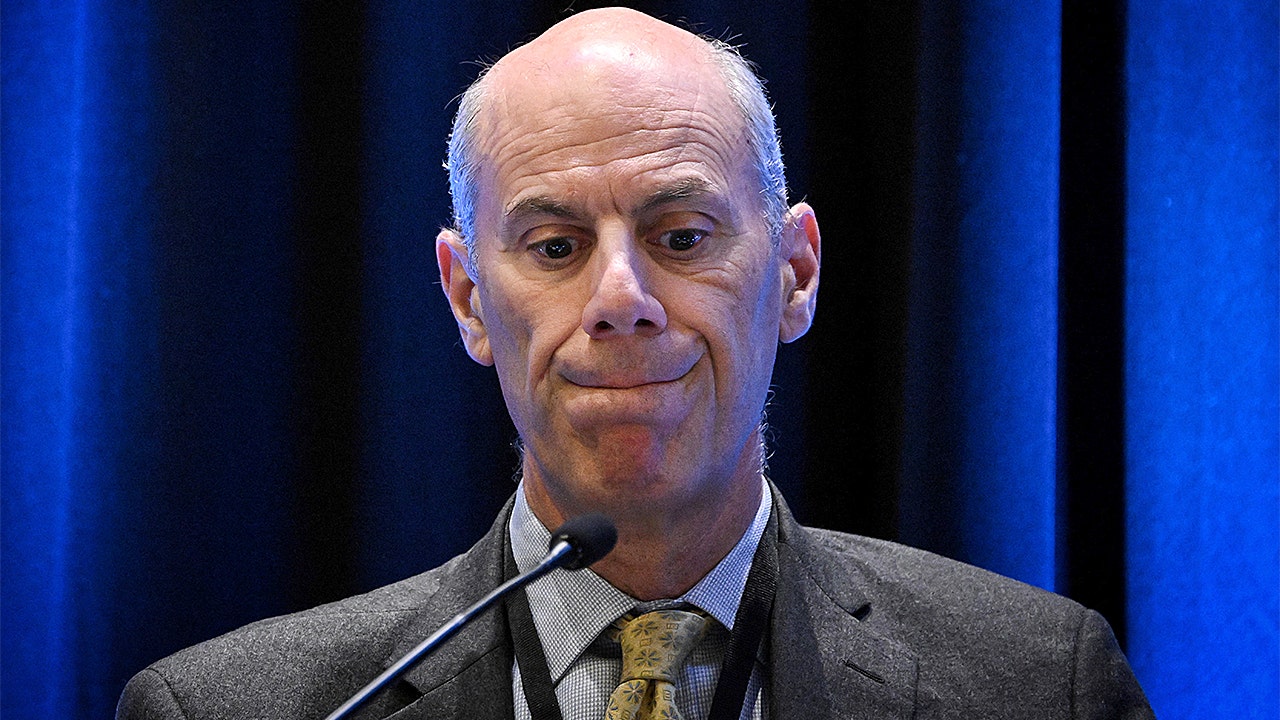
U.S. District Judge James Boasberg faces renewed Republican scrutiny after California Rep. Eric Swalwell’s lawsuit against a senior Trump housing official landed in his court. Critics have questioned Boasberg’s assignment to several high-profile cases involving the Trump administration, including litigation over the deportation of Venezuelan migrants to El Salvador and the “Signalgate” controversy.
Despite the criticism, a Fox News Digital review found that Boasberg has actually been assigned fewer Trump-related cases than some of his colleagues on the D.C. federal bench. Legal experts emphasize that case assignments in federal courts follow a randomized computer system, designed to ensure fair distribution among judges.
“We’re sitting in our districts. The cases are randomly assigned,” explained Philip Pro, a former U.S. district judge and Reagan appointee. “There is nothing ‘rogue’ about these decisions.”
Boasberg’s background has made him a particular focal point for Trump’s criticism. In 2014, Supreme Court Chief Justice John Roberts appointed him to a seven-year term on the U.S. Foreign Intelligence Surveillance Court (FISA Court). After returning to regular district court duties, Boasberg presided over the sentencing of former FBI attorney Kevin Clinesmith, who pleaded guilty to altering an email related to the surveillance of former Trump campaign advisor Carter Page. Boasberg’s decision to sentence Clinesmith to probation rather than prison time raised eyebrows, with the judge citing the “hurricane” of media attention as sufficient punishment.
The perception that Boasberg handles a disproportionate share of Trump-related cases stems partly from the prolonged J.G.G. v. Trump litigation. This case challenged the Trump administration’s use of the 1798 Alien Enemies Act to deport hundreds of Venezuelan nationals to El Salvador in March. Despite Boasberg’s emergency order blocking the deportations, the planes departed for El Salvador, prompting an ongoing contempt investigation.
Former U.S. District Judge Liam O’Grady, who served alongside Boasberg on the FISA Court, defended the judge’s role. “Boasberg didn’t pluck this issue out of the sky,” O’Grady told Fox News Digital. “He has a case before him where one side is saying, ‘it can’t be used,’ and the executive branch is saying, ‘it can be used.’ And it’s up to him to make that decision.”
Other federal judges in Washington have handled equally significant Trump-related cases. Judge Ana Reyes has presided over challenges to the administration’s transgender military service restrictions and National Guard deployments. Judge Jia Cobb temporarily blocked both National Guard deployments in D.C. and Trump’s attempt to fire Federal Reserve Governor Lisa Cook.
The D.C. District Court naturally handles a large volume of cases involving government agencies due to its jurisdiction over the nation’s capital, where many federal administrative actions originate.
Republicans on the House Judiciary Committee have previously questioned the randomized assignment system. In May, Representatives Jim Jordan, Darrel Issa, and Chip Roy sent a letter to the D.C. clerk’s office requesting information about the court’s case allocation process after Boasberg was assigned to the “Signalgate” lawsuit. That case, which alleged violations of federal recordkeeping laws when administration officials used the Signal messaging app to discuss sensitive information, appears to be resolving without judicial intervention.
“While the District Court’s allocation process is intended to produce an ‘equal distribution of cases to all judges,’ in practice the distribution of cases can be unequal,” the representatives claimed in their letter.
As contentious legal battles over the Trump administration’s policies continue, the spotlight on judicial assignments and decisions is likely to remain intense, reflecting broader tensions in the American political and legal landscape.
Fact Checker
Verify the accuracy of this article using The Disinformation Commission analysis and real-time sources.

6 Comments
This highlights the challenges judges face in high-profile, politically-charged cases. While the process aims to be fair, the public scrutiny can be intense. I’m curious to see if this leads to any changes in how cases are assigned going forward.
Absolutely. The political nature of these cases puts judges in a difficult position, even if they are just following standard procedures. It will be interesting to see if this sparks any discussions around potential reforms to the case assignment system.
The mining and energy sectors are often intertwined with political issues, so it’s not surprising to see this judge facing scrutiny. The randomized system is meant to be fair, but the perception of bias is hard to avoid. I wonder how this will impact future legal proceedings in this space.
Good point. The intersection of politics, energy, and mining creates a complex landscape for the legal system to navigate. Maintaining public trust in the fairness of the process is crucial, even if the actual case assignment is impartial.
Interesting to see the judge’s assignment to Trump-related cases drawing renewed scrutiny. While the process seems random, the high-profile nature of these cases likely contributes to the attention. I wonder if the judge’s background as a Reagan appointee factors into the criticism.
You raise a good point. The judge’s background could be seen as influencing the perception, even if the case assignment is truly random as stated. It’s a complex issue without easy answers.