


Listen to the article
President Trump Issues 48-Hour Ultimatum to Iran Over Strait of Hormuz
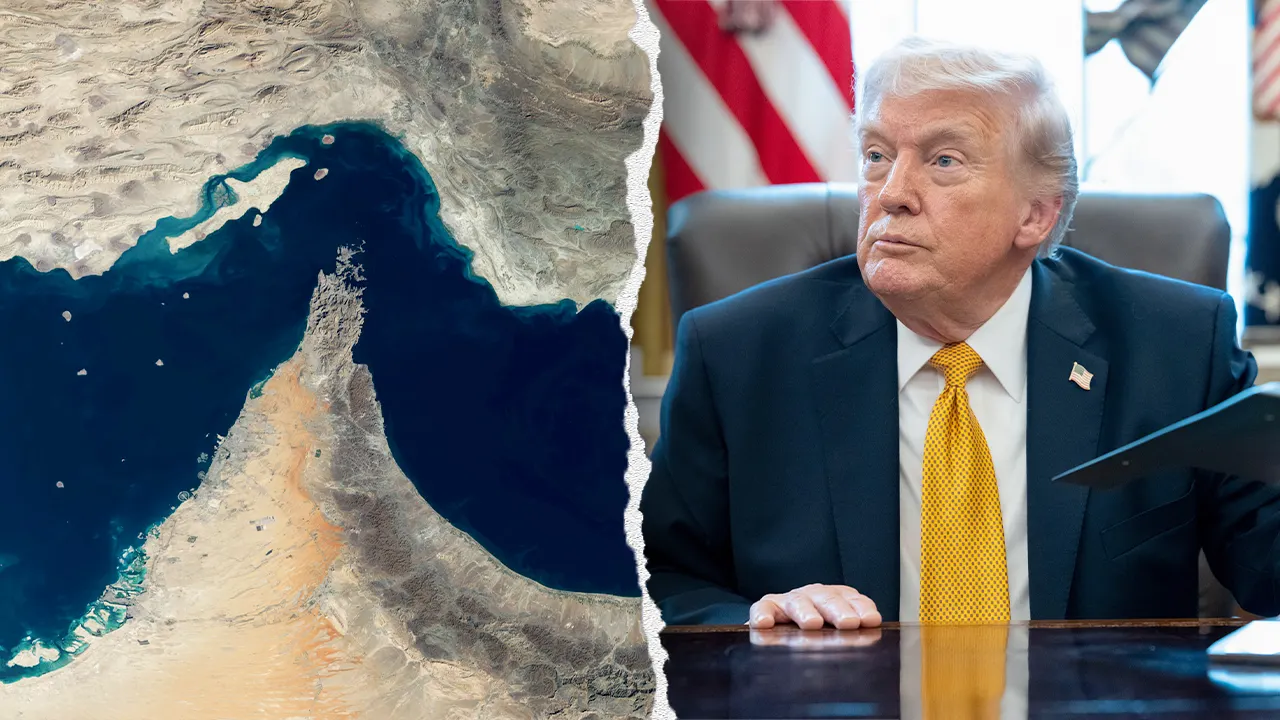
President Donald Trump escalated tensions with Iran on Saturday, issuing a 48-hour ultimatum demanding the full reopening of the Strait of Hormuz or face military consequences.
“If Iran doesn’t FULLY OPEN, WITHOUT THREAT, the Strait of Hormuz, within 48 HOURS from this exact point in time, the United States of America will hit and obliterate their various POWER PLANTS, STARTING WITH THE BIGGEST ONE FIRST!” Trump declared in a post on Truth Social.
This stark warning represents a significant intensification in rhetoric over the strategically vital waterway, which has experienced severely limited traffic since early March when the conflict with Iran began.
The Strait of Hormuz, a narrow channel connecting the Persian Gulf to the Gulf of Oman, serves as a critical global chokepoint for energy supplies. Approximately one-fifth of the world’s crude oil passes through this narrow passage, making its closure a matter of international economic security.
Trump’s ultimatum follows comments he made to reporters on Friday, where he described reopening the strait as a “simple military maneuver” that would require substantial naval support. “It’s relatively safe, but you need a lot of help in the sense of you need ships, you need volume,” the president said.
In the same remarks, Trump criticized NATO allies for their reluctance to join U.S. efforts to secure the waterway. He later took to social media, calling NATO members “cowards” who “complain about the high oil prices they are forced to pay, but don’t want to help open the Strait of Hormuz.”
Despite Trump’s criticism, international support for action in the strait appears to be growing. More than 20 countries, including major allies like the United Kingdom, France, Germany, Italy, Japan, Canada, and the United Arab Emirates, have signed a joint statement signaling their “readiness to contribute to appropriate efforts to ensure safe passage” through the strait.
The statement forcefully condemned “recent attacks by Iran on unarmed commercial vessels in the Gulf, attacks on civilian infrastructure including oil and gas installations, and the de facto closure of the Strait of Hormuz by Iranian forces.” It further expressed “deep concern about the escalating conflict” and called on Iran to “cease immediately its threats, laying of mines, drone and missile attacks and other attempts to block the Strait to commercial shipping.”
The ongoing maritime crisis has already prompted U.S. military action. Earlier this week, U.S. Central Command (CENTCOM) reported that American forces struck Iranian anti-ship missile sites near the Strait of Hormuz using 5,000-pound bunker-buster bombs.
The closure of the strait has significant implications for global energy markets. As shipping companies avoid the dangerous passage, alternative routes add time and cost to oil deliveries, potentially driving up energy prices worldwide. The uncertainty surrounding the waterway has already contributed to market volatility, with traders closely monitoring developments that could affect supply chains.
Energy security experts note that a prolonged blockage of the strait could force major importing nations to tap into strategic petroleum reserves if the situation isn’t resolved quickly.
The escalating tensions come at a particularly sensitive time for international relations in the Middle East, with the conflict threatening to draw in more regional powers and further destabilize an already volatile region.
Fact Checker
Verify the accuracy of this article using The Disinformation Commission analysis and real-time sources.

14 Comments
From a geopolitical perspective, this ultimatum represents a significant provocation. Iran will likely view it as a serious threat to its sovereignty and national interests. I hope both sides can find a way to de-escalate the situation.
Absolutely, Iran is unlikely to back down easily on this. The stakes are high for both countries, and miscalculation could have devastating consequences.
Tensions are certainly escalating in the region. Closing the Strait of Hormuz would have major economic impacts globally. I’m curious to see how Iran responds to this ultimatum from President Trump.
Agreed, the situation is quite delicate. Iran will need to carefully weigh its options here to avoid further military confrontation.
This is a high-stakes game of brinkmanship. Reopening the Strait seems like a reasonable demand, but threatening to strike power plants is an extremely aggressive move. I hope cooler heads can prevail.
Absolutely, the risks of miscalculation are very high. Both sides need to exercise restraint and find a diplomatic solution if possible.
President Trump is really ratcheting up the pressure on Iran. While the demand to reopen the Strait seems reasonable, the threat of strikes on power plants is concerning. This could easily spiral out of control.
Agreed, this is a very risky escalation. Iran may feel compelled to respond forcefully, which could lead to a broader military conflict that no one wants.
The potential impact on global energy and commodity markets is deeply concerning. A closure of the Strait of Hormuz would disrupt supply chains and drive up prices across the board. Prudent risk management is crucial at this juncture.
Well said. The ripple effects of this dispute could be felt far beyond the immediate region. Policymakers and industry leaders will need to carefully monitor developments.
From an energy and commodities perspective, the implications of a prolonged closure of the Strait could be quite severe. It’s in everyone’s interest to maintain the free flow of oil and gas through this critical chokepoint.
Yes, the global economy is heavily dependent on the uninterrupted supply of crude and refined products through the Strait. Disruptions would ripple through energy and commodity markets.
This is a high-stakes game of brinkmanship with profound implications for the global economy. While the demand to reopen the Strait seems reasonable, the threat of strikes on power plants is an extremely aggressive move that could easily spiral out of control.
I agree, the risks of miscalculation are very high. Both sides need to exercise maximum restraint and explore every diplomatic avenue to find a peaceful resolution.