


Listen to the article
North Carolina Residents Voice Economic Concerns as Trump Visits Rocky Mount
After working 22 consecutive days as an engine plant technician, Daijah Bryant finally found time to tackle her Christmas shopping at a Walmart in Rocky Mount, North Carolina. While the 26-year-old managed to fill her car with gifts for loved ones, the financial strain was evident in her voice.
“Having to pay bills, if you happen to pay rent and try to do Christmas all at the same time, it is very, very hard,” Bryant said with clear exasperation.
Her sentiment echoes the economic anxiety felt by many Rocky Mount residents ahead of President Donald Trump’s Friday evening visit to the area. The financial squeeze transcends political affiliations in this town of 54,000, which straddles two largely rural and economically challenged counties.
Trump’s appearance marked his second recent event focused on promoting his economic policies before the critical 2024 midterm elections. Like his previous stop in Pennsylvania, Rocky Mount is situated in what has historically been a competitive congressional district. However, earlier this year, Republican-controlled state legislators redrew the boundaries of this eastern North Carolina district to favor their party – part of Trump’s broader strategy to secure a Republican House majority.
The hardships reported by Rocky Mount residents mirror financial concerns expressed nationwide. Americans consistently cite high prices for groceries, housing, and utilities among their top worries. Recent polls indicate widespread dissatisfaction with economic conditions, despite Trump’s insistence that the economy is improving and relief is forthcoming.
During his Friday night speech, Trump reinforced his message that Democratic predecessor Joe Biden bears sole responsibility for any economic difficulties Americans face, while claiming conditions are improving under his administration.
“I inherited the mess. I got the prices down and they are going down still further,” Trump declared. “Over the past 11 months, we have brought more positive change to Washington than any administration in the history of our country.”
Trump highlighted several initiatives he credits with helping Americans financially, including billions in tariff revenue, pressure on pharmaceutical companies to reduce medicine prices, and a “$1776 warrior dividend” for military personnel funded through tax legislation he signed in July.
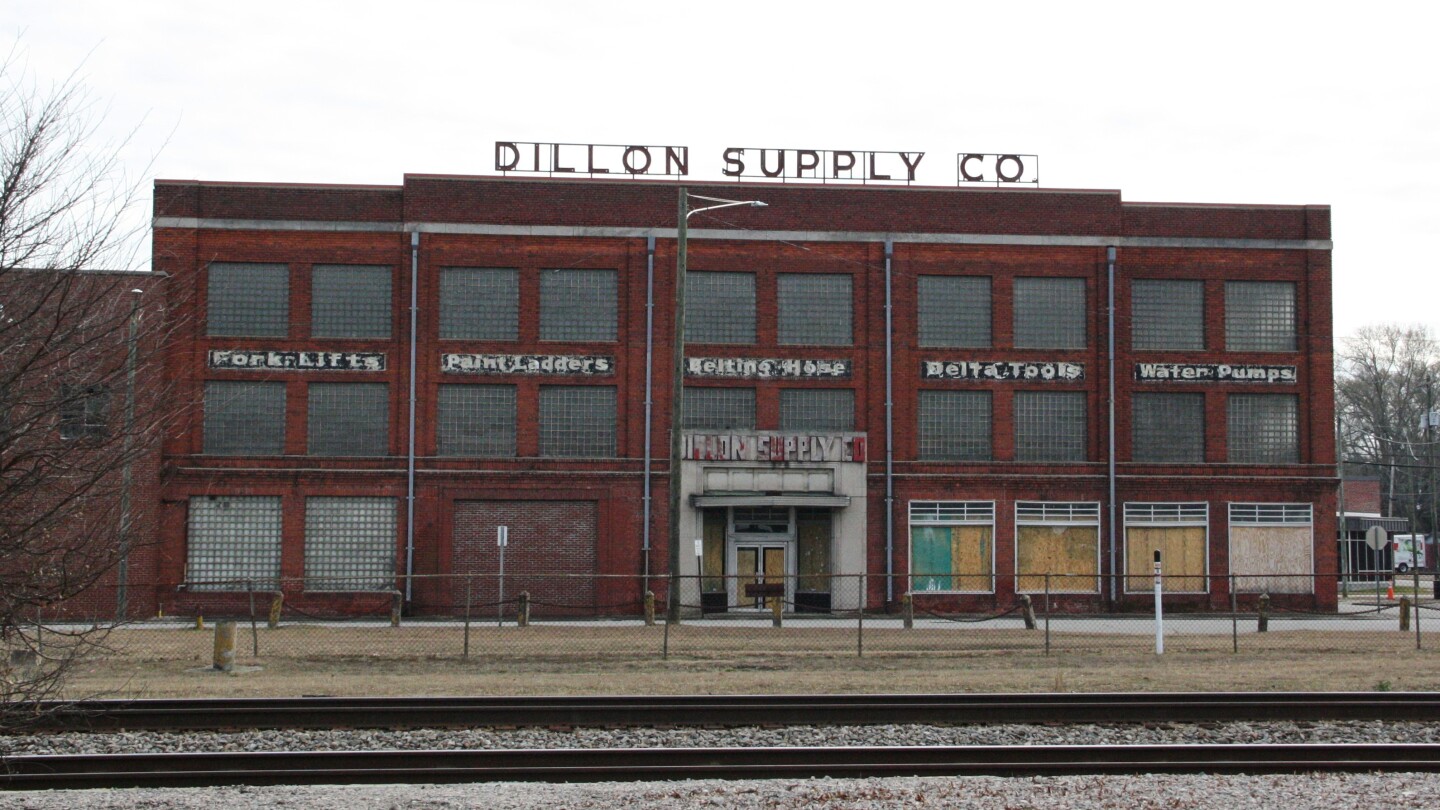
Rocky Mount’s economic landscape tells a more complex story. Crimson smokestacks dominate parts of downtown, remnants of the town’s heyday as a thriving tobacco market. Graffiti-covered trains still roll along the tracks that once made Rocky Mount a bustling railroad hub, but those prosperous days seem distant to many residents.
The city has diversified into manufacturing and biopharmaceuticals, but faces ongoing challenges. Recent financial difficulties in the municipal government have resulted in higher utility costs for residents. While the city has invested in downtown revitalization efforts, progress has been slow. Long stretches of empty storefronts line streets where restaurants, furniture shops, and drug stores once thrived.
Lucy Slep, who co-owns The Miner’s Emporium jewelry store with her husband, has witnessed these changes over nearly four decades in business. “Every downtown in every little town is beautiful,” she said. “But without the businesses, it’s dead.”
Her store hasn’t escaped the broader economic challenges. Instead of buying jewelry, more people are selling their pieces to the shop. Customer traffic has been minimal, even with Christmas approaching. “This year is just not a jewelry Christmas, for whatever reason,” Slep observed.
Despite current difficulties, Slep remains optimistic about 2025, expressing confidence that Trump’s economic policies – particularly upcoming tax cuts – will alleviate cost-of-living pressures. She views current financial strains as lingering effects from the Biden administration that will eventually dissipate.
Perspectives on economic prospects under Trump vary among Rocky Mount residents. Shiva Mrain, a local engineer, noted his family’s financial situation has neither improved nor deteriorated significantly, though he appreciates seeing lower gas prices.
Bryant, the engine technician, appears more skeptical. Having abstained from voting in the last election due to disillusionment with both parties, she remains unconvinced that meaningful economic improvement is imminent.
“I can’t really say… that change is coming,” Bryant said. “I don’t think anything is going to change.”
As Rocky Mount continues its efforts to reinvent itself economically, residents’ experiences reflect the uneven nature of economic recovery – and the gap between political promises and everyday financial realities for many Americans.
Fact Checker
Verify the accuracy of this article using The Disinformation Commission analysis and real-time sources.

20 Comments
This highlights the importance of understanding the nuanced local experiences, beyond just the national political narratives. I’m curious to learn more about the specific economic drivers and challenges facing this community.
The contrast between the President’s claims and the residents’ experiences is thought-provoking. I’m curious to see how this plays out and what lessons can be learned about the real-world impacts of economic policies.
Regardless of political affiliation, economic hardship can be a unifying issue. I hope this visit sparks meaningful discussions about how to alleviate the financial pressures residents are feeling.
Well said. Finding common ground and focusing on practical solutions would be the most constructive approach.
It’s concerning to hear about the financial strain residents are experiencing, especially during the holiday season. I hope the President’s visit leads to meaningful solutions, not just political posturing.
The political dynamics of this district redraw are interesting. I wonder how that may influence the messaging and framing around the economic situation during the President’s visit.
Good point. The redistricting could create some partisan tensions that color the discussion, even if the economic challenges cut across political lines.
It’s a complex issue – residents feeling the economic strain, while the President claims he’s brought down costs. I’m curious to hear more perspectives on how the local economy is faring and what specific policies have impacted the community.
Agreed, it’s important to get a balanced view from both sides. Hopefully this visit sheds more light on the real-world impacts residents are experiencing.
It’s encouraging to see the President engaging with the local community, but the real test will be whether the visit leads to meaningful solutions that address the residents’ very real economic concerns.
This situation highlights the complexity of economic policymaking and the importance of understanding local contexts. I hope the President’s visit leads to a more nuanced understanding of the challenges facing this community.
It’s concerning to hear about the financial strain many residents are facing, especially around the holidays. I hope the President’s visit leads to constructive dialogue and potential solutions, rather than just political rhetoric.
While the political dynamics are interesting, the real story here is the human impact of economic pressures on residents. I hope the visit sparks constructive dialogue to address their very real concerns.
Agreed. At the end of the day, the well-being of the community should be the top priority, regardless of partisan affiliations.
The redistricting dynamics add an interesting layer to this story. I wonder how that may influence the messaging and framing around the economic issues during the visit.
Good point. The political context could shape the narrative, even if the underlying economic challenges are shared across party lines.
While the political dynamics are interesting, the core issue here is the impact on people’s daily lives. I hope the President’s visit sparks constructive dialogue and practical ideas to support this community.
Well said. At the end of the day, the focus should be on improving the lives of residents, not just political posturing.
This highlights the importance of understanding the nuanced local experiences, rather than relying solely on national narratives. I’m curious to see what insights emerge from the President’s visit.
The dichotomy between the President’s claims and the residents’ experiences is intriguing. I’m curious to see how this plays out and what insights emerge from the visit.