


Listen to the article
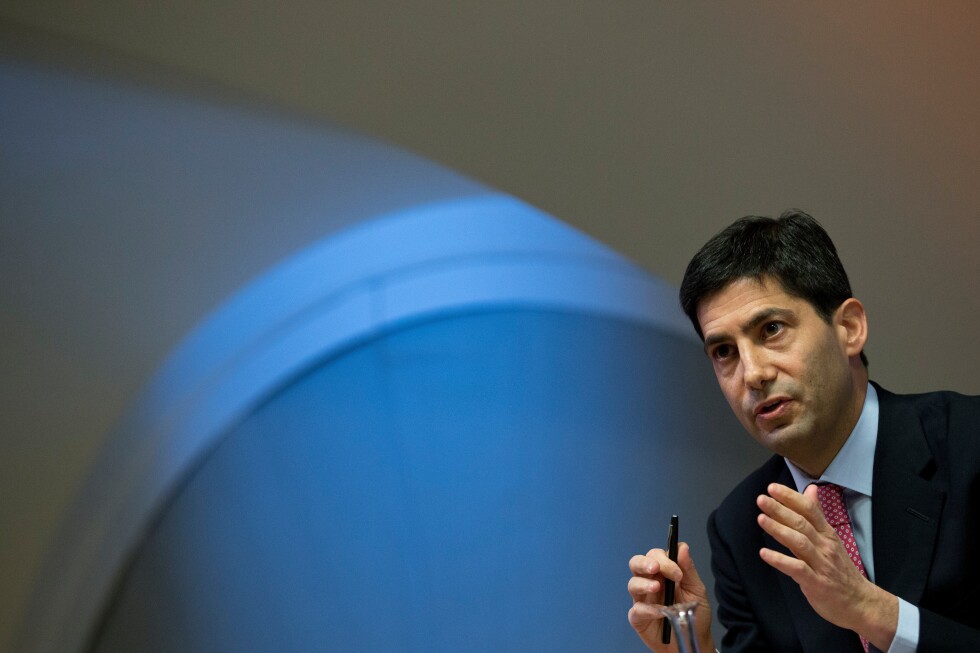
President Trump’s administration is betting that artificial intelligence can spark an economic renaissance similar to the internet boom of the 1990s, with his Federal Reserve chair nominee Kevin Warsh expected to play a crucial role in this vision.
Trump, along with Treasury Secretary Scott Bessent, believes that the Fed under Jerome Powell has unnecessarily restrained economic growth by keeping interest rates too high. They’re looking to the Greenspan era as a model, when the Fed chair famously recognized the productivity potential of emerging internet technology before it fully materialized in economic data.
“Our nation can see productivity boom like we did in the ’90s when we are not encumbered by a Federal Reserve which throws the brakes on,” Bessent stated earlier this year on social media, signaling the administration’s desire for a Fed leader with “an open, Greenspan-like mind.”
Warsh’s nomination represents a strategic choice aligned with this economic philosophy. He has argued that AI-driven productivity improvements could justify lower interest rates—a significant shift from his previous hawkish stance on inflation during his time as a Fed governor after the Great Recession.
At the heart of this economic strategy is productivity growth—the almost magical economic force that allows workers to produce more goods and services per hour. When productivity rises, companies can increase wages without raising prices, creating a virtuous cycle of economic expansion without inflation.
The ’90s economic boom under Greenspan provides the template for Trump’s vision. In the mid-1990s, Greenspan noticed that despite rising wages, inflation remained subdued. While official productivity statistics showed little improvement, Greenspan believed government data was missing something fundamental—the efficiency gains from widespread computer adoption and internet usage.
Against the advice of some colleagues who wanted to raise rates to prevent inflation, Greenspan convinced the Fed to hold steady in September 1996. The economy subsequently surged, with growth exceeding 4% annually from 1997 through 2000, unemployment falling to 3.8%, and inflation staying below 2% for extended periods.
Recent data has shown promising productivity gains in 2025, which some economists attribute to early AI adoption. However, many experts remain skeptical that history will repeat itself so neatly.
Joe Brusuelas, chief economist at RSM, argues that current productivity improvements stem not from artificial intelligence but from automation investments made during pandemic-related labor shortages. “Those investments are starting to pay off,” he noted, distinguishing today’s gains from the AI revolution the administration anticipates.
Martin Baily, former chair of President Clinton’s Council of Economic Advisers, cautions that technological transformation takes time. “Companies don’t change that fast. It’s expensive to change. It’s risky to change. The managers don’t necessarily understand the new technology that well. So they have to learn how to use it. They have to train their staff. All that stuff takes a long time.”
Current Fed officials also question the parallels to the 1990s. Fed Governor Michael Barr recently argued that an AI-driven productivity boom might actually require higher interest rates, not lower ones, as businesses borrow to invest in new technology and workers spend anticipated wage gains.
Chicago Fed President Austan Goolsbee noted that the administration’s reading of the Greenspan era is incomplete: “The analogy to the late 90s is a little harder for me to understand.” Goolsbee emphasized that Greenspan’s insight was about holding off on rate increases, not slashing rates proactively.
The economic environment today also differs dramatically from the 1990s. The federal government is running substantial deficits instead of surpluses, with federal debt projected to reach 120% of GDP by 2035. The global economy has shifted from expanding free trade to increasing protectionism, partly due to Trump’s own tariff policies and immigration restrictions.
“That benign era is clearly behind us,” observed Michael Pearce, chief economist at Oxford Economics, highlighting the changed landscape that Warsh would face if confirmed as Fed chair.
Many economists also note that the administration overlooks a crucial part of the Greenspan story: by mid-1999, even the technology-optimistic Fed began raising rates significantly, taking the benchmark from 4.75% to 6.5% in less than a year as the economy risked overheating—considerably higher than today’s 3.6% rate that Trump considers excessive.
Fact Checker
Verify the accuracy of this article using The Disinformation Commission analysis and real-time sources.

8 Comments
Interesting take on the potential for AI and a Fed chair aligned with the administration’s vision to spur a ’90s-style boom. However, history shows that economic policy alone can’t guarantee a prolonged period of strong growth. Economists are right to express skepticism given the complexity of today’s economy.
While the potential of AI-driven productivity gains is intriguing, the article rightly points out that economists have doubts about the administration’s vision. Sustainable economic growth requires a nuanced, data-driven approach, not just wishful thinking. It will be interesting to see how this plays out.
The administration’s optimism about replicating the ’90s boom is intriguing, but the article highlights the need for a more pragmatic, evidence-based approach. Policymakers should carefully consider the unique challenges and opportunities of the modern economy, rather than assuming a straightforward path to success.
The administration’s confidence in a ’90s-style boom driven by AI and a more accommodative Fed is understandable, but the article highlights the skepticism of economists. Economic policy alone may not be enough to overcome the complex challenges facing the modern economy. A balanced, evidence-based approach is crucial.
The desire to replicate the ’90s boom is understandable, but the economic landscape has shifted dramatically since then. Policymakers need to carefully consider the unique challenges and opportunities of the modern era, rather than assuming a simple formula for success. Prudent caution is warranted.
Leveraging AI and a more dovish Fed could provide a boost, but sustaining broad-based prosperity requires addressing structural issues like inequality, workforce skills gaps, and global trade dynamics. Blind optimism without a balanced, pragmatic approach is unlikely to deliver the expected results.
Interesting to see the administration’s bold vision for reviving the ’90s economic boom through AI and a Fed chair aligned with their philosophy. However, the article rightly notes the doubts of economists, who likely recognize the need for a more nuanced, multifaceted strategy to drive sustained growth.
The potential of AI-driven productivity gains is certainly compelling, but the article’s discussion of economists’ skepticism is a reminder that economic policymaking is not a simple formula. Balancing innovation, structural reforms, and prudent fiscal and monetary policies will be key to delivering lasting prosperity.