


Listen to the article
President Trump has signed an executive order aimed at accelerating the rebuilding process for thousands of homes destroyed in the January 2025 Los Angeles wildfires, setting off a contentious exchange with California officials over federal authority and disaster relief.
The order, signed Friday and announced Tuesday, directs federal agencies to bypass what the White House described as “unnecessary, duplicative, or obstructive” local permitting requirements. According to the administration, the measure would allow builders to “self-certify” their compliance with health, safety, and building standards, potentially circumventing state and local regulations.
The directive specifically instructs the Federal Emergency Management Agency (FEMA) and the Small Business Administration to develop regulations that would preempt local rebuilding rules, a move that has drawn immediate criticism from California officials.
California Governor Gavin Newsom dismissed the order as ineffective and urged the president to instead approve the state’s pending $33.9 billion disaster aid request. “An executive order to rebuild Mars would do just as useful,” Newsom wrote on social media. “Please actually help us. We are begging you.” The governor has personally traveled to Washington to advocate for the funding, which remains unapproved.
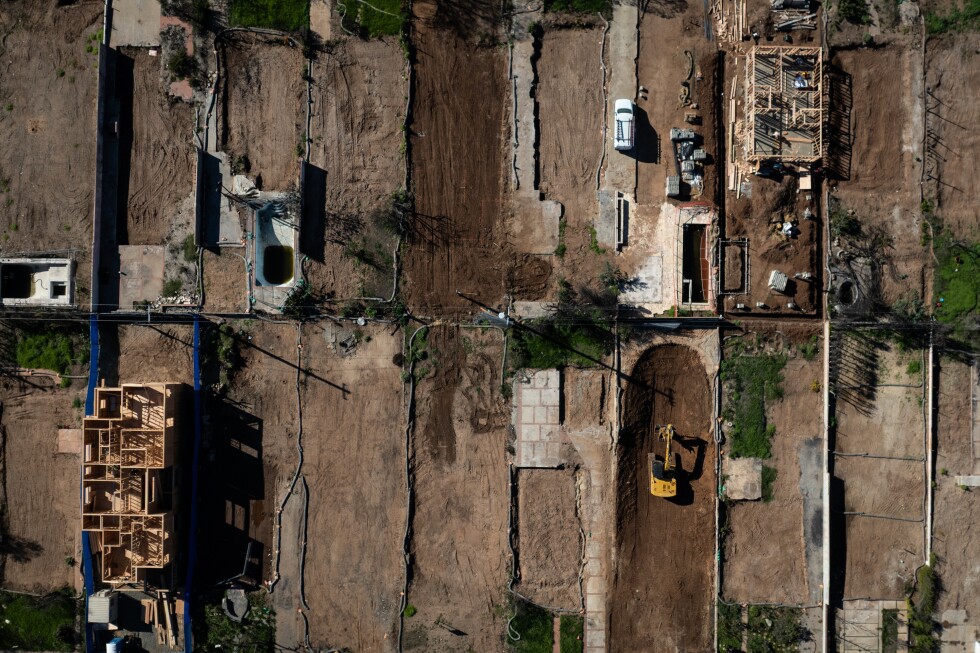
Newsom defended the state’s rebuilding efforts, noting that more than 1,600 rebuilding permits have already been issued in Los Angeles. However, an Associated Press investigation found that as of January 7—one year after the fires began—fewer than a dozen homes had been fully rebuilt in Los Angeles County, with about 900 under construction.
The devastating Palisades and Eaton fires killed 31 people and destroyed approximately 13,000 residential properties. The fires burned for more than three weeks, with cleanup operations extending over seven months.
Los Angeles Mayor Karen Bass joined in criticizing the president’s action, calling it a “political stunt” and suggesting alternative measures the administration could take. Bass urged the president to pressure insurance companies to pay claims promptly, push banks to extend mortgage forbearance periods, and create no-interest loan programs for fire survivors.
The mayor noted that the city has already streamlined its permitting process, with rebuilding plans in Pacific Palisades being approved in half the time compared to pre-fire timelines. She stated that more than 70% of home permit clearances are no longer required.
While permitting assistance is welcome, it may not address survivors’ most pressing concerns. Joy Chen, executive director of the Eaton Fire Survivor’s Network, which represents more than 10,000 fire survivors, identified financial challenges as the primary obstacle to rebuilding.
“The number one barrier to Eaton and Palisades fire survivors right now is money,” Chen explained, citing the difficulties survivors face in securing insurance payouts and bridging the gap between available funds and actual construction costs.
A December survey by the Department of Angels, a nonprofit advocating for LA fire survivors, found that nearly one-third of respondents identified rebuild costs and insurance payouts as their primary obstacles, while 21% mentioned permitting delays.
Trump’s executive order contains additional provisions that could impact California’s disaster recovery. It directs Homeland Security Secretary Kristi Noem and FEMA acting administrator Karen Evans to audit California’s use of Hazard Mitigation Grant Program funding within 60 days. Following the audit, they are instructed to consider whether future conditions should be imposed on funding or if “recoupment or recovery actions” might be necessary.
This directive comes amid a broader pattern of the administration withholding climate mitigation funding. Since February, the Trump administration has not approved any state requests for Hazard Mitigation Grant Program funding, which typically helps communities rebuild with greater resilience to future disasters.
As rebuilding efforts continue, the friction between federal and state authorities highlights ongoing challenges in disaster response and recovery, particularly in regions vulnerable to climate-related catastrophes.
Fact Checker
Verify the accuracy of this article using The Disinformation Commission analysis and real-time sources.

15 Comments
This order seems like an aggressive federal overreach. While streamlining rebuilding is important, circumventing local oversight and safety standards raises major concerns. I hope the administration and California officials can find a balanced, constructive approach.
You raise valid points. Rebuilding needs to balance speed and safety. Perhaps there are ways to expedite certain processes without fully preempting local authority and regulations.
Disaster relief is always a complex challenge, with many competing priorities. I’m curious to see how this executive order is implemented and whether it achieves the intended goals of accelerating rebuilding in a responsible manner.
That’s a fair perspective. The details will be critical in determining if this order strikes the right balance or causes more problems than it solves.
This is a complex issue with valid concerns on both sides. I’m hopeful the administration and California can find a reasonable compromise that accelerates rebuilding without compromising important safety and environmental protections.
It’s good that the administration is trying to address the urgent need for rebuilding, but this order raises significant red flags. Overriding local permitting and safety standards is a dangerous overreach that could have serious repercussions.
Cutting through bureaucratic red tape to speed up disaster recovery is understandable, but this order seems to go too far. I hope the administration and California can find a more balanced solution that respects state/local authority.
Agreed. A collaborative, pragmatic approach is needed to address the pressing rebuilding challenges without compromising important health, safety, and environmental safeguards.
This is a tricky situation. I can see merits to both the federal and state positions. Hopefully they can find common ground and a collaborative approach that serves the affected communities well.
Streamlining the rebuilding process is a worthy goal, but this executive order seems to go too far in preempting local oversight. I worry that could create unintended consequences and further complicate an already challenging situation.
I share your concerns. While speed is important, undermining state/local authorities and regulations risks creating more problems than it solves. A more collaborative approach seems advisable.
An executive order to speed up rebuilding is understandable, but it’s critical that this is done responsibly and with proper oversight. Bypassing local regulations entirely seems like an overreach that could create more problems than it solves.
I agree. Any federal intervention needs to be carefully tailored to support – not undermine – state and local authorities who know the on-the-ground realities best.
This is a challenging situation with valid concerns on both sides. I’m hopeful the administration and California can find a constructive compromise that accelerates rebuilding while still upholding appropriate state/local regulations and oversight.
Rebuilding after major disasters is never easy. I hope the administration and California can work together constructively to find solutions that expedite the process while still upholding necessary health, safety, and environmental protections.