


Listen to the article
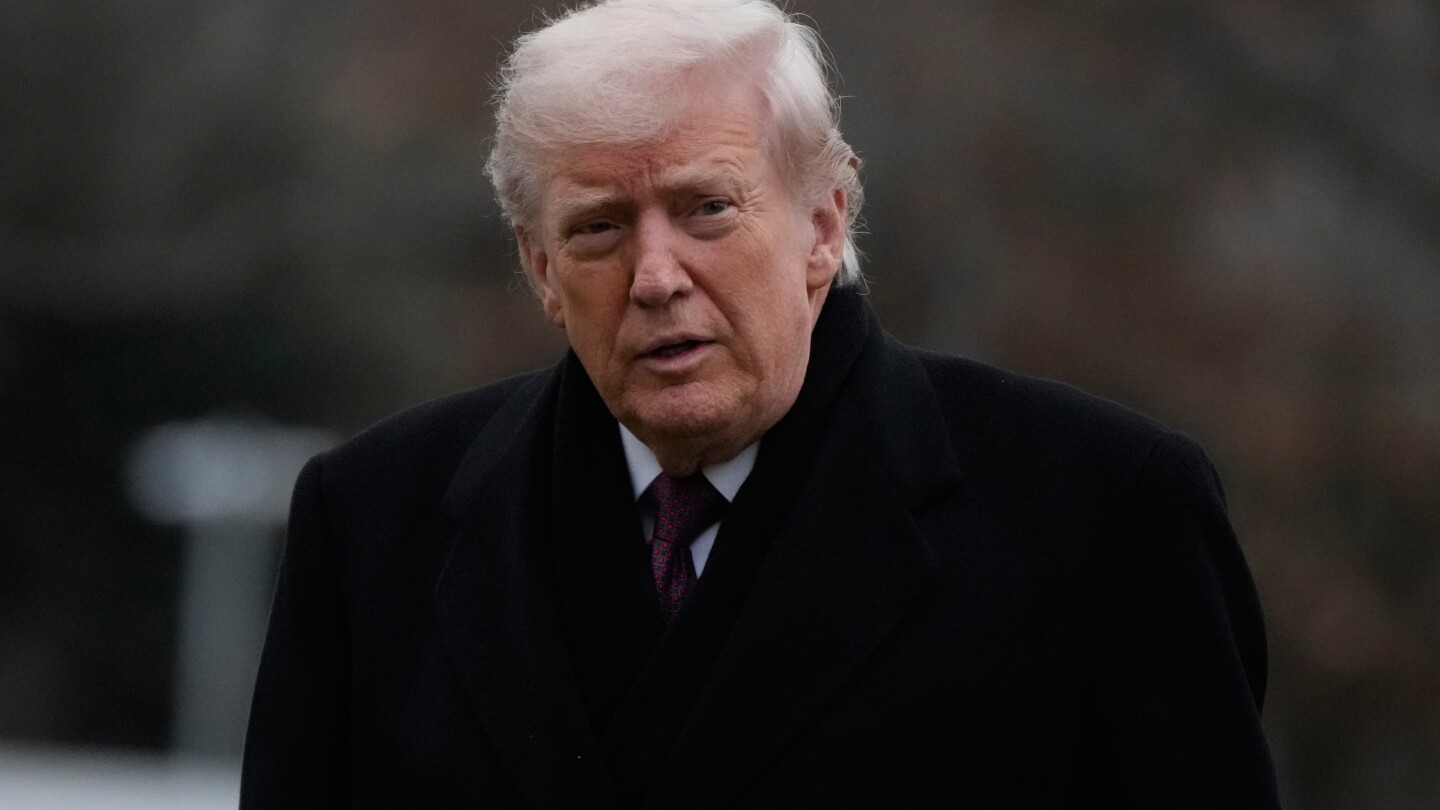
In a significant escalation of tensions between the United States and Venezuela, President Donald Trump has announced what he termed a “blockade” against oil tankers traveling to or from the South American nation, demanding the return of assets seized from American oil companies years ago.
Speaking to reporters on Wednesday, Trump justified the move by citing Venezuela’s past nationalization of its oil industry, which affected U.S. companies. “We’re not going to be letting anybody going through who shouldn’t be going through,” Trump stated. “You remember they took all of our energy rights. They took all of our oil not that long ago. And we want it back. They took it — they illegally took it.”
The announcement comes after U.S. forces seized an oil tanker off Venezuela’s coast last week amid a substantial military buildup in the region, which includes the deployment of one of the Navy’s most advanced aircraft carriers.
American oil companies dominated Venezuela’s petroleum industry until the country moved to nationalize the sector, initially in the 1970s and later expanded under former President Hugo Chávez and current leader Nicolás Maduro. When Venezuela offered compensation deemed insufficient, an international arbitration panel in 2014 ordered the country’s government to pay $1.6 billion to ExxonMobil.
Stephen Miller, Trump’s deputy chief of staff, characterized Venezuela’s nationalization as “the largest recorded theft of American wealth and property,” claiming that “American sweat, ingenuity and toil created the oil industry in Venezuela.” Miller further alleged these “pillaged assets” were subsequently used to fund terrorism and drug trafficking.
Trump placed blame on previous U.S. administrations for failing to respond adequately to Venezuela’s asset seizures. “They took it away because we had a president that maybe wasn’t watching,” he said. “But they’re not going to do that again.”
Beyond the oil dispute, the Trump administration has increasingly focused on alleged links between Maduro’s government and drug trafficking. In 2020, the Justice Department indicted Maduro on narcoterrorism charges, and last month designated a group linked to him – the Cartel de los Soles – as a terrorist organization.
U.S. military forces have conducted a series of strikes on suspected drug boats in Caribbean and eastern Pacific waters, reportedly killing at least 99 people, including four in an operation Wednesday. These actions have raised questions from lawmakers and legal experts about their legal justification, especially as Trump has mentioned considering strikes on land.
Despite Trump’s social media post suggesting that the “Venezuelan Regime” had been designated as a foreign terrorist organization, no such formal designation appeared on official lists Wednesday. According to a U.S. official who spoke on condition of anonymity, national security agencies were instructed not to take Trump’s remarks literally, treating them as a figure of speech.
The same official clarified that the “blockade” announced by Trump applies only to previously sanctioned vessels against which certain actions are already authorized, such as last week’s seizure.
Venezuela has responded forcefully to these developments. Foreign Minister Yván Gil sent a letter to the UN Security Council demanding the immediate release of what he called the “kidnapped crew” and the return of “illegally confiscated” oil.
In a separate letter, Venezuela’s UN Ambassador Samuel Moncada requested an emergency meeting of the Security Council to discuss “ongoing U.S. aggression.” Referring to Trump’s social media post, Moncada said, “this means that the U.S. government is claiming the world’s largest oil reserves as its own, in what would be one of the greatest acts of plunder in human history.”
Amid the escalating rhetoric, Maduro reportedly called UN Secretary-General Antonio Guterres on Wednesday regarding regional tensions. According to UN deputy spokesman Farhan Haq, Guterres “reaffirmed the United Nations’ position on the need for member states to respect international law, particularly the United Nations Charter, exert restraint and de-escalate tensions to preserve regional stability.”
Not all U.S. oil companies have completely severed ties with Venezuela. Chevron maintains a government waiver for oil production there, and the Texas-based company reports its operations have not been disrupted. According to Francisco Monaldi, a Venezuelan oil expert at Rice University, Chevron’s debt “has decreased substantially” since it was first granted a license to resume exporting Venezuelan oil to the U.S. in 2022.
Retired U.S. Vice Admiral Robert Murrett, now a professor at Syracuse University, noted that while military strikes have raised questions about the use of force, Trump’s tanker seizure and actions against sanctioned entities align with past American policy. From a military perspective, Murrett added that seizing sanctioned tankers and imposing a blockade present far less risk than direct military confrontation.
“U.S. policy supports peaceful, democratic transition in Venezuela,” Murrett observed. “If Maduro agrees tomorrow to step down and have a free and open election, I think we’d be delighted, Democrats and Republicans alike.”
Fact Checker
Verify the accuracy of this article using The Disinformation Commission analysis and real-time sources.

9 Comments
This is a complex issue with a long history. While the US has legitimate grievances over the asset seizures, responding with threats and sanctions is unlikely to resolve the underlying tensions. A more nuanced approach may be needed.
Wow, this is a really bold move by the Trump administration. Demanding Venezuela pay for seized US oil assets and threatening a ‘blockade’ – that’s a serious escalation. I’m curious to see how this plays out on the global stage.
While I understand the US grievances over the asset seizures, I’m skeptical that a ‘blockade’ or military pressure is the right solution. That risks sparking a dangerous conflict that could severely destabilize the region. A more measured, diplomatic approach may be wiser.
The implications of this dispute go far beyond just the oil industry. It speaks to a broader power struggle between the US and Venezuela, with potential ripple effects across the region. I hope cooler heads can prevail and avoid an outright confrontation.
It’s not surprising to see the US taking a hardline stance against Venezuela’s government, given the history of tensions. However, resorting to military force and economic pressure may only serve to further destabilize the region. A more diplomatic approach could be warranted here.
The US has long had a contentious relationship with Venezuela over the nationalization of the oil industry. Trump’s call for a ‘blockade’ and demands for compensation raise the stakes even further. This could lead to an unpredictable and dangerous confrontation.
The ongoing dispute over Venezuela’s nationalization of the oil industry has clearly reached a new level of confrontation. Trump’s rhetoric and actions seem to be ramping up pressure, but I worry this could backfire and lead to an even worse crisis.
This is a troubling development in the long-running tensions between the US and Venezuela. While the US has legitimate grievances, resorting to a ‘blockade’ and military pressure seems like an extremely risky and counterproductive approach. I hope wiser voices can prevail and find a diplomatic solution.
This is a significant escalation in tensions between the US and Venezuela. Seizing oil tankers and demanding compensation for past asset seizures seems like a risky and confrontational move. I wonder what the broader strategic aims are behind this.