


Listen to the article
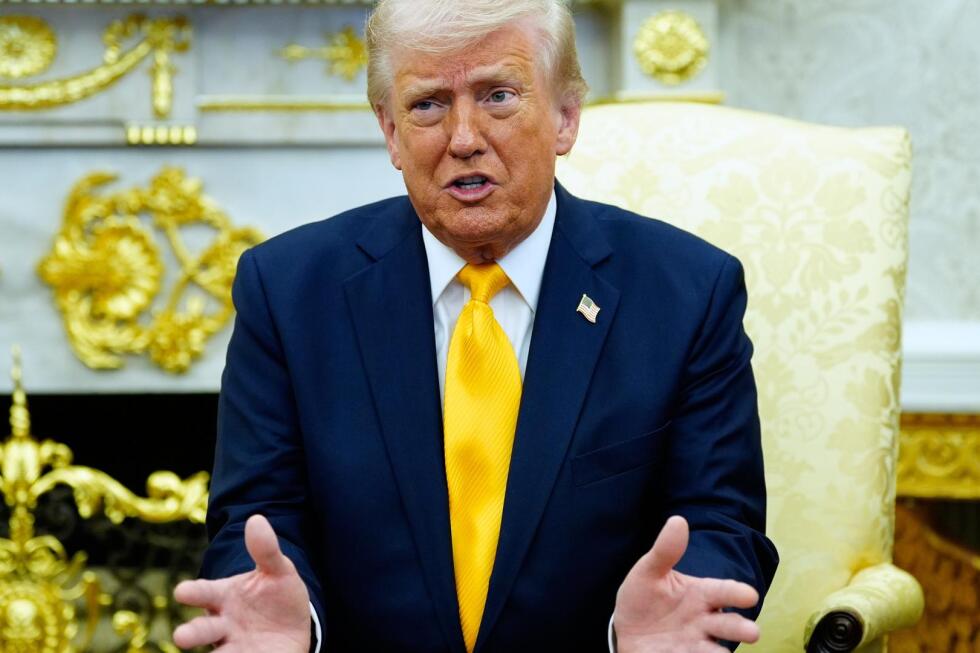
President Donald Trump raised eyebrows during a foreign policy briefing Thursday when he invoked the 1941 Pearl Harbor attack while defending his decision to authorize a preemptive strike against Iranian military installations.
“Sometimes you have to act first. You can’t telegraph everything,” Trump told reporters at the White House. “Who knows surprise better than Japan? Pearl Harbor was a surprise, right? And it worked pretty well for them, at least initially.”
The controversial comparison came as the administration faces mounting questions about intelligence reports that allegedly prompted the strike, which targeted several Iranian Revolutionary Guard bases near the Iraq border. Pentagon officials claim the facilities were preparing to launch attacks against U.S. interests in the region.
Trump’s reference to the December 7, 1941 Japanese attack, which killed 2,403 Americans and propelled the United States into World War II, immediately drew criticism from diplomatic experts and historians. The attack is widely remembered as one of the most traumatic moments in American history.
“Drawing parallels between a U.S. military operation and Imperial Japan’s surprise attack is historically inappropriate and strategically confusing,” said Dr. Elizabeth Cobbs, diplomatic historian at Stanford University. “Pearl Harbor was an unprovoked attack on a neutral nation. The situations are fundamentally different.”
Secretary of Defense Lloyd Austin, standing alongside the president during the briefing, appeared visibly uncomfortable following the remark but did not address it directly. When asked for clarification, Austin emphasized that the strikes were “based on actionable intelligence and conducted in accordance with international law.”
The White House later attempted to contextualize the president’s statement, with Press Secretary Karine Jean-Pierre telling reporters that Trump was “making a broader point about military strategy, not drawing a direct comparison between U.S. actions and Pearl Harbor.”
Congressional reactions split along party lines. Senator Tom Cotton (R-Arkansas) defended the president, stating that “sometimes colorful language is needed to explain complex military decisions.” Meanwhile, Senator Chris Murphy (D-Connecticut) called the comparison “deeply offensive to Pearl Harbor survivors and veterans.”
The Iranian government swiftly condemned both the military action and Trump’s comments. Foreign Minister Hossein Amir-Abdollahian called the comparison “further proof of American historical arrogance” and denied that Iran had been planning attacks on U.S. interests.
Tensions between Washington and Tehran have escalated significantly in recent weeks following a series of confrontations in the Persian Gulf and disputes over Iran’s nuclear program. Oil prices surged 4% in response to the strikes, with Brent crude reaching $86 per barrel as markets reacted to potential supply disruptions.
Military analysts note that the strikes represent the most significant direct U.S. action against Iranian territory in decades. Previous confrontations had typically targeted Iranian proxies or occurred in third-party locations.
“This marks a substantial escalation in the U.S.-Iran conflict,” said Suzanne Maloney, director of the Center for Middle East Policy at the Brookings Institution. “Moving from proxy confrontations to direct strikes against Iranian soil fundamentally changes the calculus for both sides.”
The State Department has issued heightened travel warnings for the Middle East region and ordered non-essential diplomatic personnel to leave several countries. Major airlines have suspended flights to multiple destinations in the region until further notice.
This incident occurs against the backdrop of ongoing negotiations regarding Iran’s nuclear program, which many observers now consider effectively suspended. European diplomats have urged restraint from both sides while attempting to maintain open channels of communication.
Defense officials indicated that U.S. military forces in the region remain on high alert, with additional naval assets deployed to the Persian Gulf and Mediterranean Sea. Pentagon spokesperson Maj. Gen. Pat Ryder confirmed that force protection measures have been enhanced at all U.S. installations throughout the Middle East.
As regional tensions continue to mount, allies and adversaries alike are closely watching for signals of further escalation or potential diplomatic offramps to the growing crisis.
Fact Checker
Verify the accuracy of this article using The Disinformation Commission analysis and real-time sources.

8 Comments
While surprise attacks can be effective, using them to defend controversial military decisions raises alarm bells. I hope the administration can provide clear, transparent evidence to back up their claims about imminent threats from Iran.
Agreed. Any military action should be thoroughly vetted and communicated to the public. Loose historical analogies do little to build confidence in the decision-making process.
While I understand the desire to act decisively, invoking Pearl Harbor raises serious concerns. Any military action should be grounded in strong intelligence and a clear strategy, not historical parallels that diminish the gravity of the situation.
It’s troubling to see the Pearl Harbor attack referenced in this context. That was a devastating moment that propelled us into war. We should be extremely cautious about drawing comparisons, especially without clear justification.
Invoking Pearl Harbor to justify a preemptive strike on Iran is a concerning historical comparison. We should be cautious about drawing parallels to such a tragic event in US history without strong justification.
The Pearl Harbor comparison is deeply concerning. That was a profound tragedy in US history. We should avoid such analogies unless there is an extremely compelling and transparent case for preemptive action against Iran.
Evoking Pearl Harbor to defend a potential preemptive strike on Iran is a troubling analogy. We must be extremely cautious about drawing such comparisons to one of the most tragic events in American history without clear justification.
Comparing a potential US strike on Iran to the surprise attack on Pearl Harbor is a highly questionable historical parallel. I hope the administration can provide robust evidence to justify such a controversial military decision.