


Listen to the article
U.S. President Donald Trump claimed Saturday he would deploy a hospital ship to Greenland to address what he described as widespread illness among residents lacking proper care. The announcement, made on his Truth Social platform, has sparked controversy and drawn a sharp response from Greenlandic officials.
“Working with the fantastic Governor of Louisiana, Jeff Landry, we are going to send a great hospital boat to Greenland to take care of the many people who are sick, and not being taken care of there,” Trump wrote, adding emphatically that the ship was “on the way!!!”
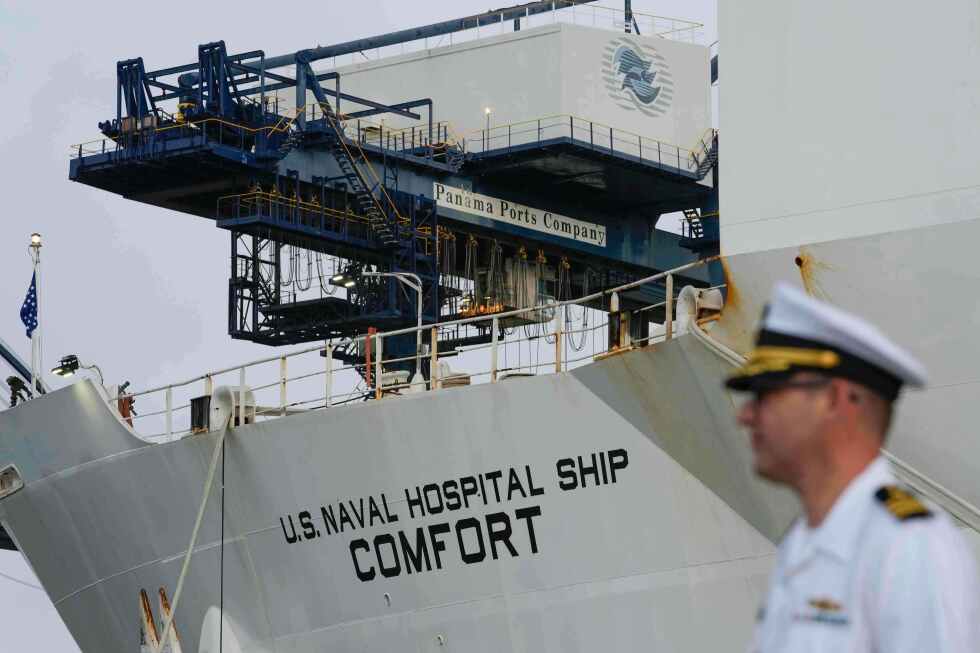
However, both of the U.S. Navy’s hospital ships—USNS Mercy and USNS Comfort—are currently undergoing maintenance at a shipyard in Mobile, Alabama. Ship tracking data confirms their location, with the Comfort scheduled to remain there through April and the Mercy awaiting additional repairs in Oregon.
Even if expedited, deploying either vessel would require substantial preparation time. The ships typically need to be staffed with medical personnel from surrounding hospitals before deployment, as they carry minimal medical staff during non-mission periods.
Greenlandic Prime Minister Jens-Frederik Nielsen quickly defended his territory’s healthcare system, highlighting fundamental differences between the U.S. and Greenlandic approaches to healthcare.
“We have a public health care system where treatment is free for citizens. That is a deliberate choice—and a fundamental part of our society,” Nielsen stated. “That is not how it works in the USA, where it costs money to see a doctor.”
Greenland, a semi-autonomous territory of Denmark with approximately 57,000 residents, offers comprehensive healthcare coverage for its citizens. The Queen Ingrid Hospital in Nuuk serves as the territory’s main medical facility, supplemented by several regional health centers. Most healthcare services—including treatment by general practitioners, specialists, hospitals, prescription medicines, public dental care, and home nursing—are provided free of charge.
While no reports of major illnesses have emerged from Greenland recently, the territory does face healthcare challenges. The rapid transition “from a hunting society to a modern industrial and knowledge society” has contributed to increased rates of conditions like obesity, diabetes, and cardiovascular disease, according to the Center for Public Health in Greenland.
Staffing shortages also exist in certain areas. Anna Wangenheim, Greenland’s minister for health and persons with disabilities, recently posted an “urgent” request for dentists in three different towns: Aasiaat, Paamiut, and Nanortalik.
Nevertheless, significant healthcare improvements have been achieved since Greenland assumed responsibility for its own healthcare system in 1992. Professor Lene Seibæk from the University of Greenland notes that life expectancy has increased by approximately six years since the 1990s, reaching about 71 years for men and 77 years for women—exceeding global averages.
Louisiana Governor Jeff Landry, whom Trump designated as his special envoy to Greenland, echoed Trump’s claims about healthcare deficiencies. “Many villages and small towns lack basic services that Americans often take for granted,” Landry posted on X. He added that “small settlements are without permanent doctors, diagnostic tools, or specialist care—forcing residents to travel great distances for vital treatments.”
While access challenges exist in remote areas, Greenland employs telemedicine and patient transportation solutions. Residents in areas without necessary medical services can be transported to the national hospital, regional facilities, or even flown to Denmark for complex treatments—with transportation and care costs covered by the government.
Ironically, rural Americans face similar healthcare access issues, particularly in states like Louisiana. According to Louisiana’s health department, 73% of state residents live in areas without enough primary care providers, 86% lack sufficient dental providers, and 93% face mental health provider shortages.
This incident represents the latest point of friction involving Trump and Greenland. The former president has repeatedly expressed interest in acquiring the resource-rich Arctic territory from Denmark—comments that have strained relations with the NATO ally in the past.
Fact Checker
Verify the accuracy of this article using The Disinformation Commission analysis and real-time sources.

9 Comments
While the intention to provide healthcare support to Greenland is admirable, the practical challenges of deploying a Navy hospital ship appear significant based on the reports. I wonder if there are other, more feasible ways the U.S. government could collaborate with Greenland to address any healthcare gaps, perhaps through coordination with local authorities and healthcare providers.
This announcement by President Trump seems to be more about political messaging than a realistic plan of action. The reports indicate substantial logistical hurdles in terms of the Navy’s hospital ship availability and readiness. I’m curious to hear more from Greenlandic officials about their actual healthcare needs and whether a hospital ship deployment would be the most effective way to address them.
While the intention to provide healthcare support to Greenland may be well-meaning, the feasibility of this plan seems questionable. The reports indicate significant barriers in terms of the Navy’s hospital ship availability and readiness. I wonder if there are other, more practical ways to address any healthcare gaps in Greenland that the government there has identified.
This announcement from President Trump seems to be more political posturing than a practical solution. Unless the Navy’s hospital ships can be readied and deployed very quickly, I don’t see how this plan could be implemented in the short term. The Greenlandic government’s response also suggests this may not be the best way to address their healthcare needs.
I agree. The logistics of deploying a hospital ship appear quite challenging, especially given the current maintenance status of the Navy’s ships. The Greenlandic government’s skepticism is understandable, as they would likely be in the best position to assess their own healthcare needs and priorities.
Interesting claim from President Trump about sending a hospital ship to Greenland. However, the reports indicate the Navy’s hospital ships are currently undergoing maintenance, so it may be a logistical challenge to deploy one quickly. I wonder what the actual healthcare situation is like in Greenland and whether a hospital ship would be the best solution.
You make a good point. Deploying a hospital ship would likely require substantial preparation time, which casts doubt on the feasibility of this plan in the near term. It will be important to get accurate information on the healthcare needs in Greenland before considering a response.
The claim about sending a hospital ship to Greenland seems to be disconnected from the current operational status of the Navy’s hospital ships. Unless the administration can quickly mobilize and deploy one of these vessels, I’m skeptical this plan can be implemented in the near term. It would be helpful to get a clearer picture of the healthcare situation in Greenland from local authorities.
This announcement raises more questions than answers. If the Navy’s hospital ships are indeed unavailable for immediate deployment, as the reports suggest, then this plan seems more like political rhetoric than a realistic solution. I’d be curious to hear more from Greenlandic officials on their actual healthcare needs and priorities.