


Listen to the article
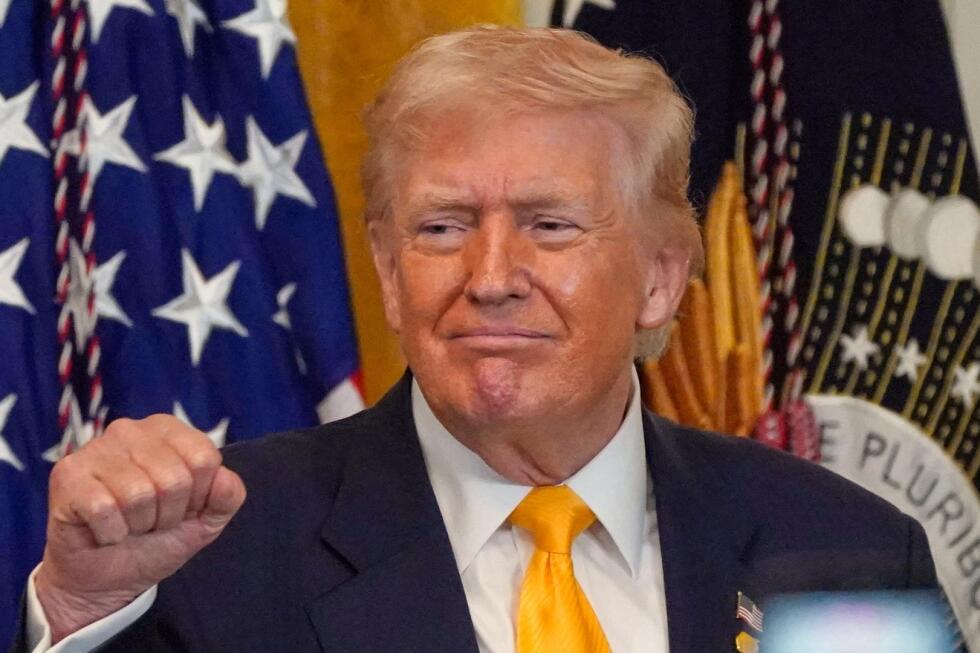
President Donald Trump hosted a Black History Month reception at the White House Wednesday, creating a moment of political tension following his controversial social media post just two weeks earlier that depicted former President Barack Obama and former First Lady Michelle Obama as primates.
The reception, traditionally a moment to honor the contributions of Black Americans to the nation’s history, was overshadowed by lingering criticism of the president’s social media activity, which had drawn condemnation from both Republican and Democratic lawmakers.
Trump’s post, which many described as explicitly racist, represented one of the most direct examples of inflammatory racial content shared by a sitting president in recent history. Political analysts note that the incident created a stark contrast with the ceremonial nature of Wednesday’s White House event.
The bipartisan backlash to the president’s social media activity was swift when it occurred. Several Republican senators and representatives publicly distanced themselves from the post, with some calling for the president to apologize. Democratic lawmakers were more forceful in their condemnation, with many characterizing the post as evidence of deeper racial animus.
Civil rights organizations, including the NAACP and National Urban League, had expressed outrage over the social media post when it first appeared, with some leaders declining invitations to White House events in protest.
The timing of the Black History Month reception places the administration in a particularly delicate position as it attempts to navigate racial politics during an election year. The White House has consistently defended the president against accusations of racism, pointing to economic policies they claim have benefited minority communities.
Presidential historians note that the celebration of Black History Month has been a White House tradition observed by administrations from both parties for decades. The event typically includes recognition of prominent Black Americans, discussion of historical achievements, and commitment to ongoing progress toward racial equality.
The Obama family, who made history as the nation’s first Black president and first lady, have largely refrained from directly responding to provocations from Trump, maintaining the tradition of former presidents avoiding direct criticism of their successors. Sources close to the Obamas indicated they would not comment specifically on the post or the reception.
Political strategists suggest that Trump’s approach to racial issues reflects a campaign strategy focused more on energizing his base than expanding his support among minority voters. Trump has previously claimed that his administration has done more for Black Americans than any president since Abraham Lincoln, pointing to criminal justice reform legislation and funding for historically Black colleges and universities.
Critics counter that such claims are undermined by inflammatory rhetoric and policies they view as harmful to minority communities. Recent polling shows Trump continues to face significant challenges with Black voters, who overwhelmingly supported Democratic candidates in recent elections.
The White House’s decision to proceed with the Black History Month reception despite the recent controversy highlights the administration’s approach of moving forward through controversies rather than addressing them directly. Press officials declined to answer questions about whether the president would address the social media post during the reception.
As the 2024 presidential campaign intensifies, observers note that incidents like these exemplify the deeply polarized nature of American politics, where racial issues remain among the most contentious and emotionally charged topics in public discourse.
The reception itself focused on celebrating Black achievement in America, with various community leaders, political supporters, and administration officials in attendance, though several invited guests reportedly declined to participate following the social media controversy.
Fact Checker
Verify the accuracy of this article using The Disinformation Commission analysis and real-time sources.

16 Comments
The contrasting nature of the president’s recent actions highlights the challenges of bridging divides and fostering genuine progress. Symbolic gestures are a start, but meaningful change will require a sustained commitment to racial justice and equity, not just temporary political expediency.
Well said. Addressing the root causes of racial inequality and building a more just society requires a deeper, long-term approach that goes beyond superficial attempts at reconciliation. The true test will be in the president’s actions and policies moving forward.
This event seems like a chance for the president to demonstrate a more inclusive and thoughtful approach, though the lingering controversy may overshadow the intended purpose. Consistent, meaningful engagement is needed to rebuild trust and foster greater unity.
I agree. Overcoming past missteps and building a more just and equitable society is an ongoing process that requires good faith efforts from all sides. Progress may be uneven, but maintaining open dialogue is crucial.
While the initial social media post was troubling, it’s good to see the president now making an effort to recognize Black History Month and the important role of African Americans in shaping our nation’s history. Progress is rarely linear, but this is a step in the right direction.
Agreed. Addressing past missteps and trying to chart a more inclusive path forward, even if imperfectly, is preferable to ignoring the issue entirely. Small steps can lead to bigger changes over time.
The contrast between the president’s previous statements and this event highlights the complexity of addressing racial divisions in our country. Symbolic gestures are a start, but meaningful change will require a sustained commitment to equity and justice.
The contrasting nature of the president’s recent actions highlights the challenges of bridging divides and fostering genuine unity. Symbolic gestures are a start, but meaningful, sustained progress will require a deeper commitment to racial justice and equity.
While the president’s past actions have understandably created skepticism, I’m hopeful this event signals a desire to honor the contributions of all Americans and work towards greater unity. Addressing complex issues like racial equity requires nuance and a willingness to listen.
While the president’s past remarks were concerning, it’s positive he is now taking time to recognize the important contributions of Black Americans. Fostering greater unity and mutual understanding is important, even if progress is uneven.
Agreed. Acknowledging past mistakes and making an effort to course-correct is a sign of progress, even if the path forward remains challenging.
This event seems like a chance for the president to demonstrate a more inclusive and thoughtful approach, though the lingering controversy may overshadow the intended purpose. Consistent, meaningful engagement is needed to rebuild trust.
Absolutely. Symbolic gestures are a start, but substantive policy changes and a sustained commitment to racial equity will be key to effecting real change.
While the president’s past remarks were concerning, I’m glad to see him now making an effort to recognize the vital role of Black Americans in our nation’s history. Maintaining open and honest dialogue, even amid disagreements, is crucial for progress.
Absolutely. Acknowledging past mistakes and striving to do better is an important first step. Whether this event signals a genuine shift or is simply a temporary gesture remains to be seen, but the attempt is noteworthy.
The president’s past actions have understandably created skepticism, but I’m hopeful this event signals a desire to heal divisions and honor the contributions of all Americans. It’s a complex issue, but open dialogue is crucial.