


Listen to the article
President Trump has intensified his pressure campaign against Venezuelan President Nicolás Maduro with naval operations and sanctions that signal a clear intent to remove the strongman from power, drawing sharp criticism from Russia and China.
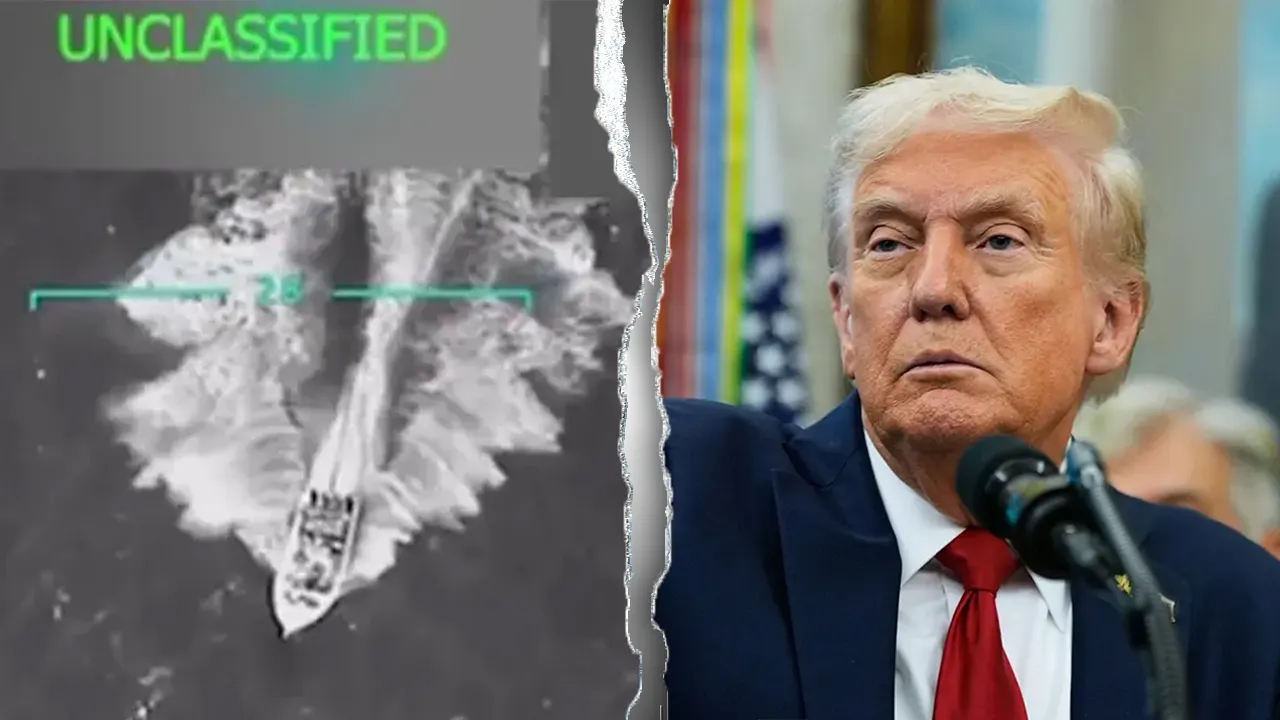
The Trump administration has launched nearly 30 strikes targeting alleged drug boats off the Latin American coast since September and announced “a complete blockade of all sanctioned oil tankers going into and out of Venezuela” while significantly boosting naval assets in the region.
When asked Monday whether these measures would be sufficient to force Maduro to step down, Trump replied, “That’s up to him, what he wants to do. I think it would be smart for him to do that. But, again, we’re going to find out.” This marks a departure from the White House’s historical reluctance to explicitly confirm regime change goals in Venezuela, even while refusing to recognize Maduro as legitimate.
The blockade represents an escalation of Trump’s previous Venezuela strategy during his first term, when he imposed sanctions and backed opposition leader Juan Guaidó in an unsuccessful attempt to oust Maduro.
U.S. forces have already seized multiple oil tankers off Venezuela’s coast, with the first seizure occurring on December 10. Trump confirmed Monday that the U.S. is still pursuing another vessel described by officials as a “sanctioned dark fleet vessel that is part of Venezuela’s illegal sanctions evasion.”
These actions have provoked strong condemnation from both China and Russia, two key Maduro allies. Chinese Foreign Ministry spokesman Lin Jian told reporters, “The U.S. practice of arbitrarily seizing other countries’ vessels grossly violates international law,” adding that Beijing opposes anything that “infringes upon other countries’ sovereignty and security, and all acts of unilateralism or bullying.”
Russia’s Foreign Ministry released a statement after Foreign Minister Sergey Lavrov spoke with Venezuelan Foreign Affairs Minister Yván Gil, saying the “Russian side reaffirmed its all-out support and solidarity with the leaders and people of Venezuela.” The ministers expressed “grave concern” about “Washington stepping up its escalation actions in the Caribbean, actions fraught with far-reaching consequences for the region and creating a threat for international shipping.”
Katherine Thompson, a senior fellow at the Cato Institute, suggested that Russia and China might be puzzled by the Trump administration’s focus on Venezuela, given the administration’s “America First” approach and the fact that Caracas doesn’t threaten U.S. interests as directly as other actors.
Beyond maritime operations, the Trump administration has designated groups like Tren de Aragua and the Sinaloa cartel as foreign terrorist organizations and has deployed unprecedented naval assets to the region, including the aircraft carrier USS Gerald R. Ford.
Trump has also hinted at potential escalation beyond maritime strikes. “We’re knocking out drug boats right now at a level that we haven’t seen,” Trump said on December 3. “Very soon we’re going to start doing it on land too.”
The legal basis for these operations has come under scrutiny from both Democrats and some Republicans. Senate Minority Leader Chuck Schumer joined Senators Tim Kaine, Adam Schiff, and Republican Rand Paul in introducing a war powers resolution aimed at preventing Trump from using U.S. armed forces against Venezuela.
The Trump administration maintains that its operations target drug trafficking networks threatening U.S. national security, but the pattern of actions suggests a broader strategy aimed at economically isolating the Maduro regime and potentially forcing a leadership change in Caracas.
The Venezuela situation represents one of the most significant foreign policy challenges of Trump’s second term, with the administration balancing counternarcotics objectives with apparent regime change goals while navigating opposition from both domestic lawmakers and global powers.
Fact Checker
Verify the accuracy of this article using The Disinformation Commission analysis and real-time sources.

30 Comments
Silver leverage is strong here; beta cuts both ways though.
Silver leverage is strong here; beta cuts both ways though.
I like the balance sheet here—less leverage than peers.
Good point. Watching costs and grades closely.
Good point. Watching costs and grades closely.
Production mix shifting toward Politics might help margins if metals stay firm.
Good point. Watching costs and grades closely.
Silver leverage is strong here; beta cuts both ways though.
Uranium names keep pushing higher—supply still tight into 2026.
Good point. Watching costs and grades closely.
If AISC keeps dropping, this becomes investable for me.
Uranium names keep pushing higher—supply still tight into 2026.
Good point. Watching costs and grades closely.
Exploration results look promising, but permitting will be the key risk.
Good point. Watching costs and grades closely.
Good point. Watching costs and grades closely.
Uranium names keep pushing higher—supply still tight into 2026.
Good point. Watching costs and grades closely.
The cost guidance is better than expected. If they deliver, the stock could rerate.
Interesting update on Trump Calls Maduro’s Removal ‘Smart’ as Russia, China Respond to Venezuela Crisis. Curious how the grades will trend next quarter.
Good point. Watching costs and grades closely.
Good point. Watching costs and grades closely.
If AISC keeps dropping, this becomes investable for me.
Good point. Watching costs and grades closely.
I like the balance sheet here—less leverage than peers.
Good point. Watching costs and grades closely.
Good point. Watching costs and grades closely.
Interesting update on Trump Calls Maduro’s Removal ‘Smart’ as Russia, China Respond to Venezuela Crisis. Curious how the grades will trend next quarter.
Good point. Watching costs and grades closely.
Good point. Watching costs and grades closely.