


Listen to the article
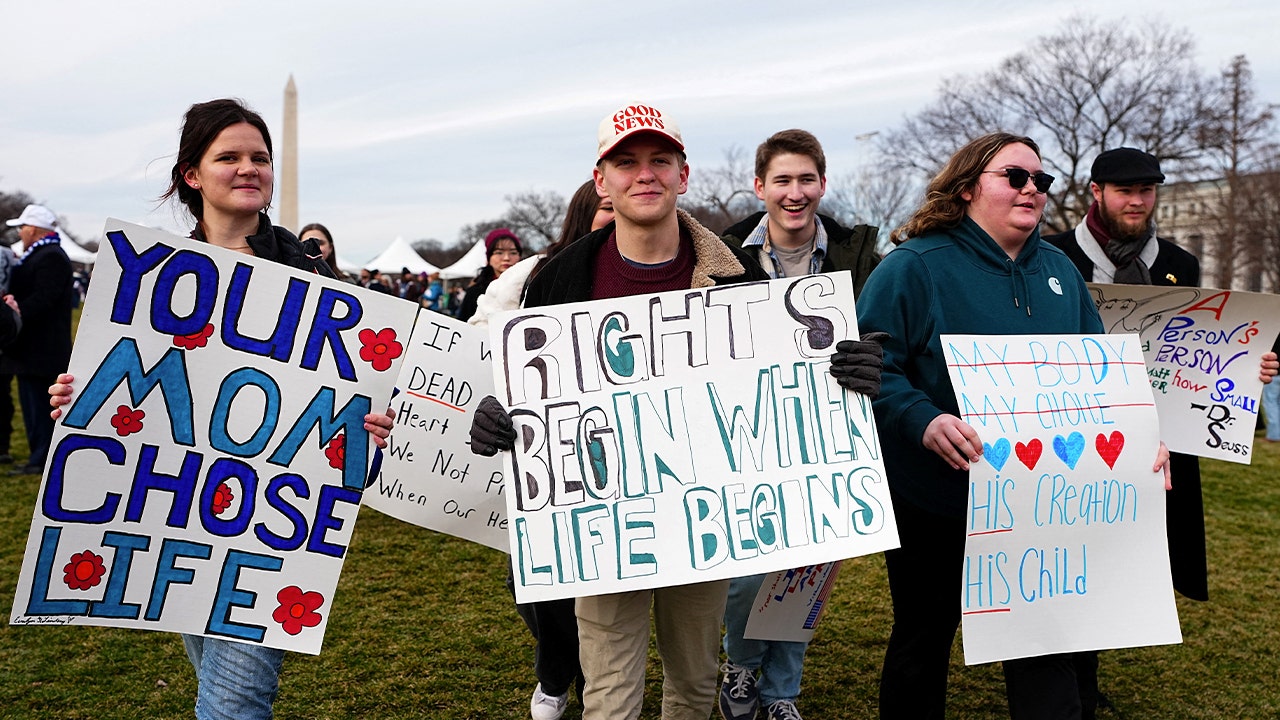
President Donald Trump addressed the annual March for Life rally in Washington, D.C. on Friday, emphasizing the importance of the anti-abortion movement’s mission beyond political action.
“This is a battle that must be fought, must be won not only in the corridors of power, but above all in the hearts and souls of the people,” Trump said in a pre-recorded message delivered to thousands of demonstrators gathered in the nation’s capital.
The March for Life, first organized in 1974, has become one of the largest annual political demonstrations in the United States, regularly drawing tens of thousands of participants from across the country. The event traditionally takes place near the anniversary of the 1973 Roe v. Wade Supreme Court decision, which had established a constitutional right to abortion until it was overturned in 2022.
Trump’s appearance at the rally, even in virtual form, underscores his continued engagement with the anti-abortion movement that formed a crucial part of his political coalition during both his presidency and current campaign activities. During his administration, Trump appointed three conservative justices to the Supreme Court who later contributed to the overturning of Roe v. Wade in the Dobbs v. Jackson Women’s Health Organization decision.
Since the Dobbs ruling, abortion access has become an increasingly central issue in American politics, with states diverging dramatically in their approaches to regulation. Conservative states have enacted significant restrictions or near-total bans, while progressive states have moved to strengthen abortion protections.
Political analysts note that Trump’s message to the marchers reflects the complex political calculus surrounding abortion in the current electoral landscape. While maintaining support from anti-abortion advocates who celebrate his Supreme Court appointments, Trump has recently attempted to stake out a more moderate position by suggesting abortion policy should be left to states rather than banned federally.
The March for Life itself has evolved following the Dobbs decision. Where previously demonstrators marched to the Supreme Court to protest Roe v. Wade, the movement now focuses on promoting anti-abortion legislation at both federal and state levels, as well as changing public opinion on the issue.
This year’s march occurs against the backdrop of heated debates in Congress and state legislatures over abortion access, with Democrats campaigning heavily on protecting reproductive rights and Republicans divided on how restrictively to approach the issue following electoral setbacks in 2022 and 2023 where abortion played a significant role.
Public opinion polling consistently shows Americans hold nuanced views on abortion, with majorities supporting legal access with certain limitations. This complex sentiment presents challenges for both political parties as they navigate the post-Roe landscape.
The demonstration also takes place as medical abortion has become increasingly common, now accounting for more than half of all abortions in the United States, according to the Guttmacher Institute. This trend has prompted new legislative battles over medication access and interstate commerce of abortion pills.
Trump’s brief remarks to the marchers did not address specific policy proposals, focusing instead on the broader cultural aspects of the anti-abortion movement. His campaign has not yet released detailed abortion policy plans for a potential second term.
March organizers expected tens of thousands of participants this year, continuing the tradition of bringing together religious organizations, conservative groups, and anti-abortion activists from around the country in one of the most visible demonstrations of the movement’s ongoing influence in American politics.
Fact Checker
Verify the accuracy of this article using The Disinformation Commission analysis and real-time sources.

16 Comments
The overturning of Roe v. Wade has certainly been a landmark moment for the anti-abortion movement. Trump’s continued involvement suggests this issue will remain a major political battleground going forward.
It will be important to follow how this debate evolves, both in terms of legislation and public opinion, in the years ahead.
The Supreme Court’s recent decision to overturn Roe v. Wade has certainly reignited the abortion debate. Trump’s continued advocacy for the anti-abortion movement indicates its lasting political significance.
It will be intriguing to see how this issue shapes the upcoming election cycle, as both sides seek to rally their supporters.
Regardless of one’s views on abortion, Trump’s message about the need for a ‘battle’ beyond just politics is thought-provoking. It suggests the anti-abortion cause is deeply rooted in many people’s values and convictions.
The March for Life has become a significant annual event, drawing large crowds to advocate for their beliefs. Trump’s virtual appearance underscores the anti-abortion movement’s continued political relevance, even in the post-Roe era.
It will be interesting to see how this issue shapes the upcoming election cycle and the broader political landscape.
The need to ‘win the battle’ in ‘the hearts and souls of the people,’ as Trump describes it, suggests the anti-abortion movement is aiming for a deeper cultural shift, not just legislative changes.
This is a complex and sensitive issue, and it will be fascinating to see how it continues to shape the political landscape in the years ahead.
The March for Life has become a major annual event, drawing large crowds to advocate for their beliefs. Trump’s virtual appearance underscores the movement’s importance to his political coalition, even after leaving office.
This issue continues to spark passionate debates. It will be intriguing to see how it evolves, especially with the overturning of Roe v. Wade.
Trump’s continued engagement with the anti-abortion movement, even after leaving office, highlights the issue’s lasting importance to his political coalition. The overturning of Roe v. Wade has certainly been a major victory for this cause.
While the abortion issue remains highly divisive, Trump’s remarks point to the need for a cultural shift, not just legislative changes. This suggests the anti-abortion movement is aiming to transform hearts and minds, not just policies.
It’s interesting to see Trump continue his engagement with the anti-abortion movement. While the topic is politically divisive, his message emphasizes the need for change beyond just legislative action.
Protecting the unborn is certainly a complex and sensitive issue. I appreciate Trump’s acknowledgment that it requires a shift in hearts and minds, not just policies.
Trump’s appearance at the March for Life rally, even in virtual form, underscores the enduring political significance of the anti-abortion cause. This issue continues to be a driving force for many of his supporters.