


Listen to the article
President Trump Approves Federal Assistance for DC Sewage Crisis as Political Tensions Rise
President Donald Trump has authorized emergency federal assistance to Washington, D.C., to address a massive sewage leak that has dumped at least 250 million gallons of untreated waste into the Potomac River since January 19.
The Federal Emergency Management Agency (FEMA) announced the approval on Saturday, enabling the deployment of equipment and resources to help manage the environmental crisis. The authorization comes after D.C. Mayor Muriel Bowser formally requested federal intervention on Wednesday and declared a local state of emergency.
The 72-inch pipeline, known as the Potomac Interceptor, ruptured nearly three weeks ago, creating one of the region’s most significant environmental emergencies in recent years. While the leak has been largely contained, officials warn that complete repairs could take months, raising concerns about long-term environmental impact.
The federal response has unfolded against a backdrop of political finger-pointing. Before approving the aid, Trump publicly criticized local Democratic leadership for their handling of the crisis, particularly targeting Maryland’s Democratic Governor Wes Moore.
“We have to clean up some mess that Maryland and Virginia have left us. We’re going to be cleaning it up. It’s unbelievable what they can do with incompetence,” Trump remarked during a White House dinner for governors, where Democratic leaders were noticeably absent.
The president had previously claimed on social media that local officials failed to request emergency assistance, stating his intention to intervene. However, the Environmental Protection Agency (EPA) was already actively involved in both repair efforts and environmental impact assessment before the presidential authorization.
Environmental experts note that sewage leaks of this magnitude pose serious threats to aquatic ecosystems. The Potomac River, which flows through multiple states and provides drinking water to millions of residents in the Washington metropolitan area, faces potential contamination of its wildlife habitats and recreational areas.
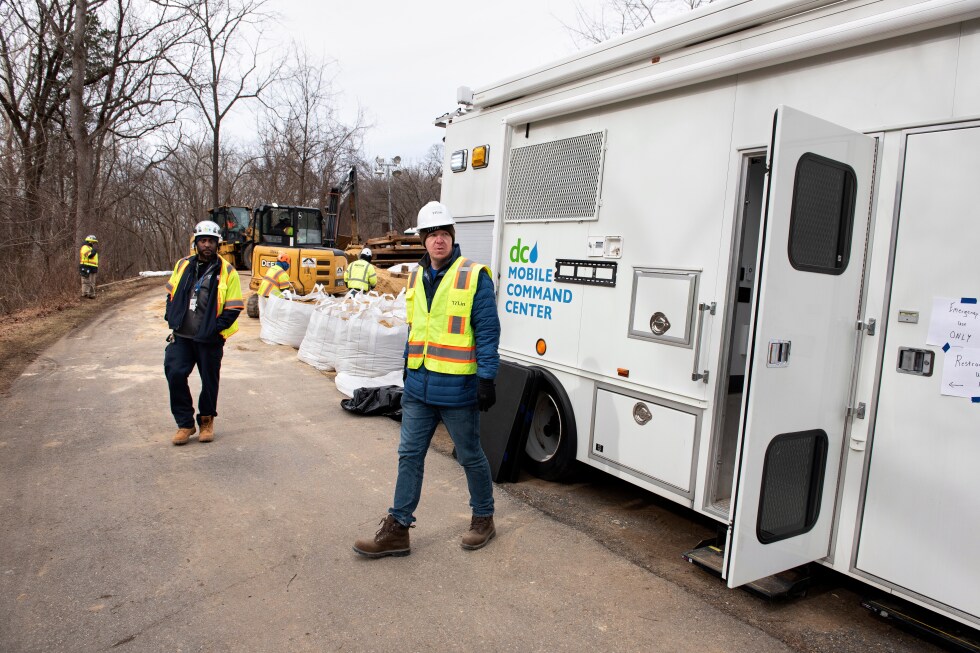
DC Water, the local utility company, has been working alongside the EPA to monitor water quality and implement containment measures. Officials have reassured residents that drinking water remains safe for consumption, as treatment facilities are equipped to filter out contaminants. However, authorities have issued warnings against direct contact with river water for recreational purposes until further notice.
The crisis highlights the aging infrastructure challenges facing many American cities. The Potomac Interceptor is part of the capital’s decades-old sewage system, which experts have long warned requires significant upgrades. Similar infrastructure vulnerabilities exist across the country, with the American Society of Civil Engineers consistently giving poor grades to the nation’s wastewater systems.
For local businesses dependent on the river—including fishing charters, kayak rental companies, and waterfront restaurants—the timing couldn’t be worse as they prepare for the spring tourism season. Economic analysts predict potential losses in the millions if water quality concerns persist through warmer months.
Regional environmental advocacy groups have called for increased funding for infrastructure improvements and stricter regulations on aging sewage systems. They point to similar incidents in other major urban centers as evidence of a national crisis requiring comprehensive federal attention beyond emergency responses.
As cleanup efforts continue, engineers from DC Water estimate that stopping the remaining leak and fully repairing the damaged pipeline could cost tens of millions of dollars. The approved federal assistance will help offset these costs, though questions remain about long-term funding for infrastructure upgrades that might prevent similar disasters in the future.
Local officials continue to monitor water quality daily and have implemented additional testing protocols throughout the affected areas of the Potomac River and its tributaries.
Fact Checker
Verify the accuracy of this article using The Disinformation Commission analysis and real-time sources.

12 Comments
While the political tensions are concerning, I’m glad to see the federal government providing assistance. Sewage spills can have far-reaching impacts, so a robust response is essential.
This is a worrying situation, but I’m hopeful the federal and local authorities can work together effectively to address the crisis. Protecting waterways like the Potomac should be a top priority.
Agreed, this is an issue that transcends politics. The environment and public health need to be the main focus.
This is a tricky situation, with political dynamics adding complexity. But the core issue is the environmental damage and public health risks from the sewage spill. I’m glad to see the federal government stepping in to assist.
As someone who lives near the Potomac, I’m very concerned about the long-term impacts this spill could have on the river’s ecosystem and water quality. Glad to see federal assistance being provided to support the cleanup efforts.
Glad to see the federal government stepping in to assist with this major environmental crisis. Sewage spills can have devastating impacts on waterways and ecosystems. Hopefully the repairs can be completed quickly and the long-term damage minimized.
Agreed, these types of spills need urgent attention. The Potomac River is an important regional resource that needs to be protected.
This seems like a complex issue with political tensions complicating the response. I hope the focus remains on addressing the environmental damage and public health concerns rather than partisan bickering.
Yes, it’s important to take the politics out of it and just focus on the practical steps needed to mitigate the spill and prevent future issues.
I hope the repairs to the pipeline can be completed quickly and effectively. Ongoing spills like this can be devastating for aquatic life and pose risks to public health. Coordinated action is key.
Absolutely, the environment should be the top priority here. Partisan politics have no place in responding to an environmental crisis of this scale.
It’s good to see the Trump administration approving disaster aid, even if the political tensions are high. Sewage spills can have severe environmental consequences, so a coordinated federal response is crucial.