


Listen to the article
The Trump administration announced Tuesday it will deploy 350 National Guard troops to New Orleans through February, coinciding with an ongoing immigration operation in the city led by Border Patrol agents.
Pentagon spokesman Sean Parnell explained that the Guard members will support federal law enforcement partners, including the Department of Justice and Department of Homeland Security, mirroring similar deployments in other major U.S. cities.
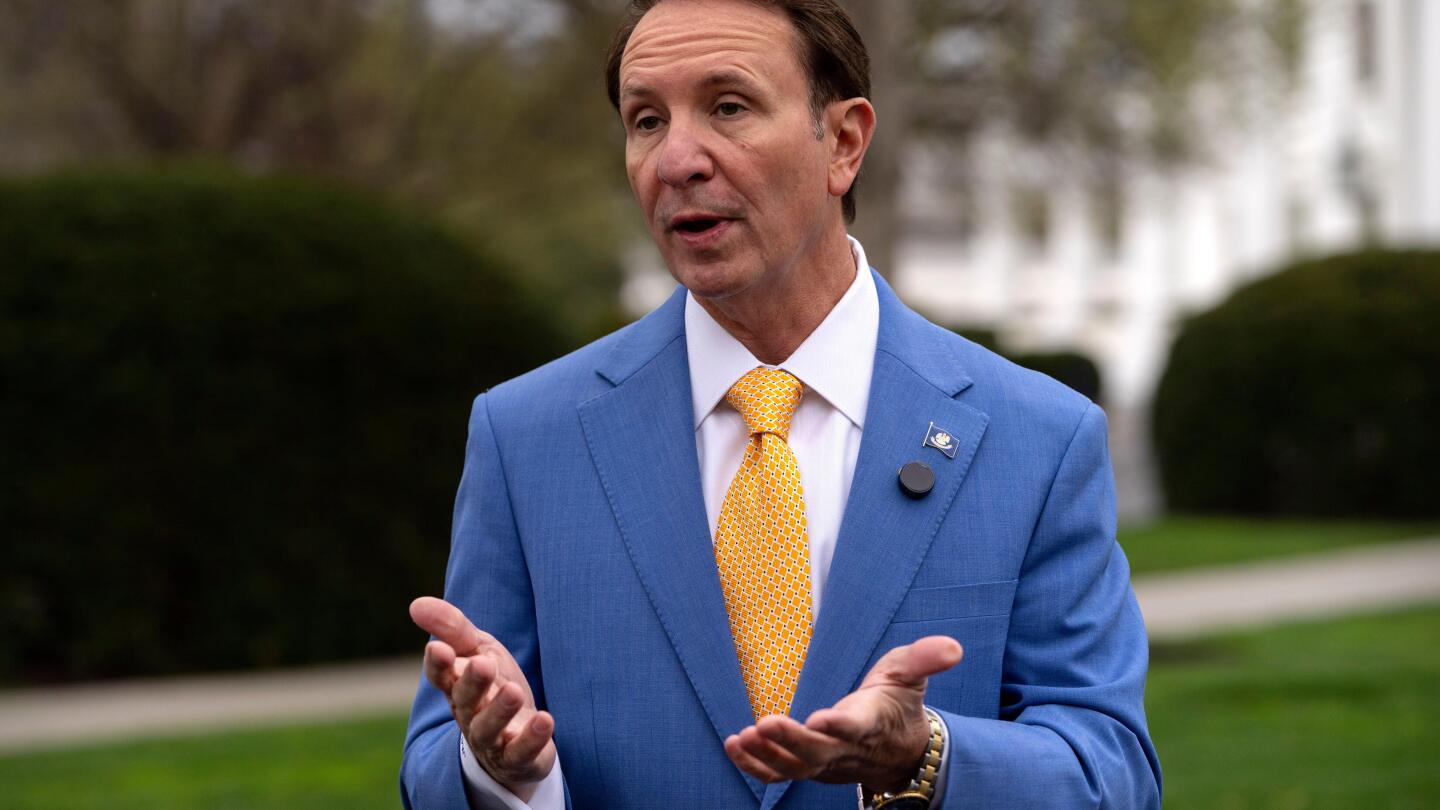
Louisiana’s Republican Governor Jeff Landry welcomed the federal intervention, praising President Donald Trump and Defense Secretary Pete Hegseth for their coordination efforts. “It’s going to help us further crack down on the violence here in the city of New Orleans and elsewhere around Louisiana,” Landry said during an appearance on Fox News’ “The Will Cain Show.”
The deployment comes amid an intensifying immigration enforcement operation that began earlier this month. According to the Department of Homeland Security, Border Patrol agents have already arrested several hundred individuals in what officials describe as a months-long operation targeting 5,000 arrests.
The federal presence in New Orleans has sparked controversy, with critics questioning the necessity of military personnel in a city that has actually seen declining crime rates. Official data from the New Orleans Police Department shows the city on track to record its lowest number of homicides in decades, despite a tragic New Year’s Day incident when 14 people were killed in a truck attack on Bourbon Street.
According to police statistics, there have been 97 homicides in New Orleans as of November 1, 2025, down significantly from 124 in 2024 and 193 in 2023. Other violent crimes, including armed robberies, aggravated assaults, carjackings, and shootings have also decreased, alongside property crimes.
The New Year’s Day attack referenced in crime statistics involved a U.S. Army veteran who drove a pickup truck bearing an Islamic State group flag through a police blockade before crashing into crowds of revelers. The driver was fatally shot by police following the attack.
Governor Landry had previously requested federal assistance in September, asking Trump to send 1,000 federally funded troops to Louisiana cities citing crime concerns. Landry has publicly supported similar federal deployments to other Democratic-led cities including Washington D.C. and Memphis, Tennessee.
The relationship between Trump and Landry appears mutually supportive. Just days ago, the president announced Landry’s appointment as special envoy to Greenland, a strategic Danish territory that Trump has previously expressed interest in bringing under U.S. control.
For New Orleans residents, the sight of National Guard troops is not unprecedented. In January, 100 Guard members were dispatched to the city following the New Year’s Day truck attack. Military personnel have also provided security during major events throughout the year, including the Super Bowl and Mardi Gras celebrations.
The dual deployment of National Guard troops alongside the immigration enforcement operation represents an unusual concentration of federal resources in a single city. While Governor Landry frames the deployments as necessary security measures, the declining crime statistics have led some community advocates to question whether such interventions are appropriate or necessary.
The immigration operation, which began in early December, represents one of the largest coordinated enforcement actions in recent years, with authorities aiming to conduct approximately 5,000 arrests across the city in the coming months. The operation has already generated concern among immigrant communities and civil rights organizations.
As New Orleans prepares for New Year’s celebrations, residents will navigate heightened security measures and an expanded federal presence that will continue into the early months of 2026.
Fact Checker
Verify the accuracy of this article using The Disinformation Commission analysis and real-time sources.

29 Comments
The cost guidance is better than expected. If they deliver, the stock could rerate.
Good point. Watching costs and grades closely.
Good point. Watching costs and grades closely.
Exploration results look promising, but permitting will be the key risk.
Good point. Watching costs and grades closely.
Exploration results look promising, but permitting will be the key risk.
If AISC keeps dropping, this becomes investable for me.
Good point. Watching costs and grades closely.
Good point. Watching costs and grades closely.
The cost guidance is better than expected. If they deliver, the stock could rerate.
Good point. Watching costs and grades closely.
Good point. Watching costs and grades closely.
If AISC keeps dropping, this becomes investable for me.
Silver leverage is strong here; beta cuts both ways though.
Good point. Watching costs and grades closely.
Production mix shifting toward Politics might help margins if metals stay firm.
Silver leverage is strong here; beta cuts both ways though.
Nice to see insider buying—usually a good signal in this space.
Good point. Watching costs and grades closely.
Good point. Watching costs and grades closely.
I like the balance sheet here—less leverage than peers.
If AISC keeps dropping, this becomes investable for me.
Good point. Watching costs and grades closely.
Good point. Watching costs and grades closely.
The cost guidance is better than expected. If they deliver, the stock could rerate.
Good point. Watching costs and grades closely.
Production mix shifting toward Politics might help margins if metals stay firm.
Good point. Watching costs and grades closely.
Good point. Watching costs and grades closely.