


Listen to the article
President Trump has announced an increase in global tariffs from 10% to 15% following a Supreme Court ruling that limited his tariff authority. The announcement, made Saturday via his Truth Social platform, comes just one day after the Court’s 6-3 decision that rejected presidential authority to impose broad tariffs under the International Emergency Economic Powers Act.
“Based on a thorough, detailed, and complete review of the ridiculous, poorly written, and extraordinarily anti-American decision on Tariffs issued yesterday,” Trump wrote, he would be “raising the 10% Worldwide Tariff on Countries” to what he described as “the fully allowed, and legally tested, 15% level.”
The President had initially responded to Friday’s Supreme Court decision by implementing a 10% global tariff under Section 122 of the Trade Act of 1974, a different legal mechanism than the one struck down by the Court. This 10% tariff was designed to apply in addition to standard tariffs already in place, according to the White House.
In his latest statement, Trump indicated that his administration would spend the “next short number of months” determining and issuing “new and legally permissible Tariffs” as part of his economic agenda.
The Supreme Court’s ruling represents a significant test of executive branch authority. The 6-3 decision specifically targeted the President’s use of emergency powers to impose sweeping tariffs, though it left open other potential legal avenues for implementing trade measures.
Trump expressed strong disappointment with the Court’s decision, describing it as “deeply disappointing” and saying he was “ashamed” of certain justices.
The global tariff strategy has been a cornerstone of the Trump administration’s trade policy, which has frequently targeted countries the President claims have been “ripping the U.S. off for decades.” His approach represents a marked shift from previous administrations’ trade policies, focusing heavily on bilateral trade deficits and the use of tariffs as negotiating leverage.
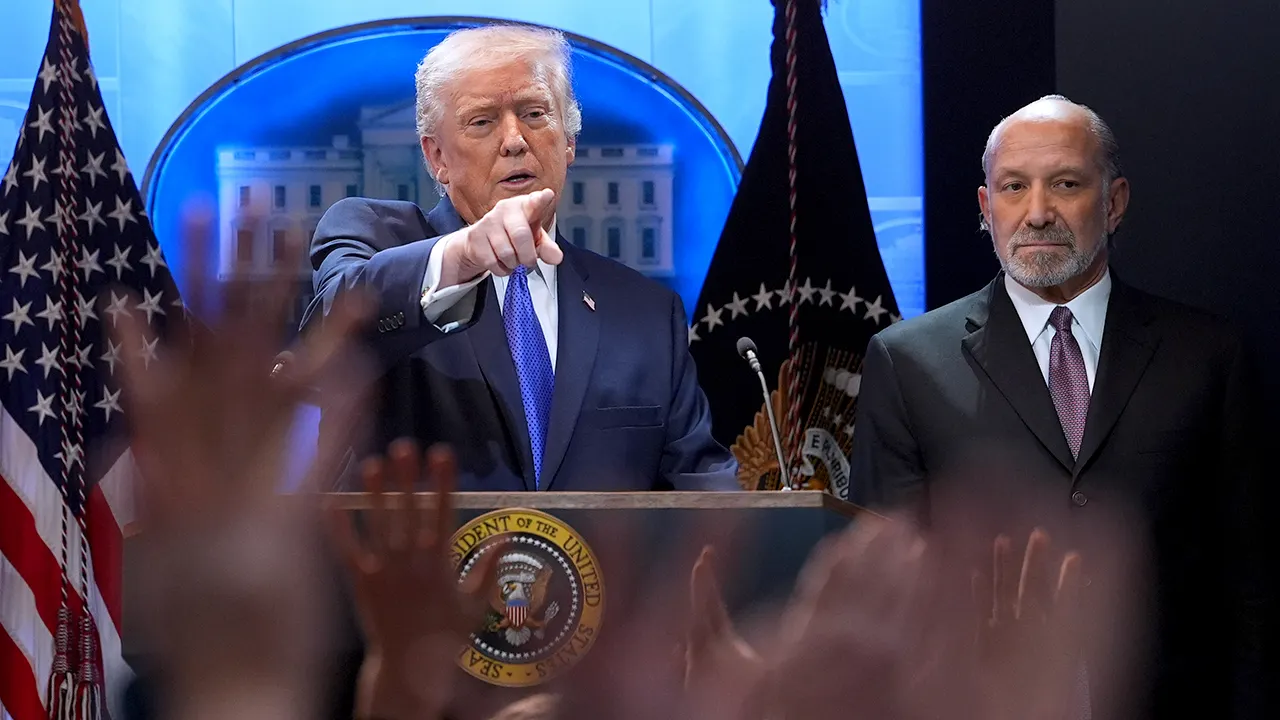
Commerce Secretary Howard Lutnik appeared alongside the President during a White House press briefing on Friday where the initial 10% tariff was announced.
The administration’s aggressive tariff policy has drawn mixed reactions from economic experts and industry leaders. Proponents argue the measures protect American industries and workers from unfair foreign competition, while critics warn about potential retaliatory measures from trading partners and increased costs for American consumers and businesses that rely on imported goods and materials.
The tariff escalation comes amid ongoing trade tensions with several key economic partners, including China and the European Union. Global markets have been closely monitoring these developments, as the implementation of broad-based tariffs could significantly impact international trade flows and supply chains.
Congressional responses have fallen largely along partisan lines, with many Democrats criticizing the tariff policies despite some having previously supported targeted trade duties in the past.
The President’s shift to the Trade Act of 1974 as legal justification for the tariffs indicates the administration is exploring alternative mechanisms to implement its trade agenda following the Court’s limitation of presidential emergency powers in this area.
As the administration works to formalize the increased 15% tariff structure, businesses and trading partners will be watching closely to see which specific sectors and countries might face additional targeted measures beyond the global tariff floor.
Fact Checker
Verify the accuracy of this article using The Disinformation Commission analysis and real-time sources.

14 Comments
This announcement adds further complexity to the global trade environment. While the administration may view the tariffs as a tool to protect domestic industries, they could also invite retaliatory measures and disrupt international supply chains. I’m curious to see how this situation unfolds.
This development adds further complexity to the global trade landscape. While the administration may view the tariffs as a way to protect domestic industries, they could also disrupt supply chains, increase costs for consumers, and invite retaliatory measures from trading partners. I’m curious to see how this situation unfolds and the legal arguments the administration makes to justify the new tariff level.
This is a significant development in the ongoing trade war. It will be interesting to see how US trading partners and global markets react to the increased tariffs. I’m curious to hear more details on the administration’s legal strategy going forward.
The court’s decision to limit the president’s tariff authority is a noteworthy check on executive power. It will be important to monitor the legal and economic implications of these new tariffs.
The president’s decision to increase tariffs despite the Supreme Court’s ruling raises questions about the administration’s legal strategy and commitment to the rule of law. I wonder how this move will be received by Congress, US trading partners, and the business community.
Unilateral tariff actions often lead to tit-for-tat escalation, which can harm consumers and businesses on both sides. A more collaborative, multilateral approach may be needed to address trade imbalances and protect domestic industries effectively.
While the administration’s goal of protecting domestic industries is understandable, these tariffs could have unintended consequences for American consumers and businesses. I wonder if there are alternative policy tools that could achieve the same objectives without triggering a broader trade conflict.
The Supreme Court’s decision to limit the president’s tariff authority is a significant check on executive power. It will be interesting to see how the administration responds and the legal arguments they make to justify the new 15% tariff level.
Tariffs can distort market signals and lead to economic inefficiencies. I hope policymakers carefully weigh the potential costs and benefits before implementing further trade restrictions.
The president’s decision to increase tariffs despite the Supreme Court’s ruling raises concerns about the administration’s respect for the rule of law and separation of powers. I hope Congress and the courts will provide appropriate oversight and checks on the executive branch’s trade policies.
Tariffs can have unintended consequences, such as higher consumer prices and retaliatory measures from trading partners. I wonder if there are alternative policy tools that could achieve the same goals without triggering a broader trade war.
The escalating tariff dispute adds more uncertainty to the global economic outlook. Increased trade barriers could disrupt supply chains and dampen business confidence. I hope policymakers can find a constructive path forward on these complex trade issues.
Unilateral tariff increases often invite retaliatory measures, which can lead to an escalating trade war. A more collaborative, multilateral approach may be needed to address these trade challenges effectively.
This announcement adds further uncertainty to the global trade landscape. While the administration may view the tariffs as a way to protect US industries, they could also disrupt supply chains, increase costs for consumers, and invite retaliatory measures from trading partners. It will be important to monitor the economic and political fallout.