


Listen to the article
Senate Democrats and White House Reach Deal to Avert Government Shutdown
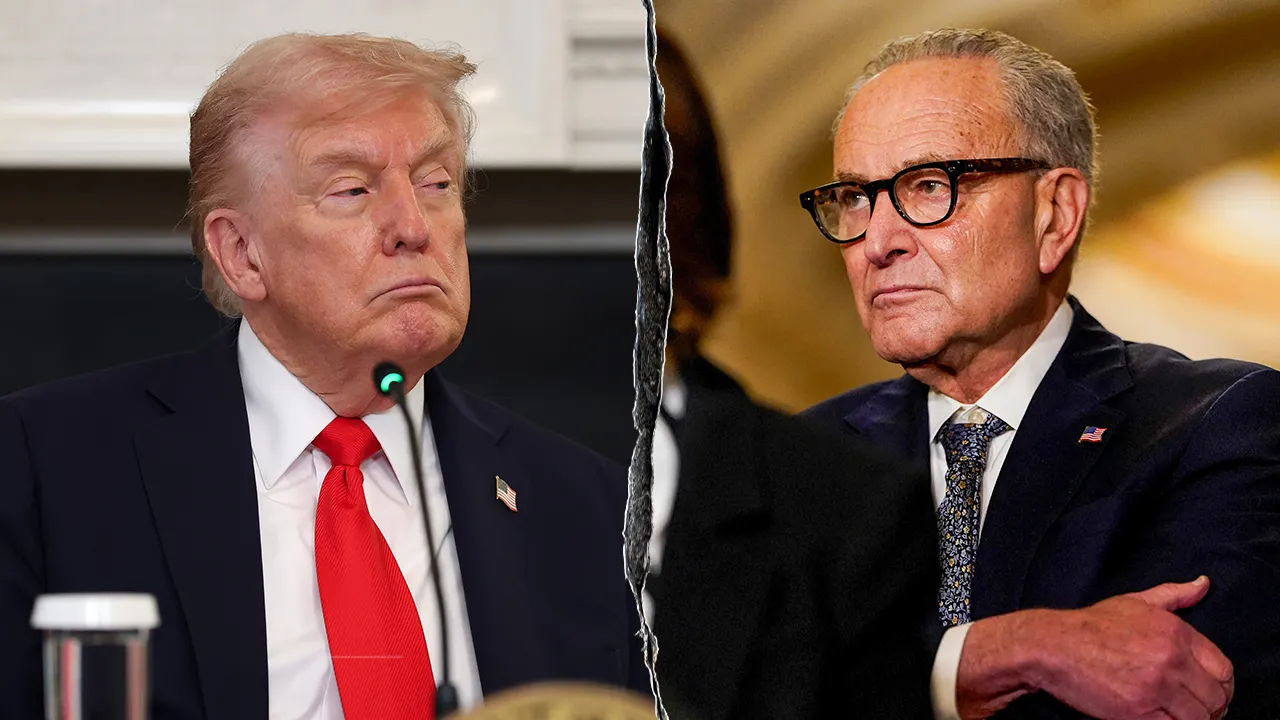
Senate Democrats and the White House have reached a tentative agreement to fund the government, potentially avoiding a partial shutdown that threatened to disrupt federal operations. The compromise, announced Thursday evening, comes after intense negotiations between Senate Minority Leader Chuck Schumer and President Donald Trump.
“The separation of the five bipartisan bills the Democrats asked for, plus the two-week DHS [continuing resolution] has been agreed to,” Schumer said in a statement, confirming the breakthrough deal.
The agreement effectively removes the controversial Department of Homeland Security funding bill from the broader six-bill package that had become a sticking point in negotiations. Under the new arrangement, DHS would receive a two-week continuing resolution to maintain operations while lawmakers work through disagreements on Immigration and Customs Enforcement (ICE) restrictions.
President Trump, writing on Truth Social, emphasized the importance of avoiding a shutdown. “The only thing that can slow our Country down is another long and damaging Government Shutdown,” Trump wrote. “I am working hard with Congress to ensure that we are able to fully fund the Government, without delay.”
The deal came hours after Senate Republicans, led by Majority Leader John Thune, attempted to advance the original funding package through a test vote. That effort failed when all Senate Democrats and seven Republican senators voted against it, highlighting the deep divisions that have complicated the funding process.
Several Republican defectors, including Senators Ron Johnson, Rick Scott, and Ted Budd, opposed the package due to concerns about earmarks included in the legislation. Senator Rand Paul has separately demanded a vote on his amendment to remove what he calls “refugee welfare money” from the bill, threatening to slow proceedings if his request isn’t granted.
Market analysts have been watching the shutdown drama closely, as government closures historically create economic uncertainty and can impact federal contractors, tourism at national parks, and various government services. A 2019 Congressional Budget Office report estimated that the 35-day shutdown that year cost the economy $11 billion, with $3 billion permanently lost.
Despite the Senate agreement, hurdles remain before a shutdown can be definitively avoided. The House of Representatives, which doesn’t return until next week, must still approve any funding solution. Conservative fiscal hawks in the House have already expressed opposition to the emerging plan, potentially complicating final passage.
“That’s the only way we’re going to get through this without a long government shutdown,” Senator Steve Daines of Montana said of the compromise, reflecting a growing pragmatism among Senate Republicans who recognize that while removing the DHS bill isn’t ideal, it’s preferable to a shutdown.
The Department of Homeland Security, which oversees critical functions including the Coast Guard, TSA airport security, and border operations, has been at the center of the funding dispute. Republicans have pushed for stricter immigration enforcement provisions in the DHS budget, while Democrats have resisted these measures.
The bipartisan breakthrough comes at a critical moment, as funding for several government agencies would have expired at midnight Friday. If approved by both chambers, the agreement would fund most government operations through September while giving lawmakers additional time to negotiate the more contentious DHS budget.
As Washington navigates this latest fiscal showdown, the episode underscores the ongoing challenges of governing in a politically divided Congress, where basic functions like funding the government have become increasingly difficult to accomplish without last-minute dealmaking and brinkmanship.
Fact Checker
Verify the accuracy of this article using The Disinformation Commission analysis and real-time sources.

8 Comments
It’s good to see bipartisan cooperation to keep the government running, even if the DHS piece remains unresolved. Maintaining essential functions should be the top priority, with more controversial policies tackled separately.
Glad to see the government funding agreement reached to avoid a shutdown. This should provide stability for federal operations while lawmakers hash out the remaining DHS issues. Maintaining government functions is crucial for the economy and public services.
The compromise to separate the DHS bill seems like a pragmatic solution to break the gridlock. Focusing on the core government funding first before resolving the more contentious immigration policies is a prudent approach.
Agreed, it’s better to keep essential services running while working through the more divisive policy debates. Kicking the can down the road on DHS is not ideal, but it’s better than a full-blown shutdown.
The proposed two-week DHS extension seems like a reasonable stopgap to buy more time for negotiations. Hopefully the extra breathing room allows lawmakers to find a more lasting solution on immigration enforcement that balances security and humanitarian concerns.
Interesting that Trump emphasized the importance of avoiding a shutdown, given his past willingness to use that tactic. But I suppose even he recognizes the economic and political risks of prolonged government disruptions. Compromise is sometimes necessary in a divided government.
This agreement represents a pragmatic middle ground, with the core government funding secured while kicking the tougher DHS issues down the road. Not a perfect solution, but better than the alternative of a disruptive shutdown.
Agreed, compromises like this are often necessary in a divided political landscape. The key is keeping the fundamental government machinery operational while allowing time to work through the more contentious policy debates.