


Listen to the article
Tensions Rise Between Trump and Netanyahu Over Iran Gas Field Attack
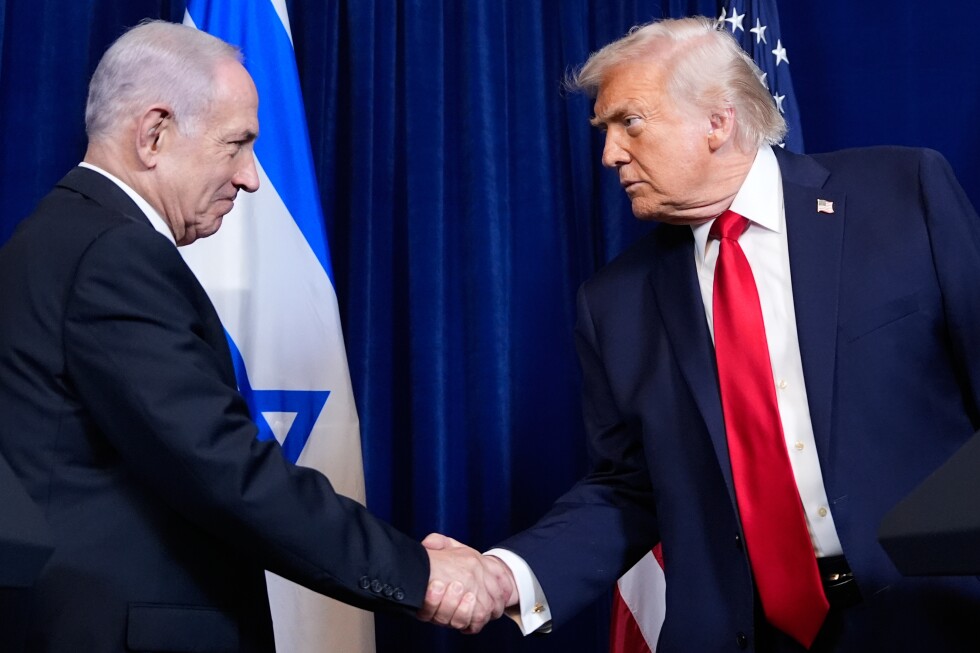
President Donald Trump and Israeli Prime Minister Benjamin Netanyahu have publicly diverged over Israel’s decision to attack Iran’s South Pars gas field, marking the most significant difference between the two leaders since the beginning of the 20-day conflict with Iran.
The Israeli strike on South Pars, the world’s largest gas field and a crucial energy lifeline for Iran, prompted swift retaliation against energy infrastructure in other Middle Eastern countries. This escalation has further destabilized global energy markets, with prices surging amid growing concerns over supply disruptions.
Gulf allies have intensified calls for Trump to restrain Netanyahu as the conflict threatens to spiral into a broader regional crisis affecting global energy security.
“I told him, ‘Don’t do that,'” Trump said during an Oval Office meeting with Japanese Prime Minister Sanae Takaichi, making it clear he neither agreed with nor approved of Israel’s attack on the gas field. “We get along great. It’s coordinated, but on occasion he’ll do something. And if I don’t like it — and so we’re not doing that anymore.”
Netanyahu, while acknowledging that Israel “acted alone” in the strike, attempted to minimize any perceived rift with the U.S. president. He confirmed he has agreed to Trump’s request to halt further attacks on Iran’s gas field.
“Look, I don’t think any two leaders have been as coordinated as President Trump and I. He’s the leader. I’m his ally. America is the leader,” Netanyahu stated during a Jerusalem press conference. He also emphasized their shared view of Iran as a threat: “For 40 years I’ve been saying that Iran is a danger to Israel and a danger to the world. You know who else said that? President Trump.”
Despite Trump’s claim on social media that the U.S. “knew nothing” about the attack before it occurred, sources familiar with the matter, speaking on condition of anonymity, indicated that U.S. officials were indeed informed of Israel’s plans ahead of time. One source stated that Israel’s targets are being coordinated with American officials.
U.S. Director of National Intelligence Tulsi Gabbard highlighted the strategic disconnect during a House intelligence committee hearing on Thursday. “The objectives that have been laid out by the president are different from the objectives that have been laid out by the Israeli government,” she noted when questioned about the White House position on the gas field strike.
The U.S. air campaign has primarily targeted Iran’s missile program, nuclear facilities, and naval assets. Israel, meanwhile, has pursued a strategy of high-level assassinations, seemingly aimed at toppling the Islamic regime that has governed Iran since 1979.
Netanyahu has consistently framed the conflict as an opportunity to transform the Middle East by replacing Iran’s current leadership with a more moderate government less hostile to Israel. His position is bolstered by strong domestic support for military action against Iran, giving him political latitude to pursue a sustained campaign.
Trump’s objectives have evolved since the conflict began. Initially, he confidently suggested Iranians would soon have the chance to overthrow clerical rule. However, in a recent Fox News Radio interview, he expressed doubts about the Iranian opposition’s capacity to challenge the regime, particularly citing the formidable presence of the paramilitary Basij force.
“So, I really think that’s a big hurdle to climb for people that don’t have weapons. I think it’s a very big hurdle,” Trump said, adding that he believed Netanyahu would understand this reality too.
Despite these emerging differences, Trump has consistently articulated that preventing Iran from obtaining nuclear weapons remains his primary goal.
The relationship between Trump and Netanyahu has been one of the strongest among foreign leaders during Trump’s presidency. Netanyahu frequently praises Trump as Israel’s most reliable White House ally. However, the president has acknowledged that geographical realities shape their different perspectives on the conflict. “You know, they’re there, and we’re very far away,” Trump noted.
Joel Rubin, a former State Department official in the Obama administration, suggests the differences between Trump and Netanyahu remain largely superficial for now. Netanyahu has “been trying to figure out how to get American support for many decades” for decisive strikes against Iran, and Trump is “the first president to say, ‘Go for it!'”
However, as the conflict continues, Trump may face increasing political pressure that could widen these rifts. “When the war ends it’s likely gonna be Trump’s call,” Rubin said, noting that synchronizing their positions on when to conclude military operations could prove challenging.
“Israel does not have the same focus on global oil markets as the U.S., and the repercussions,” Rubin added, highlighting a fundamental difference in strategic priorities that could shape the conflict’s resolution.
Fact Checker
Verify the accuracy of this article using The Disinformation Commission analysis and real-time sources.

29 Comments
Interesting update on Trump and Netanyahu split on gas field attack, raise questions about whether they’re in sync on war. Curious how the grades will trend next quarter.
Good point. Watching costs and grades closely.
The cost guidance is better than expected. If they deliver, the stock could rerate.
Good point. Watching costs and grades closely.
I like the balance sheet here—less leverage than peers.
Good point. Watching costs and grades closely.
Good point. Watching costs and grades closely.
Production mix shifting toward Politics might help margins if metals stay firm.
Good point. Watching costs and grades closely.
Good point. Watching costs and grades closely.
Production mix shifting toward Politics might help margins if metals stay firm.
Good point. Watching costs and grades closely.
Good point. Watching costs and grades closely.
Uranium names keep pushing higher—supply still tight into 2026.
The cost guidance is better than expected. If they deliver, the stock could rerate.
Uranium names keep pushing higher—supply still tight into 2026.
Uranium names keep pushing higher—supply still tight into 2026.
Good point. Watching costs and grades closely.
Good point. Watching costs and grades closely.
Uranium names keep pushing higher—supply still tight into 2026.
Good point. Watching costs and grades closely.
Good point. Watching costs and grades closely.
The cost guidance is better than expected. If they deliver, the stock could rerate.
Silver leverage is strong here; beta cuts both ways though.
Good point. Watching costs and grades closely.
Good point. Watching costs and grades closely.
Nice to see insider buying—usually a good signal in this space.
Good point. Watching costs and grades closely.
Good point. Watching costs and grades closely.