


Listen to the article
Justice Department Pushes Back on Minnesota’s Challenge to Immigration Operation
The Trump administration is urging a federal judge to dismiss Minnesota’s legal challenge to an immigration enforcement operation that has caused significant upheaval in Minneapolis and St. Paul in recent weeks.
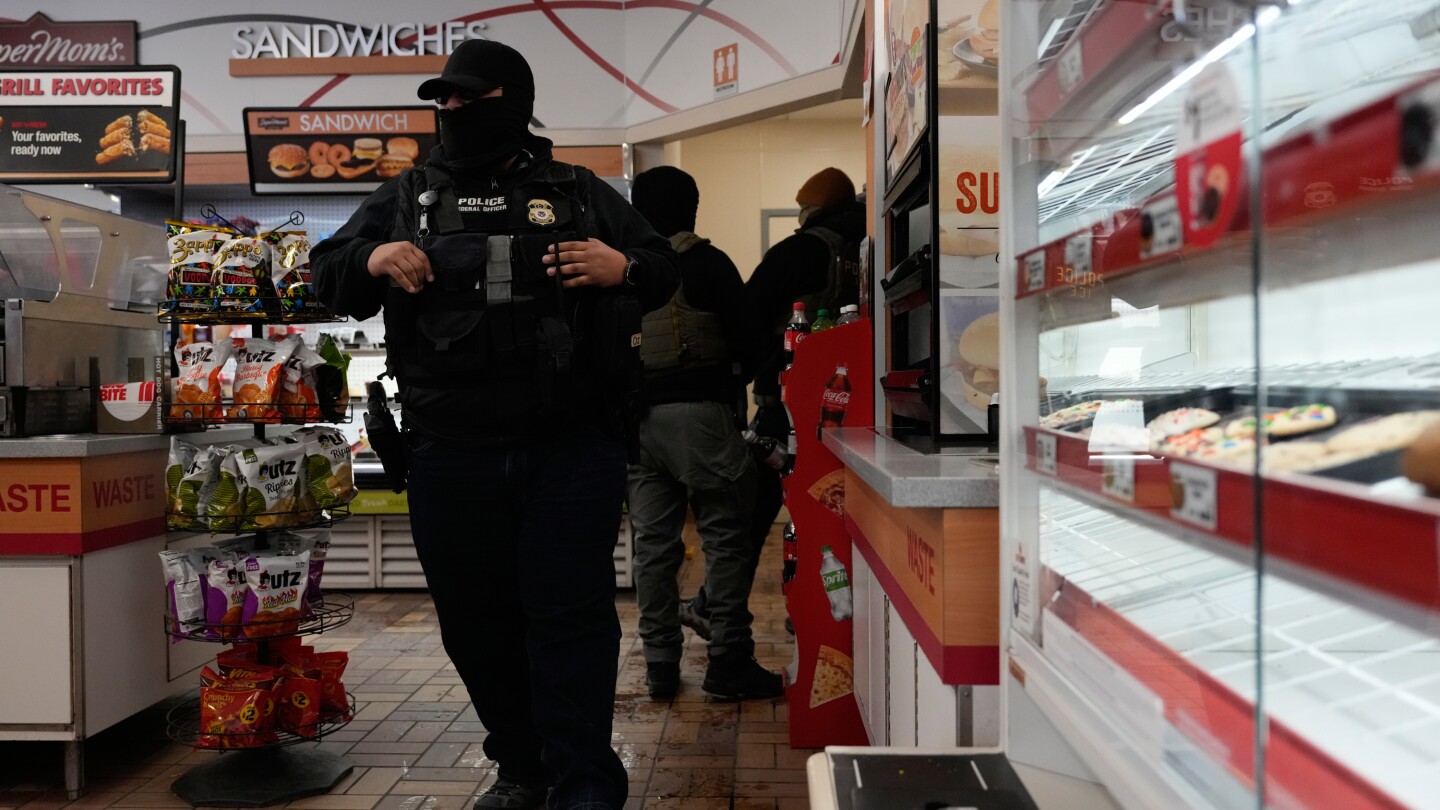
In a court filing on Monday, the Justice Department characterized the lawsuit as “legally frivolous,” asserting that the Department of Homeland Security is operating within its legal authority to enforce immigration laws. Federal officials defended Operation Metro Surge, claiming it has enhanced public safety through the arrest of more than 3,000 individuals allegedly in the country illegally.
“Put simply, Minnesota wants a veto over federal law enforcement,” Justice Department attorneys stated in their filing.
The lawsuit, filed on January 12 by Minnesota Attorney General Keith Ellison, came shortly after the fatal shooting of 37-year-old Renee Good by an immigration officer. Ellison contends the federal government is violating constitutional rights, including free speech protections, through what he described as an “invasion” of poorly trained armed officers conducting unprecedented sweeps across the Twin Cities.
The state is seeking a court order to halt or significantly restrict the enforcement action. U.S. District Judge Katherine Menendez will eventually rule on the case, though the timeline remains uncertain as additional filings are expected from both sides.
Legal experts have expressed skepticism about Minnesota’s chances of success. Ilan Wurman, a constitutional law professor at the University of Minnesota Law School, told The Associated Press: “There’s no question that federal law is supreme over state law, that immigration enforcement is within the power of the federal government, and the president, within statutory bounds, can allocate more federal enforcement resources to states who’ve been less cooperative in that enforcement space than other states have been.”
The immigration operation has faced intense scrutiny since the January 7 shooting of Good, who was killed while moving her vehicle that had been blocking a Minneapolis street where Immigration and Customs Enforcement (ICE) officers were operating. While Trump administration officials maintain that officer Jonathan Ross acted in self-defense, video footage shows Good’s Honda Pilot slowly turning away from him when shots were fired.
This incident has catalyzed public opposition to the federal operation. Protesters have repeatedly confronted officers, blowing whistles and shouting at ICE and U.S. Border Patrol personnel. Law enforcement has responded by deploying tear gas and chemical irritants against demonstrators.
Bystanders have documented controversial tactics, including officers using a battering ram to enter homes, smashing vehicle windows, and forcibly removing people from cars. These actions have raised serious concerns about potential civil rights violations.
Julia Decker, policy director at the Immigrant Law Center of Minnesota, expressed concern about the lack of transparency regarding those arrested during the operation. “These are real people we’re talking about, that we potentially have no idea what is happening to them,” she said. Decker noted that U.S. citizens have reportedly been pulled from homes and vehicles during the operation, raising questions about the precision and legitimacy of the enforcement actions.
In a related development, Judge Menendez ruled Friday in a separate lawsuit that federal officers cannot detain or use tear gas against peaceful protesters who aren’t obstructing authorities, setting some boundaries on enforcement tactics.
The situation escalated to the point that President Donald Trump threatened last week to invoke the Insurrection Act of 1807 and deploy military troops to Minnesota. However, he has since moderated his public stance on this possibility.
The legal battle highlights the ongoing tension between federal immigration enforcement priorities and state and local concerns about civil liberties, community safety, and the humanitarian treatment of both documented and undocumented residents. As the court weighs these competing interests, communities in the Twin Cities continue to grapple with the day-to-day impact of the heightened enforcement activities.
Fact Checker
Verify the accuracy of this article using The Disinformation Commission analysis and real-time sources.

14 Comments
The Trump administration’s insistence on continuing this operation despite the state’s objections speaks to their commitment to aggressive immigration enforcement. But the state’s claims also deserve a fair hearing.
This case highlights the complex, politically-charged nature of immigration policy in the US. I’ll be following the court’s decision with great interest.
This case underscores the broader debate over the appropriate scope and methods of immigration enforcement in the US. It will be important for the court to carefully weigh all the evidence and arguments.
Regardless of the outcome, this case is likely to have significant implications for the ongoing tensions between federal and state/local authorities on this issue.
I appreciate the DOJ’s perspective on enforcing immigration laws, but I share the state’s concerns about the scope and tactics of this operation. Balancing public safety and civil liberties is always challenging.
It will be important for the judge to carefully weigh the evidence and arguments from both sides before making a decision that upholds the rule of law.
The administration’s push to continue this enforcement operation despite the state’s objections highlights the ongoing tensions between federal and state/local authorities on immigration policy. I’ll be following this case closely.
The fatal shooting of Renee Good is a tragic outcome, and the state’s claims of constitutional rights violations are serious and warrant a thorough review by the court.
This case highlights the ongoing political and legal battles over immigration enforcement in the US. I’ll be watching to see how the court navigates these complex issues.
Reasonable people can disagree on the appropriate balance between federal authority and state/local concerns in this area. A fair and impartial judicial review will be critical.
This is a complex and contentious issue with valid arguments on both sides. I’m curious to see how the court will rule on the state’s challenge to the federal immigration enforcement operation.
It will be interesting to see if the judge agrees with the DOJ’s assertion that Minnesota’s lawsuit is “legally frivolous” or if the state’s concerns about civil liberties will be upheld.
The Trump administration’s stance on this issue is not surprising given their hardline approach to immigration. But the state’s arguments about constitutional rights also merit serious consideration.
I’m curious to see if the judge will side more with the federal government’s enforcement priorities or the state’s concerns about civil liberties and community impact.