


Listen to the article
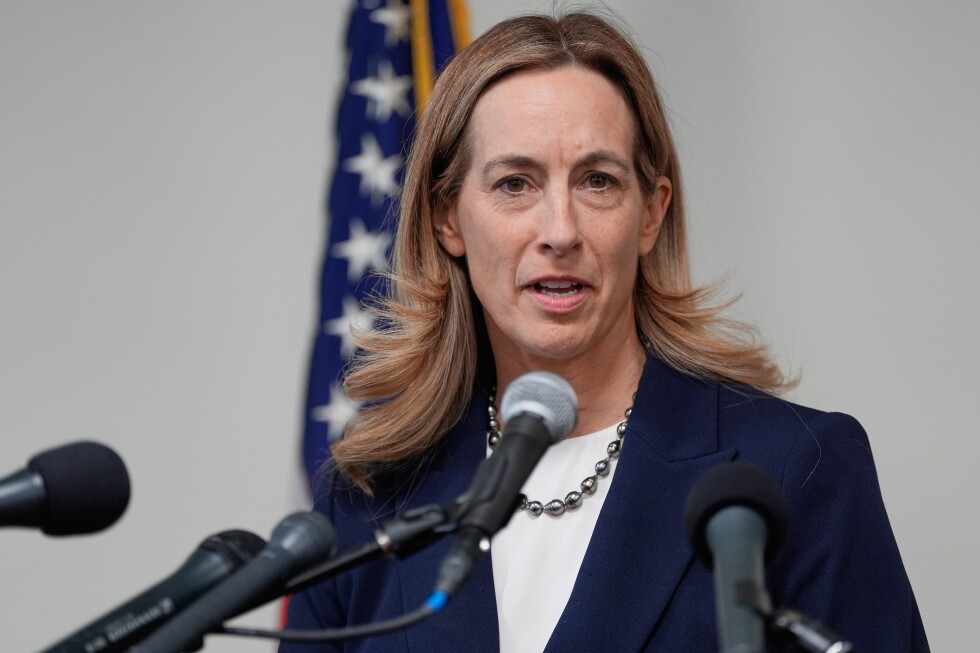
The Trump administration escalated its legal battle with New Jersey on Monday, filing a federal lawsuit challenging Governor Mikie Sherrill’s recent executive order that restricts federal immigration agents from making arrests in certain state facilities.
The lawsuit, filed in federal court in Trenton, targets Sherrill’s February 11 executive order which prohibits Immigration and Customs Enforcement (ICE) agents from conducting arrests in nonpublic areas of state property, including correctional facilities and courthouses. The order also prevents the use of state property as staging or processing areas for immigration enforcement operations.
In court documents, Justice Department officials accused Governor Sherrill, who took office on January 20, of “harboring criminal offenders from federal law enforcement” and attempting to obstruct federal immigration enforcement efforts. The lawsuit claims the executive order “poses an intolerable obstacle” to immigration enforcement and “directly regulates and discriminates” against the federal government.
When questioned about the lawsuit on Tuesday, Sherrill defended her position, suggesting federal priorities were misplaced. “What I think the federal government needs to be focused on right now, instead of attacking states like New Jersey working to keep people safe, is actually training their ICE agents,” the governor stated.
New Jersey’s acting Attorney General Jennifer Davenport dismissed the legal action as frivolous. “The Trump administration is wasting its resources on a pointless legal challenge,” Davenport said, adding that New Jersey would vigorously fight the lawsuit while continuing “to ensure the safety of our state’s immigrant communities.”
The dispute highlights the growing tension between the Trump administration’s aggressive immigration enforcement agenda and state-level resistance from Democratic-led governments. New Jersey, with its large immigrant population, has been at the forefront of implementing policies designed to limit cooperation with federal immigration authorities.
Immigration policy experts note that these conflicts raise significant constitutional questions about federal versus state authority. The federal government typically claims supremacy in immigration matters, while states argue they have legitimate public safety and resource allocation concerns that justify limiting cooperation.
This lawsuit represents the latest in a series of legal challenges the Trump administration has mounted against states and cities with so-called “sanctuary” policies. Last year, the Justice Department filed similar lawsuits against Minnesota and Colorado, along with major cities including New York, Chicago, Los Angeles, and Denver over laws limiting local police cooperation with immigration agents.
New Jersey has previously been a target of the administration’s legal offensive. In May of last year, the Trump administration sued four of the state’s largest cities – Newark, Jersey City, Paterson, and Hoboken – over their sanctuary policies. That case remains pending in federal court.
The current legal action against New Jersey comes amid the administration’s broader crackdown on immigration, which has included increased ICE enforcement operations in communities across the country, expanded detention facilities, and tighter restrictions on legal immigration pathways.
Immigration advocates argue that policies like Governor Sherrill’s executive order are necessary to maintain community trust in local government and encourage crime reporting by immigrant populations. Law enforcement officials in several jurisdictions have expressed concern that aggressive federal immigration enforcement in courthouses and other public facilities may deter witnesses and victims from coming forward.
The case will likely take months to resolve as it moves through the federal court system, potentially adding to the significant body of legal precedent developing around immigration enforcement conflicts during the Trump era.
Fact Checker
Verify the accuracy of this article using The Disinformation Commission analysis and real-time sources.

20 Comments
Exploration results look promising, but permitting will be the key risk.
Good point. Watching costs and grades closely.
Good point. Watching costs and grades closely.
Nice to see insider buying—usually a good signal in this space.
I like the balance sheet here—less leverage than peers.
Nice to see insider buying—usually a good signal in this space.
Nice to see insider buying—usually a good signal in this space.
Good point. Watching costs and grades closely.
Good point. Watching costs and grades closely.
Uranium names keep pushing higher—supply still tight into 2026.
Good point. Watching costs and grades closely.
If AISC keeps dropping, this becomes investable for me.
The cost guidance is better than expected. If they deliver, the stock could rerate.
Good point. Watching costs and grades closely.
Good point. Watching costs and grades closely.
Silver leverage is strong here; beta cuts both ways though.
Good point. Watching costs and grades closely.
I like the balance sheet here—less leverage than peers.
Good point. Watching costs and grades closely.
Good point. Watching costs and grades closely.