


Listen to the article
As its immigration crackdown in Minneapolis intensifies, the Trump administration has increasingly adopted messaging that echoes phrases, imagery, and music associated with right-wing and nationalist groups, stirring controversy and renewed criticism from opponents.
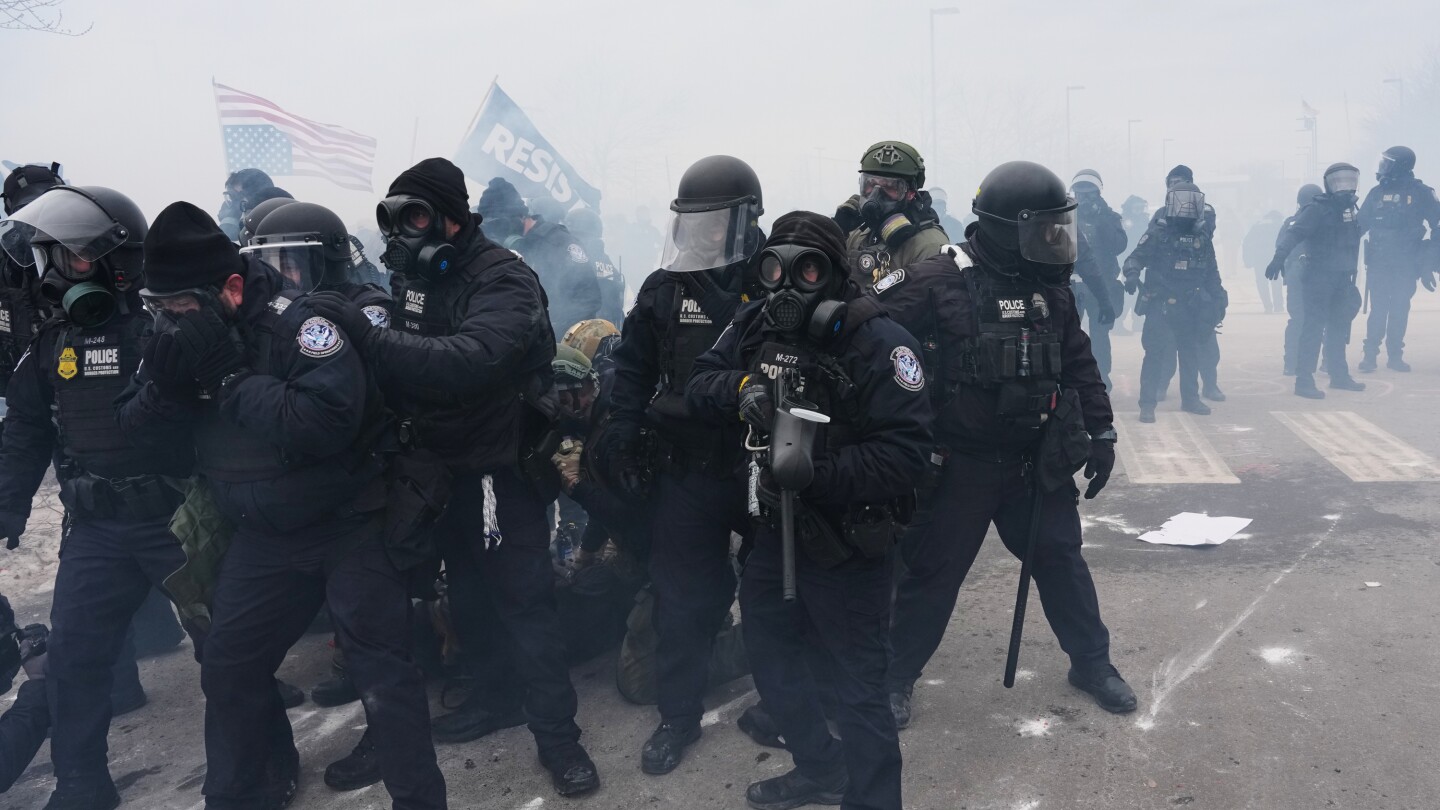
The Department of Homeland Security recently posted to social media an image of a horseman riding through a snowy landscape with the words “We’ll have our home again” – a line from a song embraced by far-right groups including the Proud Boys. This messaging came just days after tensions in Minneapolis escalated following a shooting involving a U.S. Immigration and Customs Enforcement agent and Renee Good.
In a separate incident, the Department of Labor posted on X: “One Homeland. One People. One Heritage. Remember who you are, American.” The phrasing prompted immediate backlash from critics who noted similarities to the Nazi slogan “Ein Volk, Ein Reich, Ein Führer” (“One People, One Realm, One Leader”).
Further controversy erupted when the White House posted an image regarding Greenland that featured the phrase “Which way, Greenland Man?” – language that references a meme derived from the title of a white supremacist book “Which Way Western Man?” The administration had previously used similar framing in an ICE recruiting post that asked, “Which way, American Man?”
These messages come amid the administration’s broader immigration enforcement campaign, which officials frame as necessary to preserve American identity and values. The administration has vigorously pushed back against criticism of its messaging choices.
“It seems that the mainstream media has become a meme of their own: The deranged leftist who claims everything they dislike must be Nazi propaganda,” said White House spokeswoman Abigail Jackson. “This line of attack is boring and tired. Get a grip.”
DHS spokeswoman Tricia McLaughlin described the “We’ll Have Our Home Again” post simply as “a reference to 20-plus million illegal aliens invading the country,” dismissing connections to extremist rhetoric as “absurd.”
However, César Cuauhtémoc García Hernández, a law professor at Ohio State University specializing in immigration law, pointed out that previous administrations managed to implement immigration enforcement without employing such contentious language. “You don’t have to dip into white supremacist sloganeering to promote immigration regulation,” he noted.
García Hernández observed that the administration appears to calibrate its references carefully, creating plausible deniability. “The imagery is not simply a reproduction of common white supremacist imagery or text, but a play on that imagery — and that gives them the breathing room they want,” he said.
Despite winning his second term with increased support from Latino, Black, and Asian voters, Trump has long generated enthusiasm among white nationalist groups who view his anti-immigrant stance as validating their positions. Throughout his political career, Trump has made numerous controversial statements about immigrants, including claiming they are “poisoning the blood of our country” and referring to Somali immigrants as “garbage.”
His administration has also implemented policies that critics say favor white immigrants, such as restricting refugee admissions while creating exceptions for white South Africans, whom Trump claims face discrimination despite limited evidence supporting this assertion.
The administration’s messaging strategy appears designed to resonate with certain segments of its base, particularly those immersed in online right-wing communities. Hannah Gais, a senior researcher with the Southern Poverty Law Center who tracks white supremacist groups, believes these messaging choices are deliberate.
“They know their base is this overly online right-winger who they know will go nuts if they say ‘Which Way, Western Man?'” Gais explained. However, she questioned the sustainability of this approach: “I don’t think it’s a tenable strategy for the long term because the stuff is incomprehensible to most people. And if it is comprehensible, people don’t like it.”
The controversy highlights the ongoing tensions surrounding the administration’s immigration policies and the coded language used to promote them, raising questions about the boundaries of acceptable political rhetoric in a deeply divided nation.
Fact Checker
Verify the accuracy of this article using The Disinformation Commission analysis and real-time sources.

18 Comments
While immigration is a complex and often contentious issue, the administration’s use of divisive, nationalist language is deeply troubling. We should be striving for nuanced, fact-based dialogue, not pandering to extremist elements for political gain.
I share your concerns. This kind of rhetoric is highly problematic and risks further polarizing an already tense situation. As a nation, we need to be working to bring people together, not drive them apart along racial and ideological lines.
The administration’s apparent attempts to court the far-right with this kind of messaging are very concerning. We should be seeking to reduce tensions and find common ground, not inflame divisions for political advantage. This is a disturbing trend that undermines democratic norms.
Absolutely. This type of inflammatory, divisive rhetoric is unacceptable and runs counter to the principles of a healthy democracy. We need leadership that brings people together, not drives them apart along ideological and racial lines.
While immigration is a complex and often divisive issue, the administration’s use of loaded language and imagery is highly concerning. We should be striving for nuanced, fact-based dialogue, not pandering to extremist elements.
I share your concerns. This type of rhetoric is deeply troubling and risks further polarizing an already tense situation. We need leadership that brings people together, not drives them apart.
This is certainly a concerning development. The administration’s use of divisive, nationalist rhetoric is deeply troubling and seems calculated to appeal to extremist elements. I hope cooler heads can prevail and that all sides work to reduce tensions and find common ground.
I agree, the language used is highly problematic and risks further inflaming an already tense situation. As a nation, we should be seeking unity, not stoking division.
While immigration is a complex and contentious issue, the administration’s use of loaded language and imagery is highly problematic. We should be working to reduce tensions and find common ground, not inflame divisions for political gain.
I agree, this type of rhetoric is deeply troubling and risks further polarizing an already tense situation. As a nation, we need to be striving for unity, not stoking division along racial and ideological lines.
The administration’s apparent attempts to appeal to the far-right with this kind of messaging are very concerning. We should be seeking to bring people together, not divide them for political advantage. This is a disturbing trend that undermines democratic values.
Absolutely. This type of inflammatory, us-versus-them rhetoric is unacceptable and runs counter to the principles of a healthy democracy. We need leaders who will work to reduce tensions, not inflame them.
The administration’s apparent attempts to court the far-right with this kind of messaging are deeply troubling. As a nation, we should be working to reduce tensions and find common ground, not inflame divisions for political gain.
I agree, this is a concerning development. We need our elected officials to be working to bring people together, not divide them along ideological and racial lines. This type of rhetoric is unacceptable.
This kind of inflammatory, us-versus-them messaging is extremely dangerous and unbecoming of the office of the presidency. We need leadership that brings people together, not drives them apart along racial and ideological lines.
Sadly, this appears to be part of a broader pattern of the administration appealing to the far-right fringe for political gain. It’s a disturbing trend that undermines democratic norms and civil discourse.
This is a very troubling trend. The administration’s use of divisive, nationalist language is deeply concerning and seems calculated to appeal to extremist elements. We need leadership that brings people together, not drives them apart.
I share your concerns. This kind of inflammatory rhetoric is unacceptable and undermines the values of democracy and civil discourse. We should be striving for nuanced, fact-based dialogue, not pandering to the far-right fringe.