


Listen to the article
The Trump administration urged a federal judge on Monday to reject Minnesota’s motion seeking to restrict Immigration and Customs Enforcement (ICE) operations in the state, characterizing the request as an “unprecedented” judicial overreach that would undermine federal authority.
In a strongly worded court filing, the Justice Department argued Minnesota was “effectively seeking a state veto over the enforcement of federal law,” calling the state’s position “legally frivolous” and an “absurdity.” The administration’s attorneys emphasized that “the 10th Amendment does not afford an ejectment action for states who are dissatisfied with the federal government’s enforcement of federal law.”
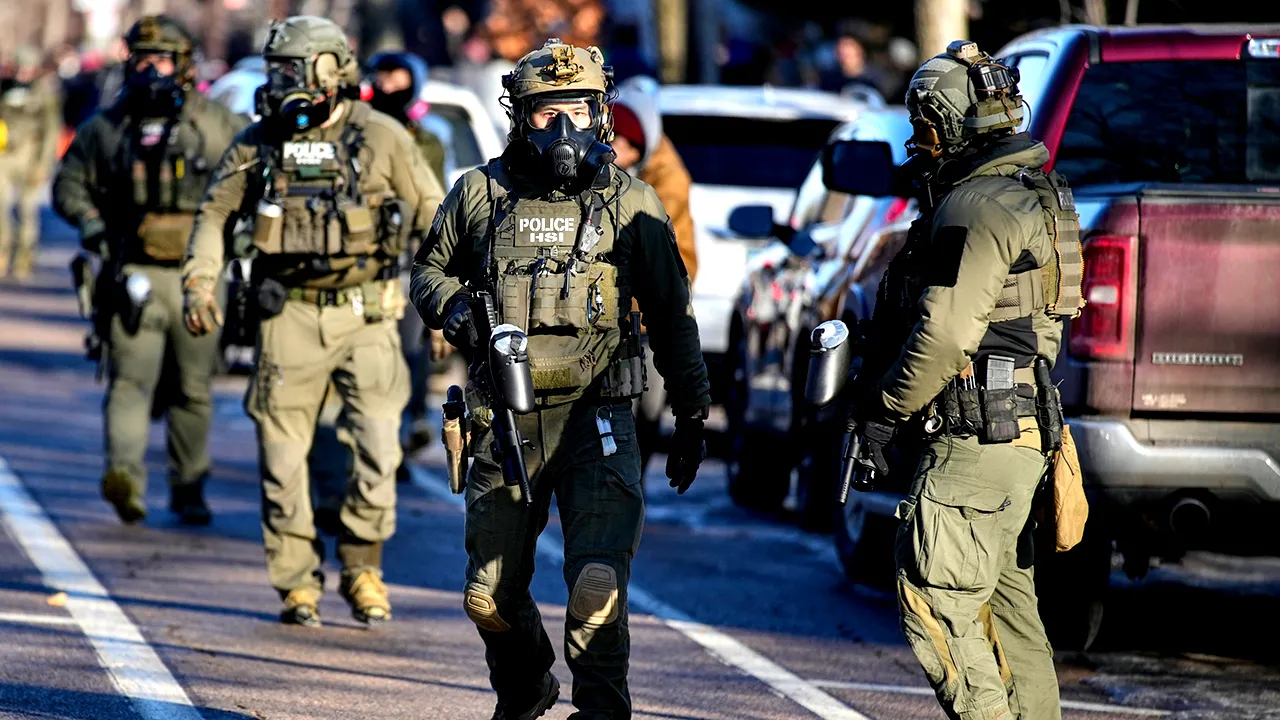
The legal clash follows Minnesota’s lawsuit filed last week, which seeks to block what state officials describe as a massive federal immigration enforcement surge that has flooded the Twin Cities with armed agents. Minnesota officials contend the operations have sparked fear and unrest while interfering with state and local authorities.
The Justice Department’s filing painted a different picture, claiming federal agents face increasing danger while conducting their duties. “In and around Minneapolis, ICE officers operating out of the St. Paul Office have been confronted with increased threats, violence, aggression, attacks, vehicle block-ins, and obstruction of immigration enforcement operations,” the document stated.
Minnesota now has until Thursday to respond to the Trump administration’s arguments, setting the stage for a significant legal battle over federal immigration enforcement jurisdiction within state borders.
The escalating tensions come against the backdrop of a fatal shooting that occurred during a federal enforcement operation in south Minneapolis nearly a week ago. Federal officials maintain that ICE agents were attempting to make arrests when a 37-year-old Minneapolis woman allegedly tried to use her vehicle as a weapon against officers, prompting an agent to fire in self-defense.
This incident has intensified an already volatile situation, with more than 2,000 federal immigration officers now operating in the state amid growing opposition from community activists, protesters, and what federal officials describe as “agitators.” Both the Trump administration and Minnesota officials have pointed fingers at each other for the heightened tensions.
The confrontation represents a significant test case in the ongoing national debate over the boundaries between federal immigration enforcement powers and states’ rights to govern their own communities. Minnesota’s lawsuit argues that the federal operations have overstepped proper boundaries and created unnecessary chaos, while the federal government maintains it is simply enforcing federal immigration laws.
Immigration policy experts note that this case could potentially set important precedents about the limits of federal enforcement operations within states that oppose such activities. It also highlights the deepening divide between states and the federal government on immigration enforcement priorities.
Local Minneapolis community organizations have reported significant disruption to daily life in immigrant communities since the enforcement surge began. Many businesses in immigrant-heavy neighborhoods have reported decreased foot traffic as residents fear encountering immigration agents while conducting everyday activities.
The case is being closely watched by legal scholars and immigration advocates nationwide, as its outcome could influence federal-state relations regarding immigration enforcement across the country. Civil liberties organizations have expressed concern about the increased federal presence, while supporters of stricter immigration enforcement view the operations as necessary for maintaining rule of law.
The Minnesota state government has until the end of the week to formulate its response to the Trump administration’s filing, after which the federal judge will determine whether to limit ICE operations as requested by the state or allow federal enforcement activities to continue unimpeded.
Fact Checker
Verify the accuracy of this article using The Disinformation Commission analysis and real-time sources.

12 Comments
The administration seems to be taking a hard line, characterizing Minnesota’s request as ‘unprecedented overreach.’ But the state argues federal actions have caused unrest. Tough call for the courts.
Exactly, it’s a complex balancing act. The judge will have to weigh the federal government’s authority against the state’s concerns about public safety and local control.
Immigration enforcement is always a hot-button political topic. Reasonable people can disagree on the right approach to balance security, civil liberties, and state/federal cooperation.
That’s a fair point. These are sensitive topics where emotions can run high, so a measured, fact-based judicial process is crucial.
The administration’s stance of defending federal authority seems understandable, but the state’s worries about public safety and local disruption also warrant consideration. Not a simple case to resolve.
You’re right, it’s a complex issue without a clear-cut solution. The courts will have to weigh the various interests and principles at stake.
This legal battle over ICE operations in Minnesota highlights the ongoing tensions around immigration enforcement and the division of power between state and federal governments.
The administration’s arguments about federal authority seem strong, but the state’s concerns about disrupting local law enforcement and sparking unrest also carry weight. Curious to see how the courts handle this.
Agreed, it’s a delicate issue without any easy answers. The judge will have to carefully consider the valid arguments on both sides.
This is a complex legal issue with valid arguments on both sides. It will be interesting to see how the courts rule on the balance of state and federal authority here.
I agree, the 10th Amendment and federalism issues at play make this a challenging case. Curious to hear the judge’s reasoning.
Immigration is always a politically charged topic. This case touches on important federalism issues around the balance of state and federal power. Should be an interesting legal battle to follow.