


Listen to the article
U.S. Government Takes Minority Stake in Rare Earth Miner to Reduce Chinese Dominance
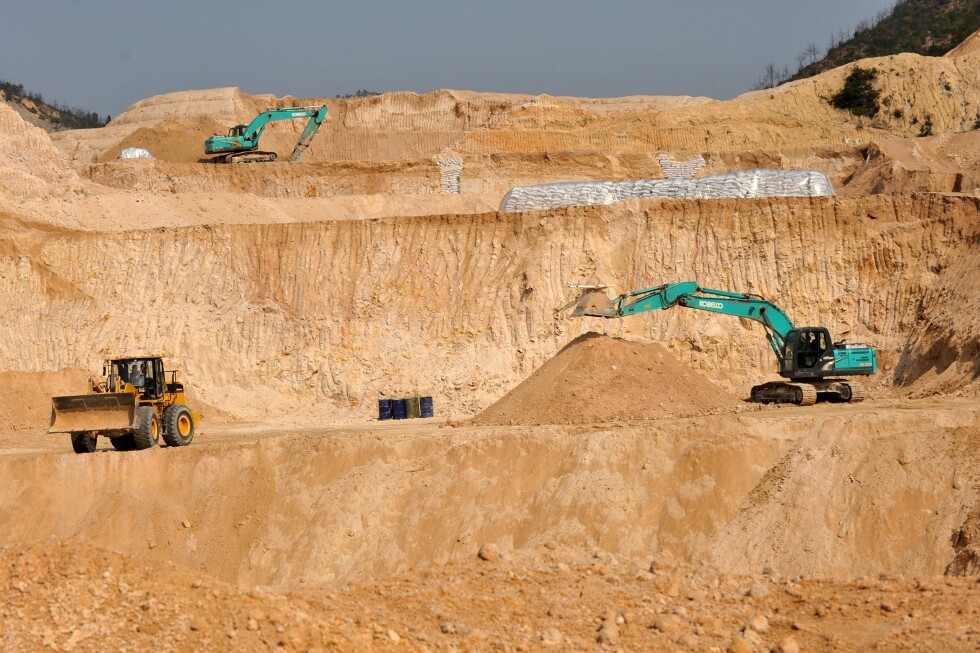
The United States is taking a significant step to counter China’s control of critical minerals by investing $1.6 billion in USA Rare Earth, an Oklahoma-based mining company. The Commerce Department announced Monday that the investment will support the development of a mine in Texas and construction of a magnet manufacturing facility in Oklahoma.
The deal represents the latest move in an escalating effort to establish domestic supply chains for rare earth elements, which are essential components in smartphones, electric vehicles, robotics, and military equipment. Currently, China processes more than 90% of the world’s critical minerals, giving Beijing considerable leverage in ongoing trade tensions with Washington.
“USA Rare Earth’s heavy critical minerals project is essential to restoring U.S. critical mineral independence,” Commerce Secretary Howard Lutnick said in a statement. “This investment ensures our supply chains are resilient and no longer reliant on foreign nations.”
The financial package includes $277 million in proposed federal funding and a $1.3 billion senior secured loan. In exchange, the Commerce Department will receive 16.1 million shares of common stock and rights to purchase an additional 17.6 million shares. The announcement sent USA Rare Earth’s stock soaring more than 13% in pre-market trading.
Industry experts have long warned that America’s dependence on China for critical minerals represents a serious national security vulnerability. The list of 50 critical minerals includes 17 rare-earth elements that are fundamental to modern technology and defense systems.
This investment marks the third major U.S. government stake in domestic rare earth operators in recent months. The Pentagon previously invested $400 million in rare-earth producer MP Materials and provided the company with a $150 million loan in August. In November, the Trump administration and private investors announced a $1.4 billion partnership with rare earth startups Vulcan Elements and ReElement Technologies to scale up domestic production capabilities.
The administration’s broader strategy includes a tax and spending bill that allocates $2 billion for the Pentagon to enhance the U.S. stockpile of critical minerals and an additional $5 billion through 2029 to strengthen those supply chains. Between 2020 and 2024, the Defense Department has awarded more than $439 million to establish domestic rare earth supply chains.
The government’s aggressive investment approach comes amid growing bipartisan support for reducing dependence on foreign sources of critical minerals. Earlier this month, lawmakers from both parties proposed creating a new agency with $2.5 billion in funding to accelerate domestic production of rare earths and other critical minerals.
The rare earth sector has become a focal point in the economic and strategic competition between the United States and China. Beijing has previously signaled willingness to restrict rare earth exports as leverage in trade disputes, prompting urgent calls from U.S. officials and industry leaders to develop alternative sources.
Rare earth elements, despite their name, are relatively abundant in the Earth’s crust but are difficult and environmentally challenging to mine and process. Rebuilding domestic capacity, which largely disappeared in the 1990s as Chinese production ramped up, requires significant investment and time.
Market analysts note that while these investments represent important first steps, establishing a complete supply chain from mining to processing to manufacturing will likely take years. The current initiatives aim to create the foundation for a self-sufficient rare earth industry that can eventually compete with China’s established infrastructure.
The USA Rare Earth investment underscores the growing recognition that control of critical mineral supply chains has become a cornerstone of national security and economic policy in an increasingly technology-dependent global economy.
Fact Checker
Verify the accuracy of this article using The Disinformation Commission analysis and real-time sources.

15 Comments
Diversifying critical mineral supply chains is a complex challenge, but this investment in USA Rare Earth is a step in the right direction. Let’s hope it leads to more US-based production.
While I’m supportive of efforts to reduce reliance on China, I wonder about the environmental and labor standards at this Texas mine. Responsible mining practices should be a priority.
That’s a fair concern. Environmental protection and worker safety need to be closely monitored as this project develops.
While I support efforts to boost US rare earth production, I’m concerned about the potential for this investment to distort global markets and create new trade tensions. Policymakers should consider the international ramifications.
That’s a valid concern. Any actions taken should be carefully coordinated with allies to avoid unintended consequences in the global rare earths trade.
I’m curious to see how this investment in USA Rare Earth will impact global rare earth markets and prices. Reducing China’s dominance could have wide-ranging consequences.
That’s a good point. Decreased Chinese control may create more competition and potentially lower prices for consumers.
This move reflects the growing geopolitical importance of critical minerals. Securing domestic production capacity is a wise investment for the US government.
Absolutely. Rare earths are essential for high-tech industries, so this helps strengthen US economic and technological competitiveness.
It will be interesting to see if this investment helps spur innovation and technological advances in the rare earths processing and manufacturing sectors. Reducing reliance on China could drive new solutions.
Good point. Domestic competition and investment could accelerate progress in rare earth extraction, refining, and applications.
This is an important step in reducing US reliance on China for critical rare earth minerals. Establishing domestic supply chains for these essential materials is crucial for economic and national security.
Agreed. Diversifying sources and building resilient supply chains is a smart long-term strategy.
This is an important geopolitical move, but I hope the US government also considers the broader environmental and social impacts of rare earth mining. Sustainability should be a key priority.
Agreed. Responsible sourcing and production methods need to be a central part of this strategy to reduce Chinese dominance.