


Listen to the article
The Trump administration has indefinitely postponed a decision on extending federal protections to monarch butterflies, despite years of warnings from conservationists about their dwindling populations.
In December 2024, during the final days of Joe Biden’s presidency, the U.S. Fish and Wildlife Service had announced plans to add the monarch to the threatened species list by the end of 2025, describing the insect as “iconic” and “cherished across North America.”
However, the Trump administration recently classified the effort as a “long-term action” in a September regulatory status report from the Office of Management and Budget. This designation doesn’t completely block the possibility of protection, but indicates no decision will be made within the coming year.
“The administration remains committed to a regulatory approach that is transparent, predictable and grounded in sound science,” a Fish and Wildlife Service spokesperson said in an email statement. “Any listing must follow the Endangered Species Act’s statutory requirement that determinations be based on the best scientific and commercial data available.”
The agency emphasized its preference for “voluntary, locally driven conservation as a proven tool for supporting species and reducing the need for additional federal regulation,” but did not provide specific reasons for the delay when asked for follow-up information.
This postponement comes as the Trump administration pursues policies focused on expanding oil and gas production and reducing environmental regulations perceived as impediments to development. In November, the administration moved to eliminate blanket protections for threatened species, requiring instead the creation of species-specific rules—a potentially lengthy process.
The monarch butterfly was first designated as a candidate for listing during Trump’s previous term in December 2020. The current delay places protection efforts in what Tierra Curry, endangered species co-director at the Center for Biological Diversity, described as “bureaucratic limbo.”
“It’s absolutely disappointing because monarchs need all the help they can get,” Curry said.
The Center for Biological Diversity and other conservation groups have been advocating for federal protections since 2014, when they petitioned the Fish and Wildlife Service to list the butterfly. In 2022, the center filed a lawsuit to force the agency to make a decision.
Curry noted that protection delays are not uncommon in endangered species cases. She cited examples like the Miami Blue Butterfly, which waited 28 years from candidacy to endangered listing in 2012, and the Dakota Skipper, which spent 30 years as a candidate before being listed as threatened in 2014.
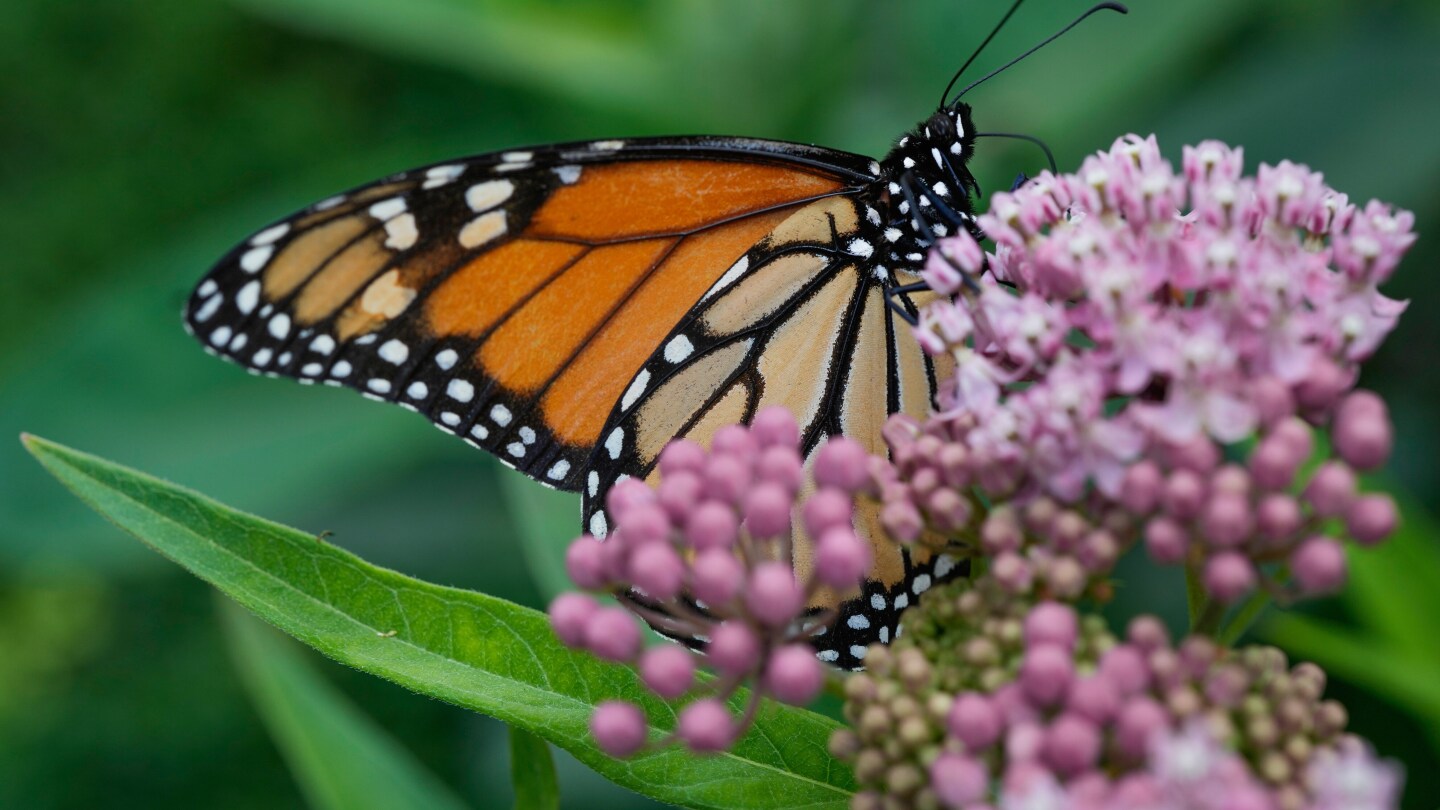
Monarch butterflies, recognizable by their distinctive orange-and-black wings, are found across North America and have long symbolized summer days. However, experts warn their populations are declining due to climate change and rural development. When the Fish and Wildlife Service announced plans to list the species last December, they reported that monarchs east of the Rocky Mountains face a 57% to 74% probability of extinction by 2080, while those west of the Rockies have a 95% chance of extinction by then.
The proposed protections would prohibit killing or transporting monarchs, with exceptions for educational purposes or transporting fewer than 250 butterflies. People and farmers could continue removing milkweed—a critical food source for monarch caterpillars—from their properties but would be barred from making changes that permanently render land unusable for the species.
The proposal also included designating 4,395 acres across seven coastal California counties as critical habitat where western monarchs migrate for winter. This designation would require federal agencies to avoid destroying or modifying these areas and would mandate that landowners seeking federal permits work with wildlife officials to mitigate potential damage.
The delay in protection comes at a critical time for the species, as conservation efforts continue against the backdrop of changing environmental policies.
Fact Checker
Verify the accuracy of this article using The Disinformation Commission analysis and real-time sources.

7 Comments
Monarch butterflies are such a beloved and ecologically vital species. I hope the administration will take the necessary steps to protect them, even if it means overcoming political hurdles. Their populations have declined sharply and swift action is needed.
The monarch butterfly is an iconic species that holds tremendous cultural and ecological significance across North America. Delaying protections is troubling and runs counter to established conservation science. I hope the administration will reconsider this decision.
This is really disappointing to see. Monarch butterflies face serious threats to their survival, and decisive action is needed to address their decline. I hope the administration will heed the advice of scientists and conservationists on this issue.
It’s concerning to see the monarch butterfly protections delayed, especially given their declining populations. I hope the administration will ultimately make a science-based decision that prioritizes conservation of this iconic species.
Agreed, the monarch is a vital pollinator and its decline could have far-reaching ecological impacts. Transparent, data-driven policymaking is crucial here.
Interesting that the administration has classified this as a ‘long-term action.’ I wonder what the reasoning is behind the delay, and whether there are any political or economic factors at play. Protecting the monarch should be a priority given its importance.
Good point. The ‘long-term action’ designation seems concerning and raises questions about the administration’s motivations. Hopefully the scientific evidence will ultimately guide the decision, not political interests.